Studio Guide / Lesson 2 · Mark + meaning
From mark to visual language
Learning outcomeDevelop one selected mark through variation and begin building a visual language.
What students need to know
Key learning points
- Visual language develops through repeated choices in scale, spacing, repetition and relationship.
- Meaning can be carried through visual choices, context and association.
- Artists develop visual language by selecting, repeating and adapting forms.
- Variation allows one mark to become a family of related forms.
Key terms
- Structural Lens
- Personal Lens
- Cultural Lens
- visual language
- variation
- relationship
01 /Quick check
Five questions. Answer, then open the response.
- 01
Look back at the Kusama example from Lesson 1. Which word describes what she is doing with one form?
Check
Repetition — one form accumulates across the whole surface, changing through density and spacing.
- 02
Look back at the mark you selected in Lesson 1. What could happen if you begin changing and repeating it?
Check
It can become a developing visual language: a family of related forms that belong to you.
- 03
You describe the scale, line weight and spacing of an artwork. Which lens are you using?
Check
The Structural Lens — you are reading meaning through the visual choices in the work.
- 04
You write about what a symbol means to you, and what the artist's own experience brought to it. Which lens?
Check
The Personal Lens — the artist's experience and the viewer's experience, either side of the work.
- 05
You consider where and when a work was made, and the beliefs around it. Which lens?
Check
The Cultural Lens — the context the artwork comes from and is seen in.
02 /Look + interpret
Look first
What does a spider already mean to you?
Write your first response before you read anything about Bourgeois. Open the artwork through the museum link and keep it beside you while you look.
Structural Lens
- How does its scale affect your response?
- What happens in the space beneath the legs?
- Where does the form feel strong or vulnerable?
Find out more
Bourgeois returned to the spider across decades. She associated it with her mother, who repaired tapestries, and with protection, memory, strength and vulnerability. Its meaning shifted across works and experiences.
What changes in your interpretation now?
Personal Lens
- What does Bourgeois bring to Spider?
- What do you bring?
- What in the artwork supports your interpretation?
Keep in your visual diaryFirst response, context note, revised interpretation
03 /Return
Go back to the mark you chose in Lesson 1.
Keep the reason you chose it in mind. That reason is what the work carries forward.
04 /Develop
Build with your mark.
Try your mark in different ways and begin combining the possibilities that interest you.
Possibilities, not steps
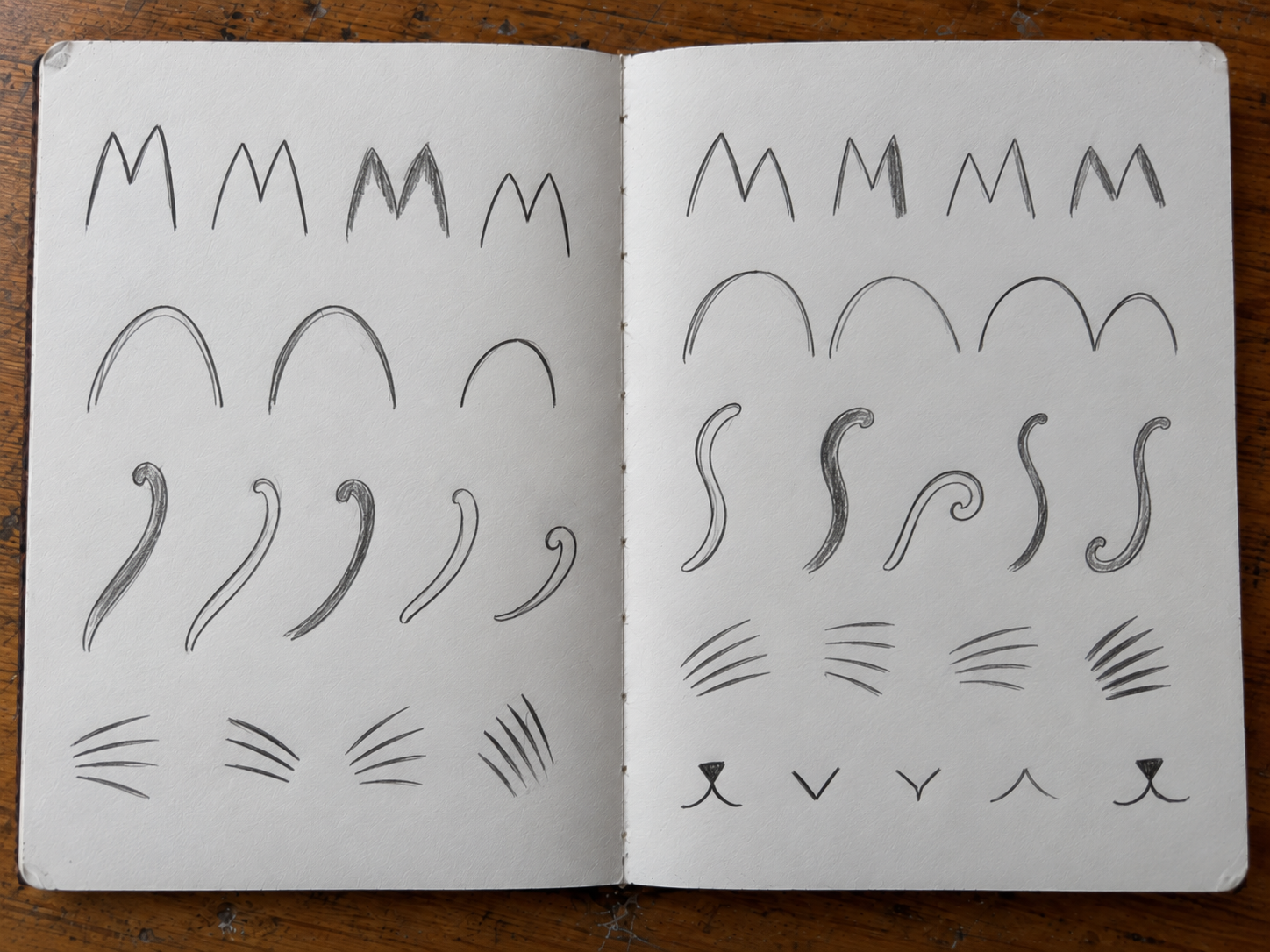
Visual material: Studio work, 2026.
Selected markVariationsRelated formsDeveloping visual language
Keep what strengthens the idea you began with.
05 /Reflect
- What did you keep from your original source?
- What changed?
- Where does meaning now sit in the work?
- What would you develop next?
Keep in your visual diarySELECTED MARK / VISUAL LANGUAGE STUDIES / RELATED FORMS / REFLECTION
By the end of this lesson
- A first response, context note and revised interpretation
- Visual language studies developed from your selected mark
- Related forms growing from those studies
- A reflection on what changed and what comes next
References
Source note
Developed through studio practice, VCE Art Creative Practice curriculum guidance, disciplinary resources and artist and gallery material. Instructional material and Studio studies on this page were developed for Learning by Design.
Curriculum + reading
Victorian Curriculum and Assessment Authority. (2022). VCE Art Creative Practice study design 2023–2027. VCAA ↗
Greenwood, D. (2023). Art creative practice: VCE units 1–4. Cambridge University Press & Assessment.
Artists + artworks
Art21. (n.d.). Louise Bourgeois. art21.org ↗
Museum + gallery sources
National Gallery of Art. (n.d.). Louise Bourgeois: Spider. nga.gov ↗
Studio material
MARK DEVELOPED THROUGH VARIATION. Visual material: Studio work, 2026.