Creative Thinking Toolkit / 03
DISCIPLINARY THINKING
Different practices ask you to pay attention to different things.
You can look at the same work differently depending on the question you are trying to answer.
Use the questions that help you look further.
01 / ART CREATIVE PRACTICE
LOOK
INTERPRET
RECONSIDER
An artwork can be interpreted through what you see, what you know and the questions you bring to it.
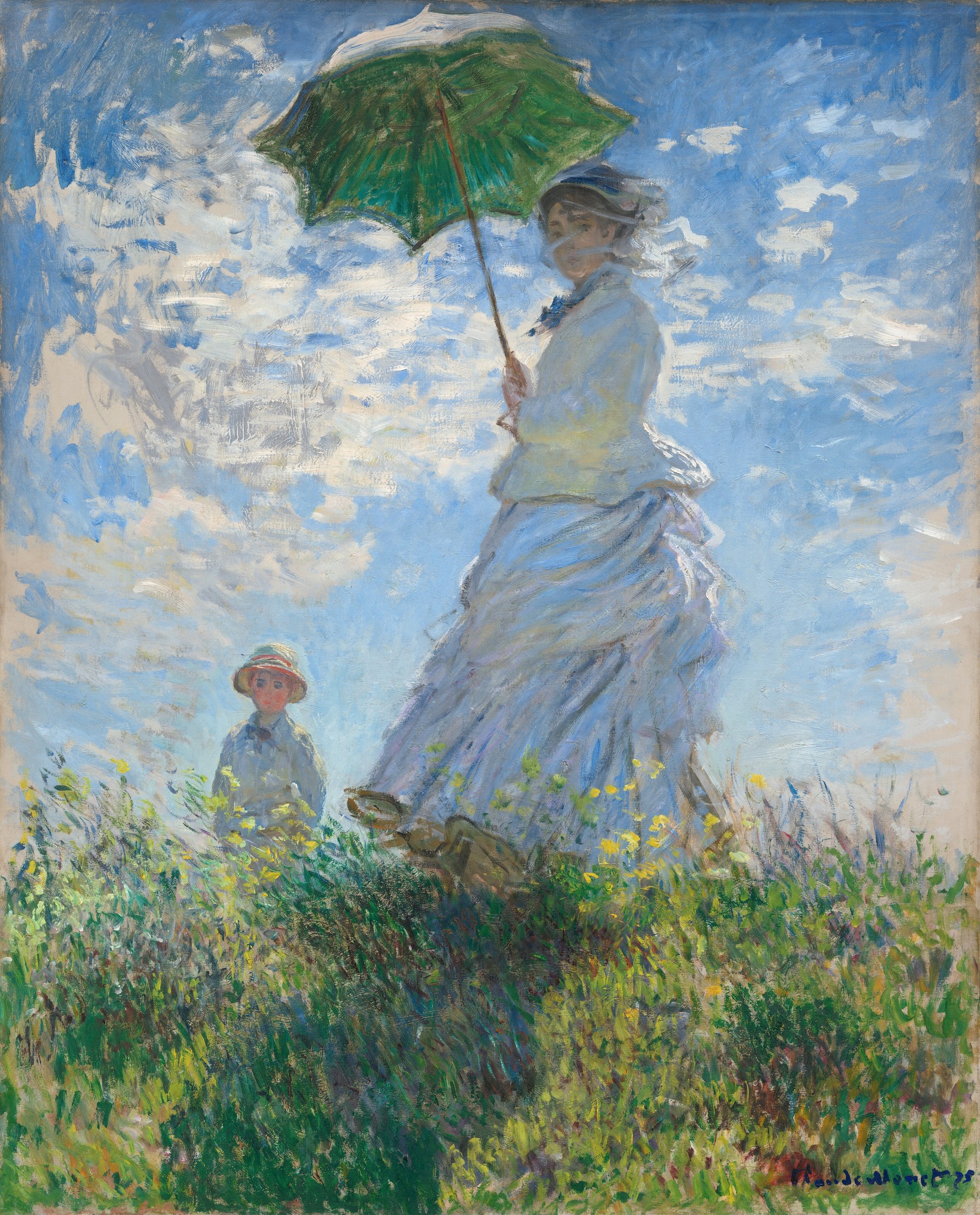
Woman with a Parasol — Madame Monet and Her Son, 1875
Oil on canvas
100 × 81 cm
National Gallery of Art, Washington
Collection of Mr. and Mrs. Paul Mellon
Look first
- What draws your attention first?
- How has Monet used colour, light, brushwork, composition and viewpoint?
- What relationships can you see between the figures, landscape and viewer?
- What meanings or ideas might these visual choices suggest?
- What evidence in the artwork supports your interpretation?
Change the lens
A different lens can change what you notice and how you interpret an artwork.
- Structural
- How do visual language, materials and techniques shape what the work communicates?
- Personal
- What experiences or associations do you bring to the work, and how might they affect your response?
- Cultural
- What does context help you understand about the work, artist or ideas around it?
- Contemporary
- How might current ideas and perspectives change how the work is understood now?
Now add context
- Does this information change or strengthen your first interpretation?
- What can you now say that you could not say from looking alone?
Worked example
At first, the loose brushwork and moving fabric make the scene feel immediate and temporary. The low viewpoint also makes Camille appear prominent against the sky. Knowing that Monet completed the painting in a single outdoor session strengthens this interpretation. His rapid handling of paint is connected to the experience of changing light, weather and movement rather than simply describing the figures accurately.
02 / ART MAKING + EXHIBITING
MATERIAL
PROCESS
PRESENTATION
How an artwork is made and presented shapes how it is experienced.
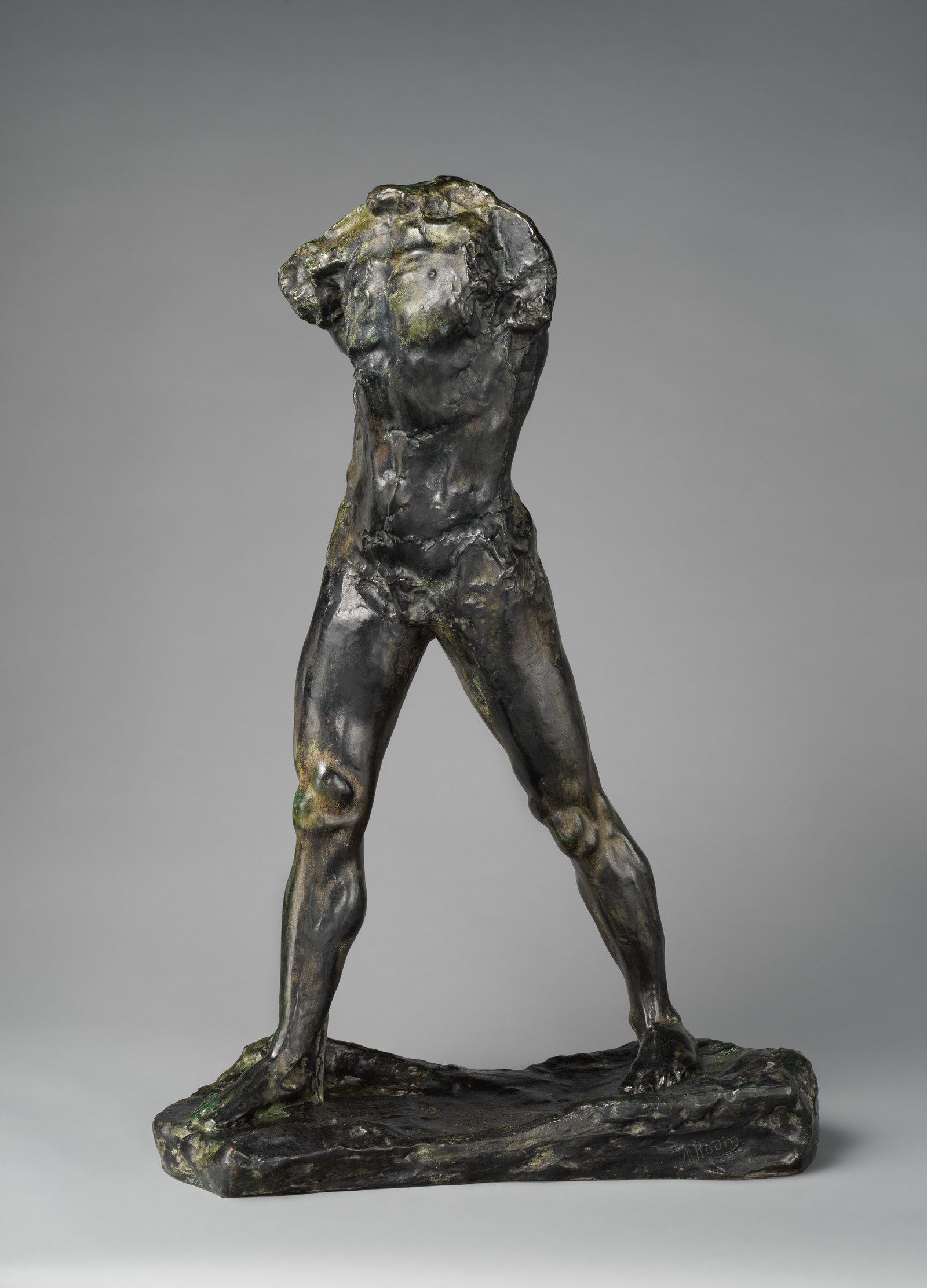
The Walking Man (L'homme qui marche)
Modelled before 1900, cast before 1914
Bronze, green patina
85.1 cm high
Cast by Alexis Rudier
The Metropolitan Museum of Art, New York
Look at the making
- What can you tell about the material from looking at the sculpture?
- What do you notice about the surface, form and treatment of the body?
- How do the material, techniques and processes contribute to its aesthetic qualities?
- Which parts appear resolved, fragmented or incomplete?
- What makes an artwork feel finished?
Now add process
- How does knowing how the sculpture was assembled change the way you understand it?
- What does Rodin's decision suggest about refinement and resolution?
Think about exhibiting
- A photograph gives you only one view of this sculpture. How might your experience change if you could move around it?
- How could height, position, lighting and surrounding space affect the way the work is experienced?
- What would you consider if you were responsible for presenting this work in an exhibition?
- What would the material require you to consider when handling, displaying or caring for the work?
Worked example
The fragmented body initially appears unfinished, but the construction becomes part of the work's aesthetic qualities. Joining a torso and legs from different figures shifts attention away from anatomical completeness and towards movement. The bronze preserves the irregular surface and gives the form physical weight. In an exhibition, space around the sculpture would allow viewers to move around it and experience the changing relationship between its mass, surface and movement.
03 / VISUAL COMMUNICATION DESIGN
PURPOSE
AUDIENCE
CONTEXT
Design decisions respond to a communication need.
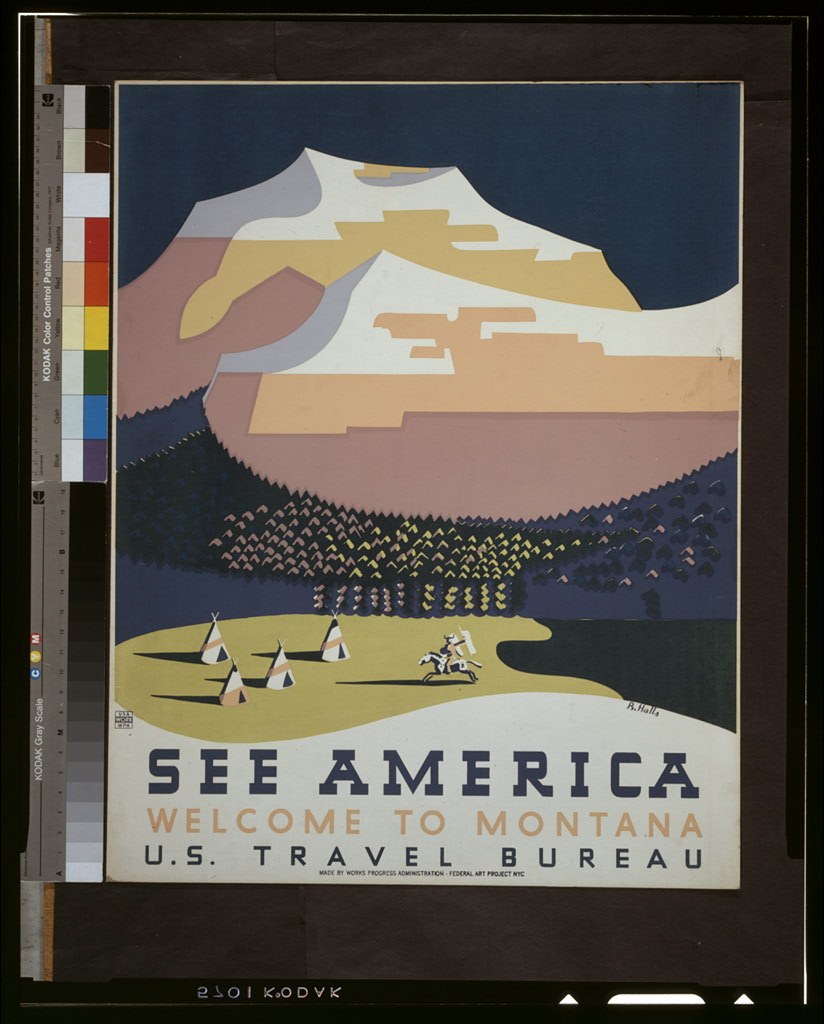
See America. Welcome to Montana
1936–1938
Silkscreen colour poster
Works Progress Administration Federal Art Project
Produced for the U.S. Travel Bureau
Library of Congress, Prints and Photographs Division
Read the design
- What attracts your attention first?
- What information has been given the strongest visual hierarchy?
- How do image, colour, scale, typography and composition direct your attention?
- What do you think this communication is trying to achieve?
- What can you infer about the intended audience from the design?
Now add the context
- Now that you know the purpose and context, how do the design decisions make sense?
- Who was the intended audience? How does that compare with what you inferred from the design?
- How does the poster attempt to make Montana desirable to that audience?
- What assumptions or ideas about place and culture are communicated through the choice of imagery?
Look again
- The designer chose tipis as a prominent way to represent Montana to tourists. What does that choice communicate?
- Whose culture is being used within the communication?
- How might historical context affect the way we interpret this design decision today?
Worked example
The poster uses a simplified image, restricted colour and large typography to communicate quickly. The landscape and tipis construct an image of Montana as a distinctive travel destination. Once the tourism purpose is known, these choices can be understood as deliberate communication decisions aimed at attracting visitors. The use of tipis also raises questions about representation: Indigenous cultural imagery is being used to construct an identity for Montana for a tourist audience. Further contextual research would be needed before making claims about the specific culture represented.
SAME ACT OF LOOKING. DIFFERENT QUESTIONS.
- Art Creative Practice
- How can visual evidence, context and different lenses shape my interpretation?
- Art Making + Exhibiting
- How do materials, techniques, processes, decisions and presentation shape the artwork and its experience?
- Visual Communication Design
- How do design decisions respond to purpose, audience and context?
ABOUT THIS RESOURCE
The questions on this page draw on the terminology, skills and learning expectations of the VCE Art Creative Practice, Art Making and Exhibiting, and Visual Communication Design Study Designs. The examples translate these disciplinary expectations into student-facing questions. They are teaching scaffolds developed for Learning by Design, not VCAA prescribed response structures.
Curriculum + reading
Victorian Curriculum and Assessment Authority. (2022). VCE Art Creative Practice study design 2023–2027.
Victorian Curriculum and Assessment Authority. (2022). VCE Art Making and Exhibiting study design 2023–2027.
Victorian Curriculum and Assessment Authority. (2023). VCE Visual Communication Design study design 2024–2028.
Artists + artworks
Halls, R. (ca. 1937). See America. Welcome to Montana [Silkscreen poster]. Library of Congress, Prints and Photographs Division, Washington, DC. loc.gov ↗.
Monet, C. (1875). Woman with a Parasol — Madame Monet and Her Son [Oil on canvas]. National Gallery of Art, Washington, DC. nga.gov ↗.
Rodin, A. (modelled before 1900, cast before 1914). The Walking Man (L'homme qui marche) [Bronze]. The Metropolitan Museum of Art, New York. metmuseum.org ↗.
IMAGE CREDITS
CLAUDE MONET Woman with a Parasol — Madame Monet and Her Son, 1875. Oil on canvas, 100 × 81 cm. National Gallery of Art, Washington. Collection of Mr. and Mrs. Paul Mellon. Accession 1983.1.29. Image: public domain.
AUGUSTE RODIN The Walking Man (L'homme qui marche). Modelled before 1900, cast before 1914. Bronze, green patina. Cast by Alexis Rudier. The Metropolitan Museum of Art, New York. Gift of Miss G. Louise Robinson, in memory of Mrs. Nelson Robinson, 1940. Object 40.12.4. Image: Public Domain / Open Access.
RICHARD HALLS See America. Welcome to Montana, 1936–1938. Silkscreen colour poster. Works Progress Administration Federal Art Project. U.S. Travel Bureau. Library of Congress, Prints and Photographs Division. Call number: POS - WPA - NY .H355, no. 7 (C size).
Visual material: Studio work, 2026.