Studio Guide / Lesson 1 · Mark + meaning
From source to mark
Learning outcomeDevelop a mark from close observation and select one form to carry forward.
What students need to know
Key learning points
- Visual language can begin with close observation of something familiar.
- Repeated looking helps particular lines, shapes and features become noticeable.
- A small feature from a source can begin to work as a mark.
- Artists make choices about which forms are worth carrying forward.
Key terms
- source
- observation
- feature
- mark
- association
- meaning
01 /Look
What can visible details tell you about a larger story?
First look
Click the image to enlarge it. Look closely before you read the story.
- Where does your attention go first?
- What appears to be happening?
- Which gesture, object or detail shaped that first reading?
- What evidence in the artwork supports your interpretation?
Look again
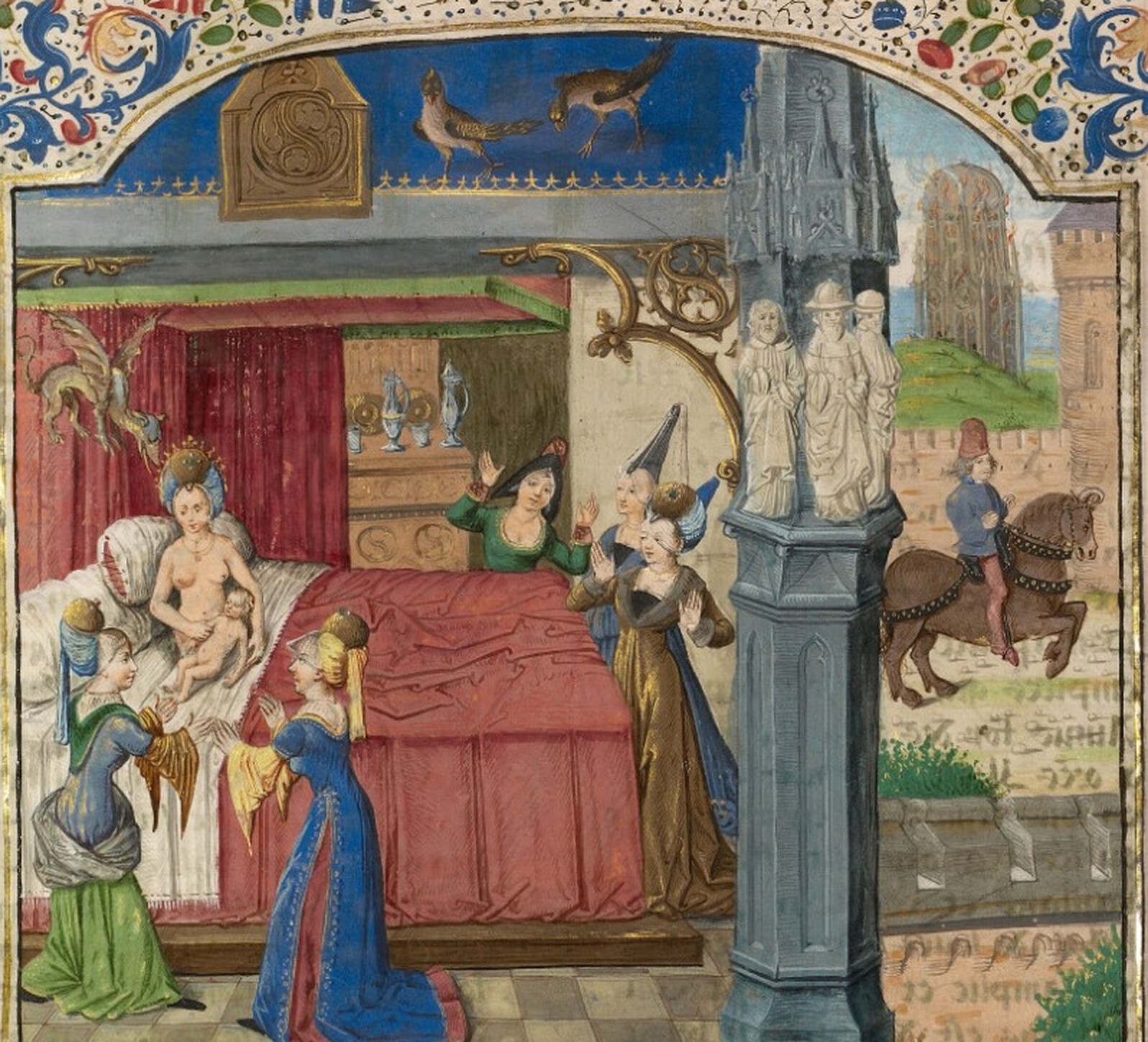
Find the newborn child, the surrounding women, the dragon, the two roosters and the burning building.
- What do the women’s gestures suggest about their response to the child?
- Which details appear ordinary and which appear symbolic?
- What makes you think these details carry meaning beyond what they literally show?
Context
The scene represents the birth of Alexander the Great. The two roosters stand for the two continents he ruled. The dragon refers to the story of his divine parentage. The burning building is the Temple of Diana at Ephesus, said to have burned on the day he was born and used here as a sign of his future rule in Asia.
Although the story is ancient, the artist pictured it through fifteenth-century Flemish clothing, architecture and visual culture.
In The Birth of Alexander, visual details carry meaning within a larger story. The dragon, roosters and burning building do more than describe what is visible: they communicate ideas about Alexander’s identity and future.
02 /Model
Watch one subject change
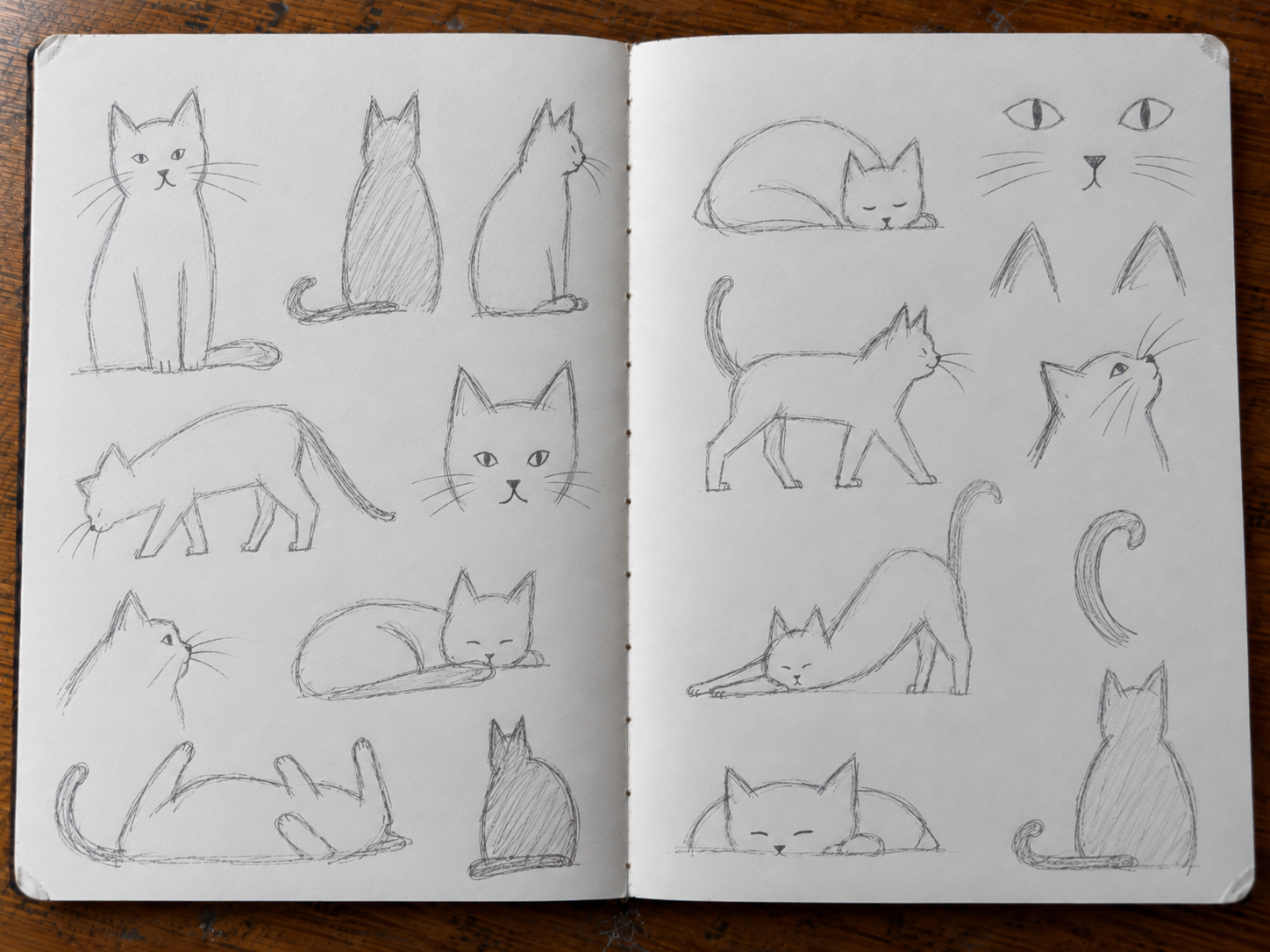
CAT VISUAL DIARY STUDY / MULTIPLE ATTEMPTS ACROSS ONE PAGE
Visual material: Studio work, 2026.
Look across the page
- What do you start to notice as the cat changes position?
- Are there shapes, lines or features that keep returning?
- Which ones catch your attention?
03 /Artist possibilities
A visual detail can carry meaning within a story. Artists build visual language through choices about line, shape, form, colour, scale, placement, repetition and variation. These choices can make a visual form recognisable and give it associations or symbolic meaning. When forms are placed in relation to figures, objects or events, they can also contribute to a visual narrative.
Trace the artist’s visual choices
Look closely at each artwork. Identify one visual feature the artist has emphasised: a line, repeated mark, shape, figure, word or symbol.
Notice what the artist does with it. Is it repeated, varied, enlarged, isolated, layered or placed in relation to other forms?
Then use the questions below to explain how those choices build meaning.
- Identify: What has the artist selected or returned to?
- Describe: How has it been repeated, changed or arranged?
- Interpret: What associations or meanings does it begin to carry?
- Connect: Does it function as an expressive mark, a recognisable symbol, part of a visual narrative, or several of these?
Mark: a visible trace made through an action or material.
Symbol: a form that carries an associated meaning.
Visual narrative: visual forms arranged to communicate or suggest a story, event or experience.
“The artist emphasises ____. They develop it through ____. This begins to suggest ____. I can see this in ____.”
04 /Make
Start with something you know
Choose something from your own life that matters to you.
It could be:
- an object you use often
- an animal
- a plant
- something connected to a person or memory
For example:
a key
a shoe
a cat’s ear or tail
a leaf
Draw it several times
As you draw, notice whether one part keeps attracting your attention.
It might be:
- a particular line
- an edge
- a curve
- a shape
- a small feature
Let that feature become clearer through repeated looking and drawing.
For now, stay close to what you notice.
KEEP IN YOUR VISUAL DIARY / Source drawing + first marks
05 /Select
Which part is worth carrying forward?
Look back across your drawings. Choose one line, shape or feature that still feels connected to your source. Draw it on its own a few times and see what remains important.
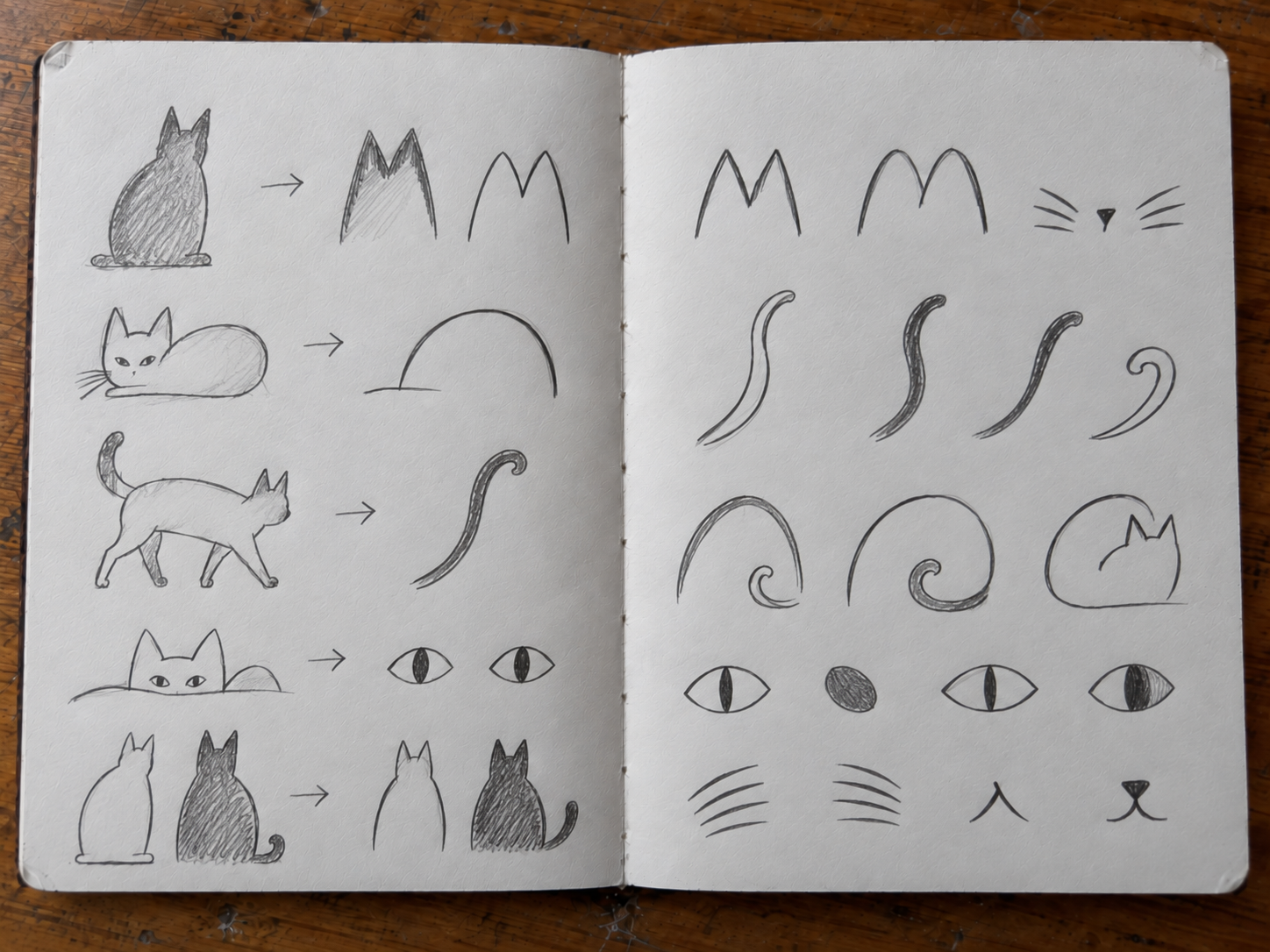
A FEATURE FROM THE CAT STUDY BEGINNING TO STAND ON ITS OWN
Visual material: Studio work, 2026.
I don't know what to choose
- Start with something you see often.
- Choose something connected to a person, place, memory or interest.
- Draw three possibilities quickly, then choose one.
Nothing stands out yet
- Draw the same thing again, slower.
- Look for a line or edge you have already drawn more than once.
I can't decide which to keep
- Circle two that still connect to your source.
- Choose the one you are most curious to test again.
06 /Choose one mark
Choose one mark worth taking further.
Peer critique
- NOTICE — What do you notice?
- EVIDENCE — What in the mark makes you say that?
- QUESTION — What are you curious about?
- POSSIBILITY — What could the artist test next?
More support
Which mark will you take into Lesson 2, and why?
Keep the response short. This mark is your starting point for Lesson 2.
Selected mark + one line reason
07 /Reflect
Look back across what you made.
- What became clearer as you worked?
- What are you still unsure about?
- What will you test next?
KEEP IN YOUR VISUAL DIARY / Three short responses
By the end of this lesson
- Source drawings
- First extracted marks
- One selected mark
- Three short reflections
References
Source note
Developed through studio practice, VCE Art Creative Practice curriculum guidance, disciplinary resources and established art education material. Instructional material and Studio studies on this page were developed for Learning by Design.
Curriculum + reading
Greenwood, D. (2023). Art creative practice: VCE units 1–4. Cambridge University Press & Assessment.
J. Paul Getty Museum. (n.d.). Symbols of a life. getty.edu ↗
National Gallery of Art. (n.d.). The elements of art: Line. nga.gov ↗
National Gallery of Art. (n.d.). Symbolism and place. [Title retained; source link to be verified manually.]
Victorian Curriculum and Assessment Authority. (2022). VCE Art Creative Practice study design 2023–2027. VCAA ↗
Artists + artworks
Basquiat, J.-M. (1982). Untitled (Crown). Estate of Jean-Michel Basquiat. View artwork ↗
Constant. (1949). Fauna. Stichting Constant. stichtingconstant.nl ↗
Kusama, Y. (1951). Infinity Nets. The Museum of Modern Art, New York. moma.org ↗
Master of the Jardin de vertueuse consolation and assistant. (about 1470–1475). The Birth of Alexander [Tempera colours, gold leaf, gold paint and ink on parchment]. The J. Paul Getty Museum. Getty collection ↗
Schendel, M. (1967). Untitled from Graphic objects (Objetos gráficos). The Museum of Modern Art, New York. moma.org ↗
Steinberg, S. (n.d.). Line drawing study, cat and guitarist [Drawing]. Saul Steinberg Foundation. Saul Steinberg Foundation ↗
Twombly, C. (1989). Untitled. Cy Twombly Foundation. cytwombly.org ↗
Studio material
CAT VISUAL DIARY STUDY / MULTIPLE ATTEMPTS ACROSS ONE PAGE. Studio response.
A FEATURE FROM THE CAT STUDY BEGINNING TO STAND ON ITS OWN. Studio response.