Studio Guide / Lesson 3 · Place + culture
From things to signs
Learning outcomeTrace how a recognisable form becomes a sign, and read Miró's visual language through place and context.
What students need to know
Key learning points
- Recognisable forms can be simplified into signs while keeping meaning.
- Artists transform observations into a symbolic visual language.
- Place and context change how an artwork and its signs are interpreted.
- Interpretation becomes stronger when artwork evidence is connected to context.
Key terms
- sign
- simplification
- Personal Lens
- Cultural Lens
- context
01 /Bring a mark forward
Bring one form forward
Then use:
Keep its meaning in mind.
Return to the mark family you developed in Lesson 2. Choose one form that still carries something important from your original source.
Take that form further.
See how far it can move from the original while still keeping some connection to where it began.
Keep in your visual diaryOne form carried forward + first sign tests
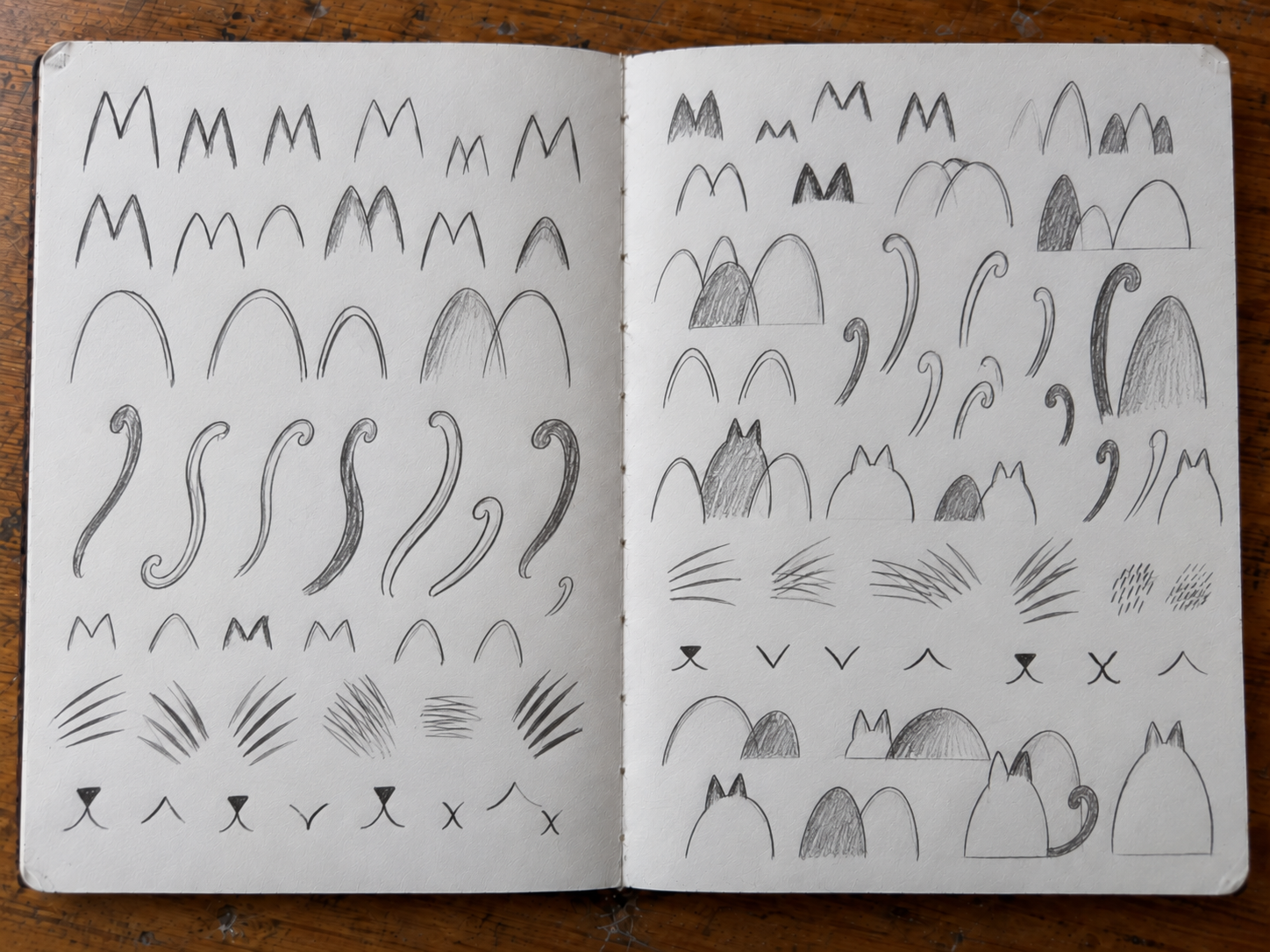
Visual material: Studio work, 2026.
02 /Encounter the artwork
Look closely
What can you recognise?
What has become a sign?
- What has Miró simplified or changed?
Open the artwork through the museum link and keep it beside you while you look. The artwork is viewed through its authorised museum record.
Keep in your visual diaryFirst artwork response
03 /From things to signs
Miró filled the painting with signs drawn from the world around him. A hunter, animals, plants and details of rural life became simplified shapes, lines and symbols. Some remain recognisable. Others move further away from what they began as.
Do this
Choose one form in the artwork. Trace the movement from something recognisable toward a simplified sign.
- What has been kept?
- What has changed?
Keep in your visual diaryOne observed transformation
04 /Place changes what you see
Context / Montroig
Miró had a strong connection with his family’s farm at Montroig in Catalonia. The Hunter brings together details connected with that place and with his own life. At the same time, Miró was moving between Montroig and Paris, where new ideas in modern art were changing the way artists represented the world.
What comes from Miró’s own experience?
Look for signs connected with his life and the places he knew.
What changes when place and time come into the picture?
- What might come from the landscape and culture around Montroig?
- What might come from the ideas Miró encountered in Paris?
Look again
What becomes clearer now?
Keep in your visual diaryContext + interpretation note
05 /Reflect
Look back across what you made and what you noticed in Miró’s work.
- What stayed connected to where your mark began?
- What changed as it moved towards a sign?
- What became clearer when you added context to Miró’s work?
KEEP IN YOUR VISUAL DIARY / Three short responses
By the end of this lesson
- One form carried forward + sign tests
- First artwork response
- One observed transformation
- Context + interpretation note
- Three short reflections
References
Source note
Developed through studio practice, VCE Art Creative Practice curriculum guidance, museum collection material and art education resources. Studio studies on this page were developed for Learning by Design.
Curriculum + reading
Victorian Curriculum and Assessment Authority. (2022). VCE Art Creative Practice study design 2023–2027. VCAA ↗
Greenwood, D. (2023). Art creative practice: VCE units 1–4. Cambridge University Press & Assessment.
Solomon R. Guggenheim Museum. (n.d.). Spanish painting from El Greco to Picasso: Time, truth, and history: A guide to the exhibition for teachers. guggenheim.org ↗
Artists + artworks
Miró, J. (1923–1924). The Hunter (Catalan Landscape) [Oil on canvas]. The Museum of Modern Art, New York. moma.org ↗
Studio material
SELECTED FORMS BEGINNING TO RECUR, COMBINE AND SIT BESIDE ONE ANOTHER. Visual material: Studio work, 2026.