Interpret + develop
Students interpret how form carries meaning, then develop one of their own marks into an intentional visual response.
01 /
Overview
- Learning
- Interpret how visual choices, context and association contribute to meaning, then use this understanding to develop a selected mark into a visual response.
- Making
- Quick check → look + interpret → return → develop → visual response → reflect
- Evidence
- First response, context note and revised interpretation → selected mark → visual language studies → developed visual response → reflection
02 /
Prepare
- Materials
- Visual diaries with Lesson 01 marks, graphite, ink, one brush, scrap stock.
- Room
- Space to lay studies out side by side so development can be compared.
- Artwork
- Louise Bourgeois, Spider, ready to project from the presentation. Show it before giving the artist’s association.
- Presentation
- Open the Lesson 2 presentation before class.
- Studio support
- Studio Guide / From mark to visual response →
03 /
Teach
Retrieve → Interpret → Context → Return → Develop → Respond → Reflect
- Retrieve
Short retrieval on visual language and the marks made in Lesson 01. Keep it brief and spoken.
OPEN / RETRIEVE →- Interpret
Look at Louise Bourgeois’s Spider. Take a first response, then read the work through the Structural Lens — scale, material, form, structure.
OPEN / INTERPRET →- Context
Introduce the artist’s stated association, then use the Personal Lens. Students revise their interpretation and note what changed and why.
OPEN / CONTEXT →- Return
Students return to their own marks and select one with potential to carry association.
OPEN / RETURN →- Develop
Develop the selected mark through repetition, spacing, scale, connection, overlap and composition. Keep studies visible so students can compare what each change does.
OPEN / DEVELOP →- Respond
Students resolve the studies into one intentional visual response built from their own marks, not a new picture.
OPEN / RESPOND →- Reflect
Written reflection: what the response carries, and which decision made it carry that.
OPEN / REFLECT →
04 /
Questions
- Describes but does not interpret
- You have told me what is there. What does it make you think of, and what makes you think it?
- Confuses Personal and Structural Lens
- Is that something you can see in the work, or something it brings up for you?
- Meaning asserted without evidence
- Point to the part of the work that carries that.
- Context not connected to interpretation
- Now that you know what the artist has said, what would you change in your first response?
- Returns to making without changing anything
- What is the one thing you will change this time? Make both and keep them together.
- Response becomes illustrative
- Which of your own marks is this built from? Show me where it is in the response.
- Cannot explain a development choice
- What did that decision do to the work? What would happen if you undid it?
05 /
Support
- 1 / Brief cue
- One short cue while the student keeps working. “Say what you can see first, then what it suggests.”
- 2 / Structured choice
- Offer two or three development options — repeat, change scale, change density. The student chooses. Interpretive Lenses →
- 3 / Model or direct guidance
- Interpret one work aloud beside the student, naming the evidence, then hand the looking back. Thinking support →
06 /
Assess
- Teacher looks for
- reads visual evidence before asserting meaning
- distinguishes Structural and Personal Lens
- revises an interpretation once context is known
- selects one mark and develops it deliberately
- explains why a development decision matters
- Evidence produced
- first response, context note and revised interpretation
- selected mark
- visual language studies
- developed visual response
- written reflection
07 /
Resources
- Class presentation
- Lesson 2 / From mark to visual language →
- Studio Guide
- From mark to visual response →
- Interpretive Lenses
- Structural · Personal · Cultural →
- Thinking support
- Creative Thinking Toolkit →
08 /
Visual references
Visual material used to interpret how association and context contribute to meaning. External artworks are source-linked only; they are not reproduced here.
09 /
Worked example
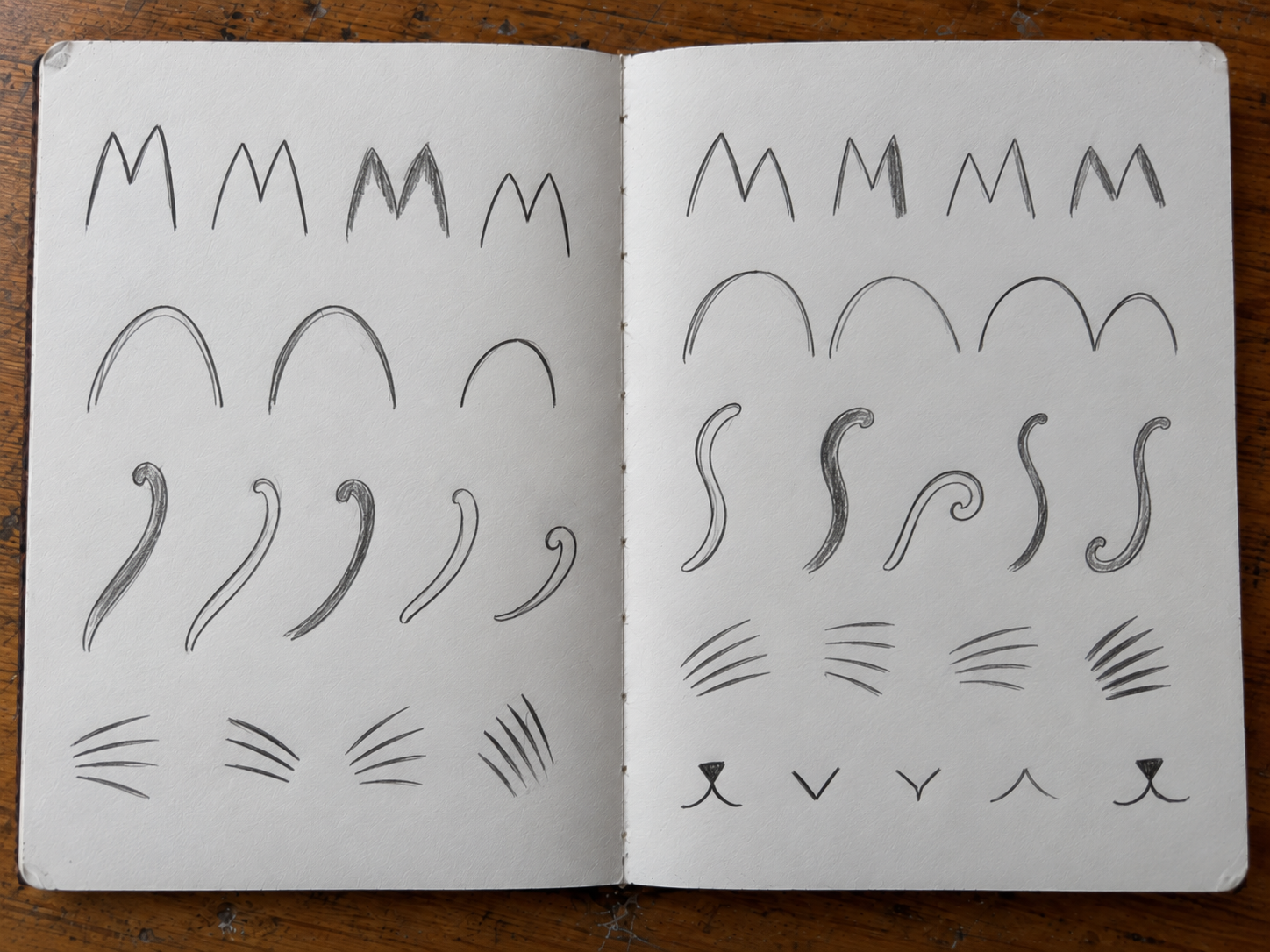
Selected mark → Variation → Developing visual language
Selected mark → variation
Visual material: Studio work, 2026.View large ↗Download ↓