From source to mark
Students develop a mark through close observation of something familiar and select one form to carry forward.
01 /
Overview
- Learning
- Develop a mark through close observation and select one form to carry forward.
- Making
- Source → observation → feature → first mark → selection
- Evidence
- First-looking response → source drawing → selected feature → first marks → selection and reflection
02 /
Prepare
- Materials
- Graphite, ink, one brush, scrap stock, visual diary.
- Room
- Set out materials for close observational drawing before class.
- Visual references
- Contrasting visual languages ready to show. 08 / Visual references →
- Worked example
- Repeated observation → selected feature → first mark. 09 / Worked example →
- Studio support
- 09 / Mark making →
03 /
Teach
Look → Observe → Identify a feature → Develop a first mark → Select → Critique → Reflect
- Look
Begin with The Birth of Alexander. Ask students to look before contextual information is provided. Prompt direct observation first, then introduce context and ask what changes in their reading.
- Model
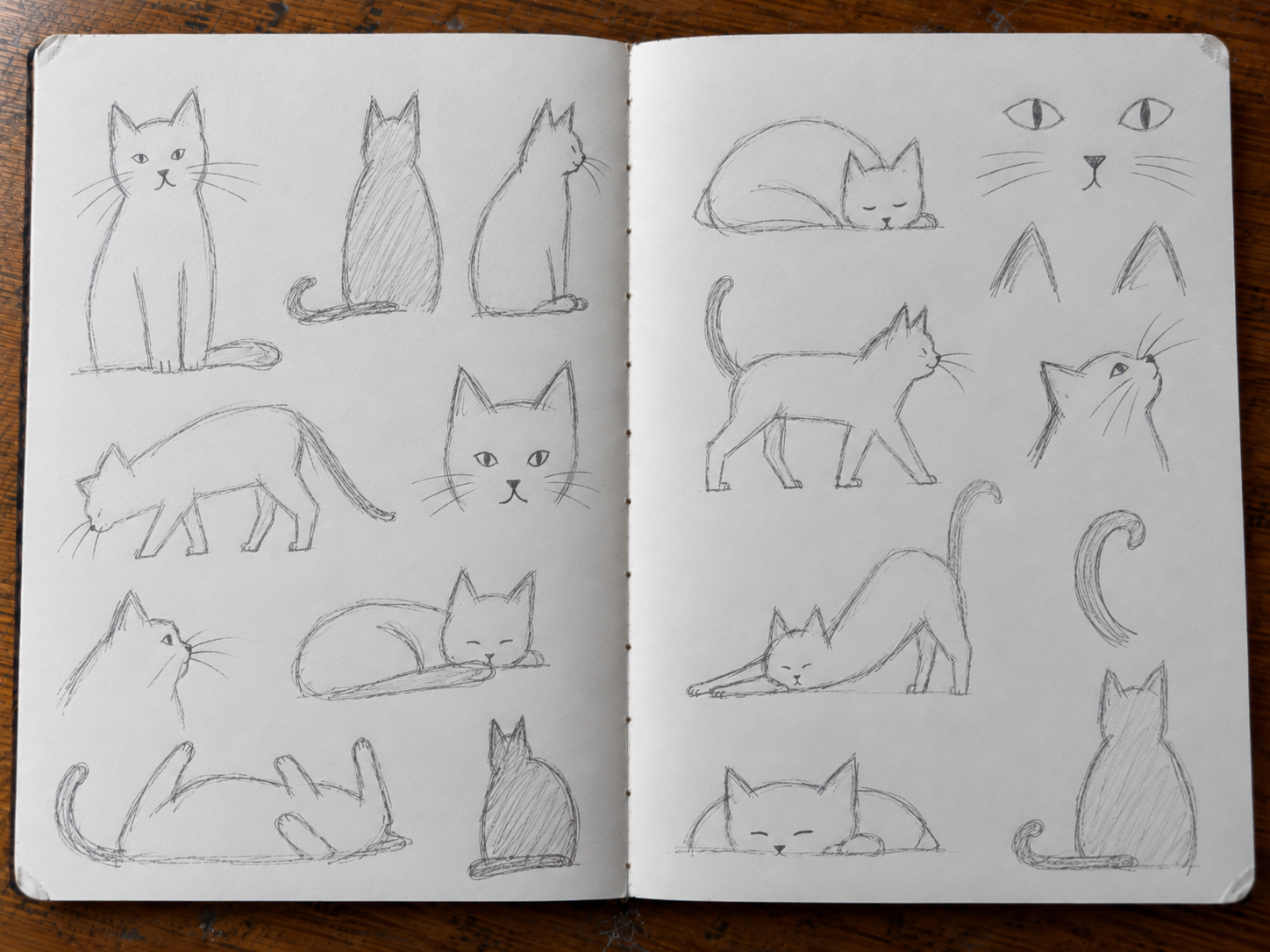
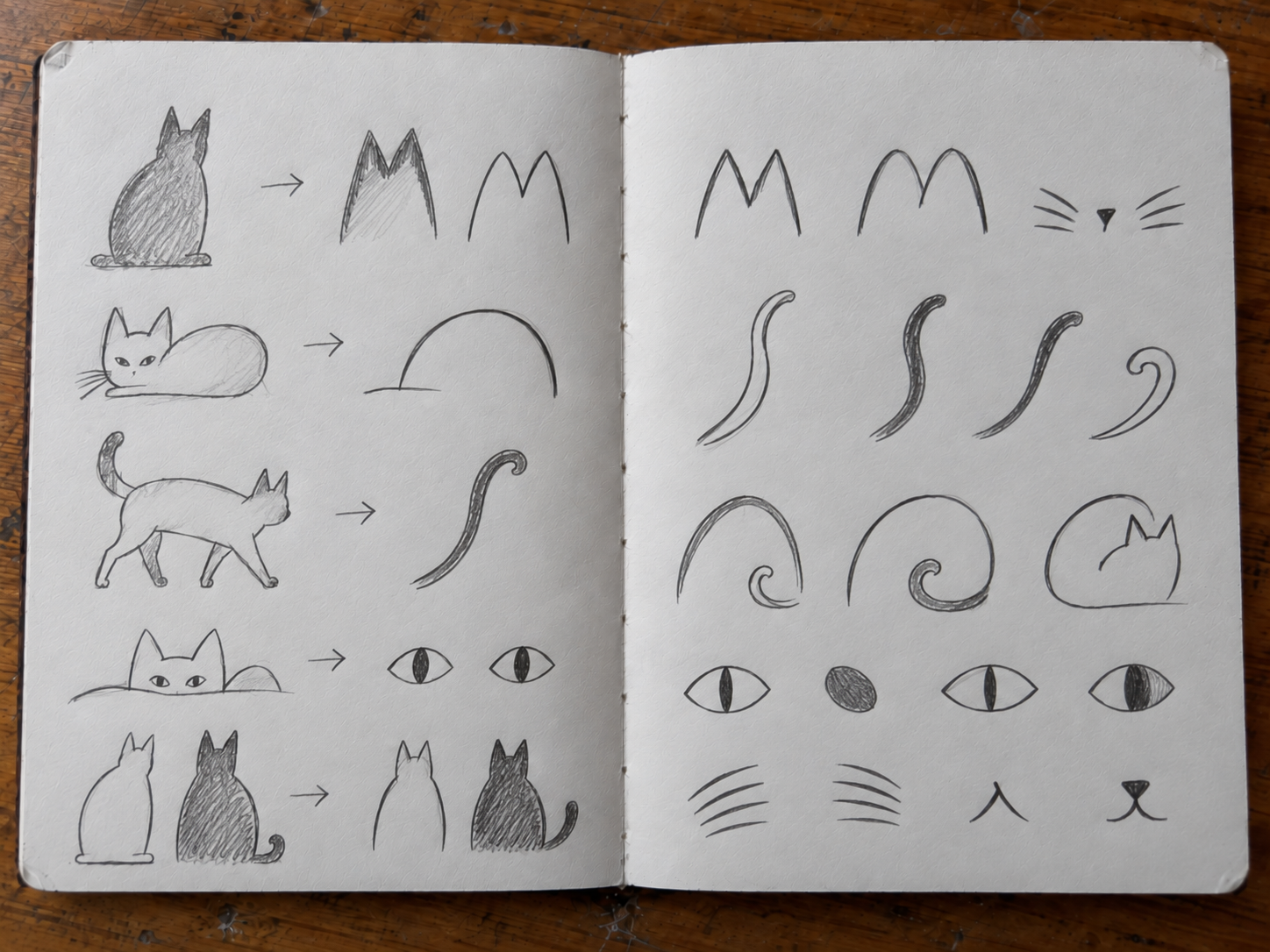
Use the cat visual-diary example to model repeated observation → noticed feature → first mark. Show how close looking makes recurring lines, shapes and features noticeable.
- Artist possibilities
Use the artists and artworks in the Student Studio Guide. Explain that visual language may use recognisable marks, words, figures and symbols. Students are not required to make their source unrecognisable.
- Make
Students select something familiar, personally meaningful or recurring and record it through close observation. They identify one line, shape or feature that continues to matter.
- Select
Students isolate and develop one feature into a first mark while keeping a meaningful connection to the source.
- Critique
Use the Critique + Feedback structure to discuss what is visible, what the mark carries from the source and what may be worth developing.
- Reflect
Students record what they selected, why they selected it and what they may carry into Lesson 02.
04 /
Questions
- Looking moves too quickly
- What can you point to before you explain what it might mean?
- Observation and interpretation merge
- What do you see? What does that visible detail make you think?
- Cannot choose a source
- What is something familiar, meaningful or recurring in your life?
- Nothing stands out
- Which line, shape or feature has appeared more than once as you looked and drew?
- Feature feels arbitrary
- Which feature still matters when you think about the source?
- Cannot make a selection
- Which first mark keeps the clearest connection to your source? What makes you say that?
- Connection is unclear
- What does this mark carry from the source? Point to the evidence in both.
- Responding to feedback
- What did your peer notice? What might be worth carrying into Lesson 02?
05 /
Support
- 1 / Brief cue
- Give one short cue while the student keeps looking. “Point to one feature that keeps returning.”
- 2 / Structured choice
- Ask the student to circle two features that still connect to the source, then choose one to draw on its own.
- 3 / Model or direct guidance
- Model the move from repeated observation to a noticed feature and first mark. Name what you can see, then ask the student to identify the equivalent move in their own source.
06 /
Assess
- Teacher looks for
- direct observation before interpretation
- a source that is familiar, meaningful or recurring
- identification of a visual feature
- development of that feature into a first mark
- a deliberate selection
- an explanation connecting the mark to its source
- participation in critique and reflection
- Evidence produced
- first-looking response
- source observation or drawing
- selected feature
- first marks
- selected mark
- critique or reflection
- After the lesson
Read the student reflections alongside their visual diary work, your questioning and observations from the lesson.
Look for:
- what students can now explain or do
- common points of uncertainty
- students who still need modelling or a worked example
- students ready to work with greater independence
Use this evidence when planning the next lesson. You might:
- revisit one idea
- model something again
- provide a scaffold to a small group
- adjust pacing
- change a resource or example
- reduce support where students are ready
07 /
Resources
- Visual references
- 08 / Visual references →
- Worked example
- 09 / Worked example →
- Class presentation
- Week 1 / Mark + meaning →
- Studio Building Block
- 09 / Mark making →
- Studio Guide
- Mark making →
08 /
Visual references
Visual material used to introduce contrasting approaches to mark and visual language. External artworks are source-linked only; they are not reproduced here.
09 /
Worked example
Repeated observation → Selected feature → First mark
Repeated observation
Visual material: Studio work, 2026.View large ↗Download ↓
Selected feature → first mark
Visual material: Studio work, 2026.View large ↗Download ↓