CRITIQUE + FEEDBACK
A focused discussion about work in progress. Look closely, say what you notice, listen, then decide what to test next.
01 / BEFORE
Bring work in progress and identify what you want feedback on.
Ask:
- What are you trying to explore or communicate?
- What decisions have you already made?
- What part of the work are you unsure about?
- What would you like feedback on?
Prepare 1–2 questions

02 / LOOK
Look before judging.
Ask:
- What do you notice first? Where does your eye go?
- What can you actually see? Look at the marks, materials, surface, repetition and space.
- How is visual language being used?
- What meanings or messages might be communicated?

03 / TALK
NOTICE EVIDENCE QUESTION POSSIBILITY
- NOTICE
- Describe what you can see, hear or experience.
- EVIDENCE
- Point to the part of the artwork that supports what you are saying.
- QUESTION
- Ask about a decision, intention or next step.
- POSSIBILITY
- Suggest something the artist could test.
Example
- NOTICE
- The repeated marks make this area feel dense.
- EVIDENCE
- They become smaller and closer together toward the centre.
- QUESTION
- Do you want that area to become the main focus?
- POSSIBILITY
- You could test what happens if the spacing changes elsewhere.
SENTENCE STARTERS
Notice
- I notice…
- My attention goes to…
- I keep looking at…
Evidence
- I can see this in…
- The part that shows this is…
- This is strongest where…
Interpret
- This could suggest…
- I think this communicates…
- The material, colour or scale changes the way I read it because…
Question
- What made you decide to…?
- What are you trying to communicate here?
- What would happen if…?
Possibility
- You could test…
- It may be worth trying…
- Another way to explore this could be…
Respond to feedback
- The feedback I want to test is…
- I want to keep…
- I am reconsidering…
- My next step is…
04 / LISTEN
When receiving feedback:
- listen before responding
- write down useful observations
- notice where feedback agrees or conflicts
- ask follow up questions
- decide which feedback is relevant to your intention
Use the feedback that helps the work. You do not need to act on every suggestion.
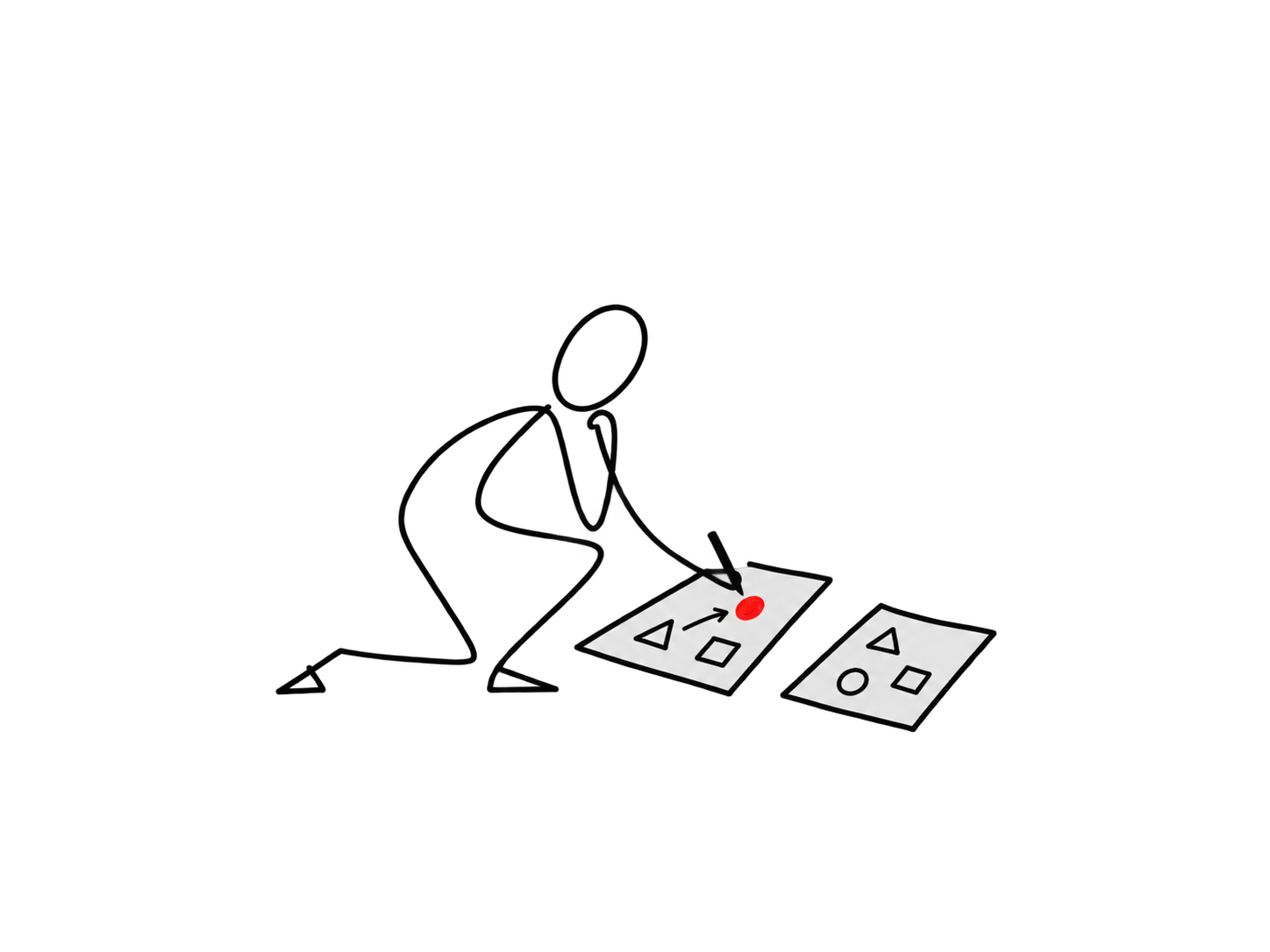
05 / AFTER
Ask:
- What feedback changed how you see the work?
- What will you test next?
- What will you change, and what will you keep?
- What is your next step?
WORDS FOR CRITIQUE
- observe
- describe
- analyse
- interpret
- compare
- evaluate
- question
- justify
- refine
- reflect
Source + Studio
Source note
Developed from VCE Art Creative Practice curriculum guidance, studio teaching practice and resources on critique and feedback. The instructional structure and student prompts on this page are original Learning by Design material.
Curriculum + reading
Greenwood, D. (2023). Art creative practice: VCE units 1–4. Cambridge University Press & Assessment.
Victorian Curriculum and Assessment Authority. (2022). VCE Art Creative Practice study design 2023–2027. vcaa.vic.edu.au ↗
Victorian Curriculum and Assessment Authority. (2026). VCE Art creative practice: Administrative information for school-based assessment 2026.
Studio material
CRITIQUE + FEEDBACK / LOOK.
CRITIQUE + FEEDBACK / TALK + LISTEN.
CRITIQUE + FEEDBACK / ACT ON FEEDBACK.
Visual material: Studio work, 2026.