Studio Guide / Lesson 8 · History + position
Evidence + development
Learning outcomeDistinguish observation from source based knowledge, then develop your own work with position and responsibility in mind.
What students need to know
Key learning points
- Direct observation identifies visible qualities; sources can provide specific material, contextual, historical and cultural knowledge.
- Artist voice and authoritative sources help establish where information comes from.
- Cultural position can shape the stories artists tell, the decisions they make and the responsibilities they hold.
- Collaborative practice can involve shared inquiry while artists retain different positions, knowledge and responsibilities.
- Students can carry this awareness into their own practice by recognising what comes from their own experience and what they have learned from other people or sources.
Key terms
- cultural meaning
- protocols
- position
- representation
- collaboration
01 /What needs a source?
Look first. Then check.
Begin with a visual test. Study the object before you open the museum record. Keep what you can observe separate from what a source allows you to know.
What you can observe
- Form
- Colour
- Composition
- Visible surface qualities
- Relative scale
- Visible relationships in the work
What needs a source
- Precise materials
- Dimensions
- Date
- Cultural meaning
- Specific histories
- Relationships
- Protocols
- Knowledge held by the artist or community
Begin with what you can observe directly. Use artist voice, community knowledge or another authoritative source when your interpretation depends on cultural meaning, history, relationships or protocols.
Look first
What can you know from looking?
- What can you describe directly?
- What do the materials appear to be?
- What can you notice about form, colour, surface and construction?
- What can you not know from looking alone?
Now use the source
The museum record identifies the object and provides information that cannot be established through observation alone.
- What did the source add?
- Which of your first observations can you keep?
- Which ideas would have been assumptions without the source?
Quick check
What can you know from looking?
Sort each example into Can observe directly or Needs a source. Then check whether your choice is a description or a precise factual, historical or cultural claim.
- colour
- date
- visible shape
- precise material
- surface quality
- cultural meaning
- composition
- historical context
- artist or maker
- visible relationship between forms
Reveal the distinction
Can observe directly
Colour · visible shape · surface quality · composition · visible relationship between forms
Needs a source
Date · precise material · cultural meaning · historical context · artist or maker
Support what you say
Keep two source-backed observations:
- one about position or representation
- one about collaborative practice, making or presenting
Keep in your visual diaryTwo source-backed observations
Bridge back to megan evans
A museum record can establish what an object is and where it comes from. It cannot, by itself, explain what megan evans does with Victorian objects or the position she brings to colonial history. For that, use Evans’s own account and the project sources.
- What is each artist able to speak about, and on what basis?
- What responsibility comes with the story each artist chooses to tell?
Read / artist position + collaboration
megan evans / Owning her Colonial Past
In this interview Evans talks about her position as a non-Indigenous artist, the responsibility that comes with it, working with Peter Waples-Crowe, why they made separate artworks while collaborating on the ideas, and why she intervenes in Victorian objects.
- What does Evans say about her own position?
- How did cultural position affect the way the artists collaborated?
- How does her choice of existing Victorian objects contribute to meaning?
- What information here could support one of your claims about Squatters and Savages?
Keep in your visual diaryOne source-backed practice observation
Deeper research
Exhibition catalogue / Squatters and Savages ↗02 /Develop
Return to your mark.
Bring forward the mark and position note from Lesson 7. Develop the mark once more with your position in mind. Keep the earlier versions visible so the development can be read.
- What are you drawing from?
- What relationship do you have to it?
- Which decisions belong to your own experience?
- What have you learned from another person or source?
- What changes in the work when you make those relationships visible?
Keep in your visual diaryDeveloped mark + position
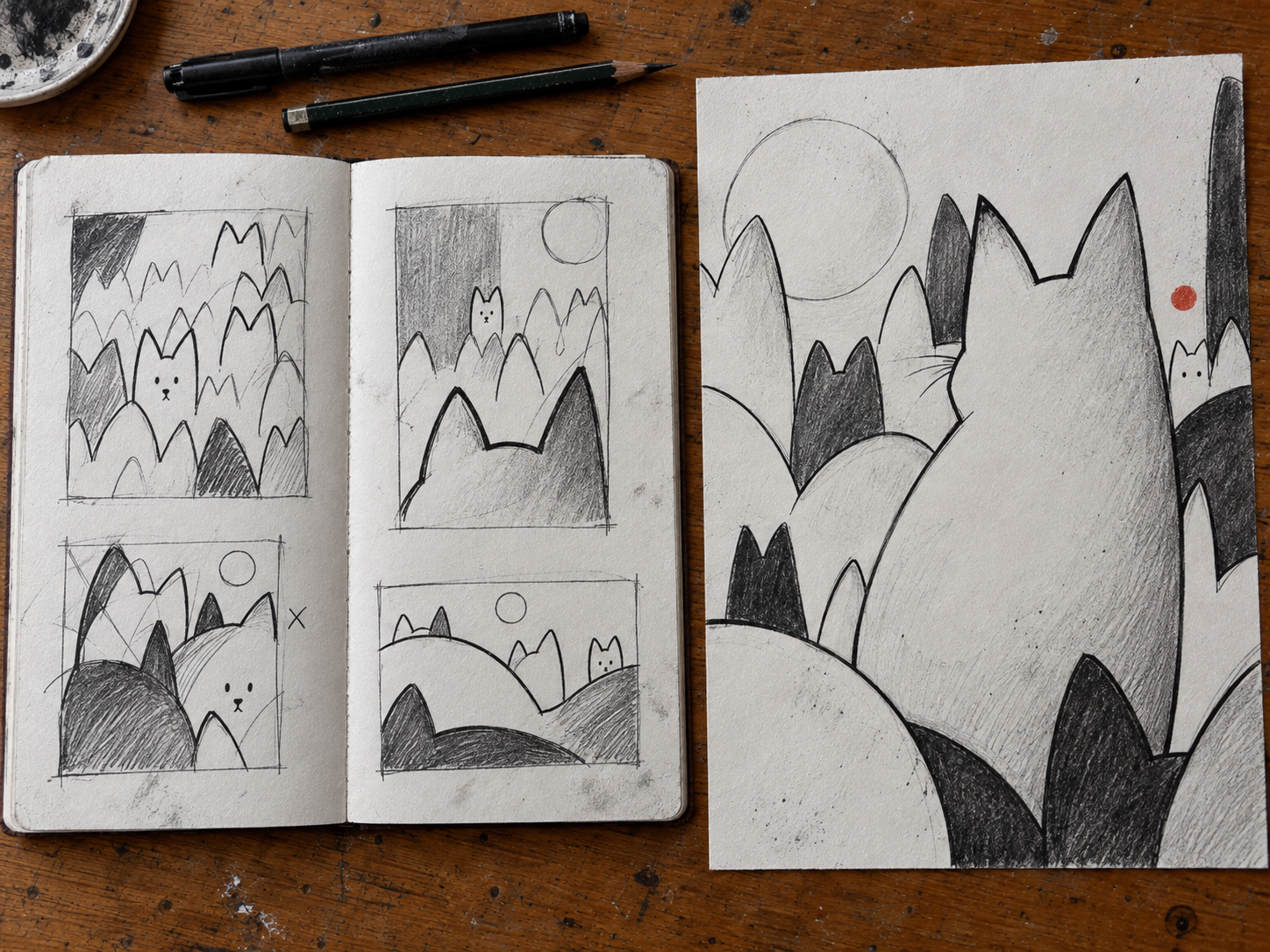
Visual material: Studio work, 2026.
03 /Look back
What changed?
Before
Earlier mark
Now
Developed visual language + position
Look back at the project and your own work.
- What changed when you considered who was speaking as well as what was being said?
- What became clearer when you considered position?
- What have you learned about the difference between what you can observe and what you need a source to know?
- What responsibility will you carry into your own practice?
Keep one source-backed observation about position or representation for the comparative report.
Keep in your visual diaryBefore + after source-backed reflection
By the end of this lesson
- Two source-backed observations
- One source-backed observation about artist practice
- A developed mark + position
- A before + after source-backed reflection
References
Source note
This Studio Guide was developed for Learning by Design using VCE Art Creative Practice curriculum guidance, artist and exhibition material relating to Peter Waples-Crowe and megan evans, Creative Australia First Nations cultural protocols, museum collection material and original Studio material. Linked Studio Building Blocks, Creative Thinking Toolkit and Interpretive Lenses pages carry their own source notes and references.
Curriculum + reading
Art World Women. (n.d.). Megan Evans, owning her colonial past. Art World Women ↗
Creative Australia. (n.d.). Protocols for using First Nations cultural and intellectual property in the arts. Creative Australia ↗
Greenwood, D. (2023). Art creative practice: VCE units 1–4. Cambridge University Press & Assessment.
Victorian Curriculum and Assessment Authority. (n.d.). VCE Art Creative Practice: Teaching and learning. VCAA Teaching and learning ↗
Victorian Curriculum and Assessment Authority. (2022). VCE Art Creative Practice study design 2023–2027. VCAA Art Creative Practice ↗
Museum + gallery sources
The Metropolitan Museum of Art. (mid-19th century). Mourning jewelry [Gold, glass and hair]. Object 1993.423.16. Public Domain / Open Access. The Met object record ↗
Waples-Crowe, P., & evans, m. (2017). Squatters and Savages [Exhibition catalogue]. Art Gallery of Ballarat. Exhibition catalogue ↗
Studio material
A DEVELOPING VISUAL LANGUAGE CARRIED INTO COMPOSITION AND A MORE RESOLVED VISUAL RESPONSE. Visual material: Studio work, 2026.