15 / The Studio · Reflect
REFLECTION + EVALUATION
Looking at the work to decide what comes next.
Reflection gives you a chance to look back at what you have done before making the next decision. Use the work itself as evidence. Look at earlier stages, experiments, photographs, notes and feedback. Then decide what is working and what still needs attention.
TODAY’S FOCUS
Look at the evidence before you decide.
Look
LOOK BACK
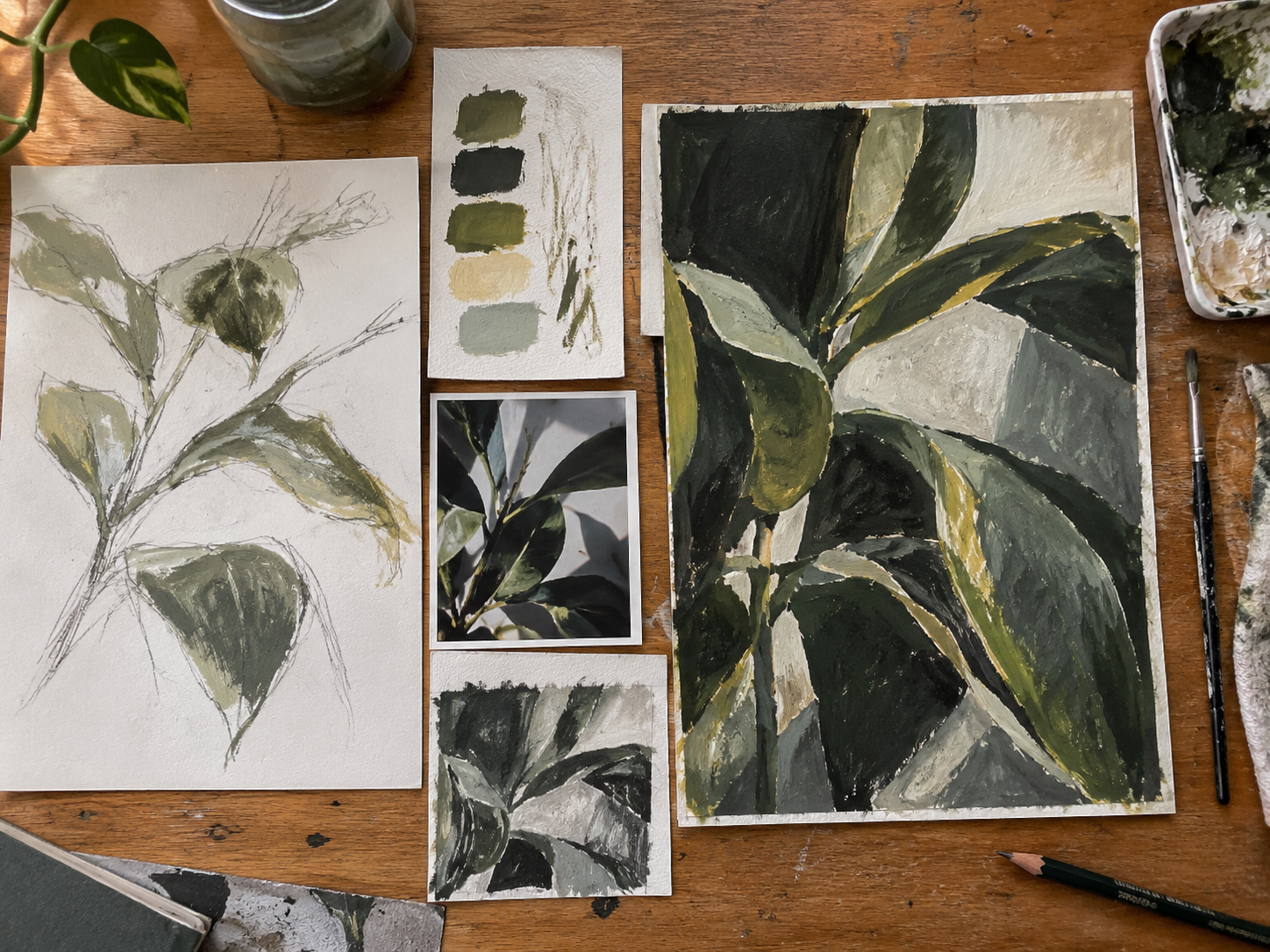
Studio process.
- What has changed since the earlier stage?
- Which decision made the biggest difference?
- What can you point to in the work that supports that judgement?
- What still needs attention?
Understand
REFLECTION AND EVALUATION
Reflection looks back at what happened and why. Evaluation makes a judgement about how well something is working. That judgement needs evidence.
The evidence might be visible in the work, an earlier version, a material test, a photograph, a note, feedback or something you noticed while making.
The point is not to describe everything you did. Focus on the decisions that matter.
Make
LOOK AT WHAT CHANGED
Put your current work beside an earlier stage, test or photograph. Look at both before writing anything.
Find one decision that helped the work. What changed because of that decision?
Now find one part that still needs attention. Point to the evidence.
Record what you want to keep, change or investigate next.
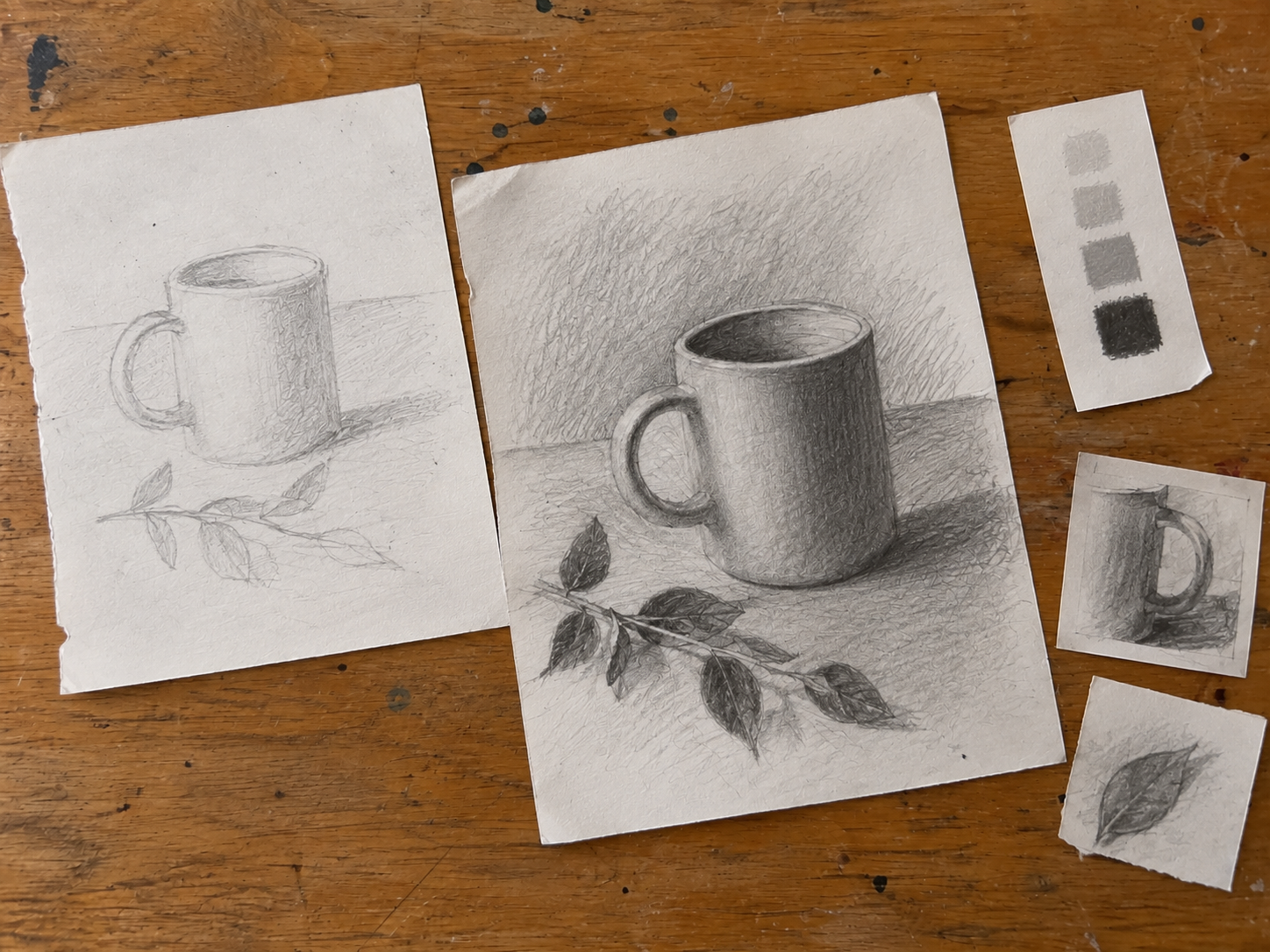
Evidence
WHAT CAN YOU USE AS EVIDENCE?
THE WORK. Look closely at what is actually there.
EARLIER STAGES. Compare the current work with where it began.
TESTS. Return to material, technique, composition or visual language studies.
DOCUMENTATION. Use photographs, drawings and notes to recover stages that are no longer visible.
FEEDBACK. Consider what another person noticed, then decide whether it is useful.
In practice
Reflection happens throughout creative practice, not only when a work is finished. Artists and designers return to earlier stages, compare decisions, consider feedback and judge whether the work is doing what they intend.
Documentation gives you something concrete to return to. You do not need to record every decision. Record the ones that help explain what changed and why.
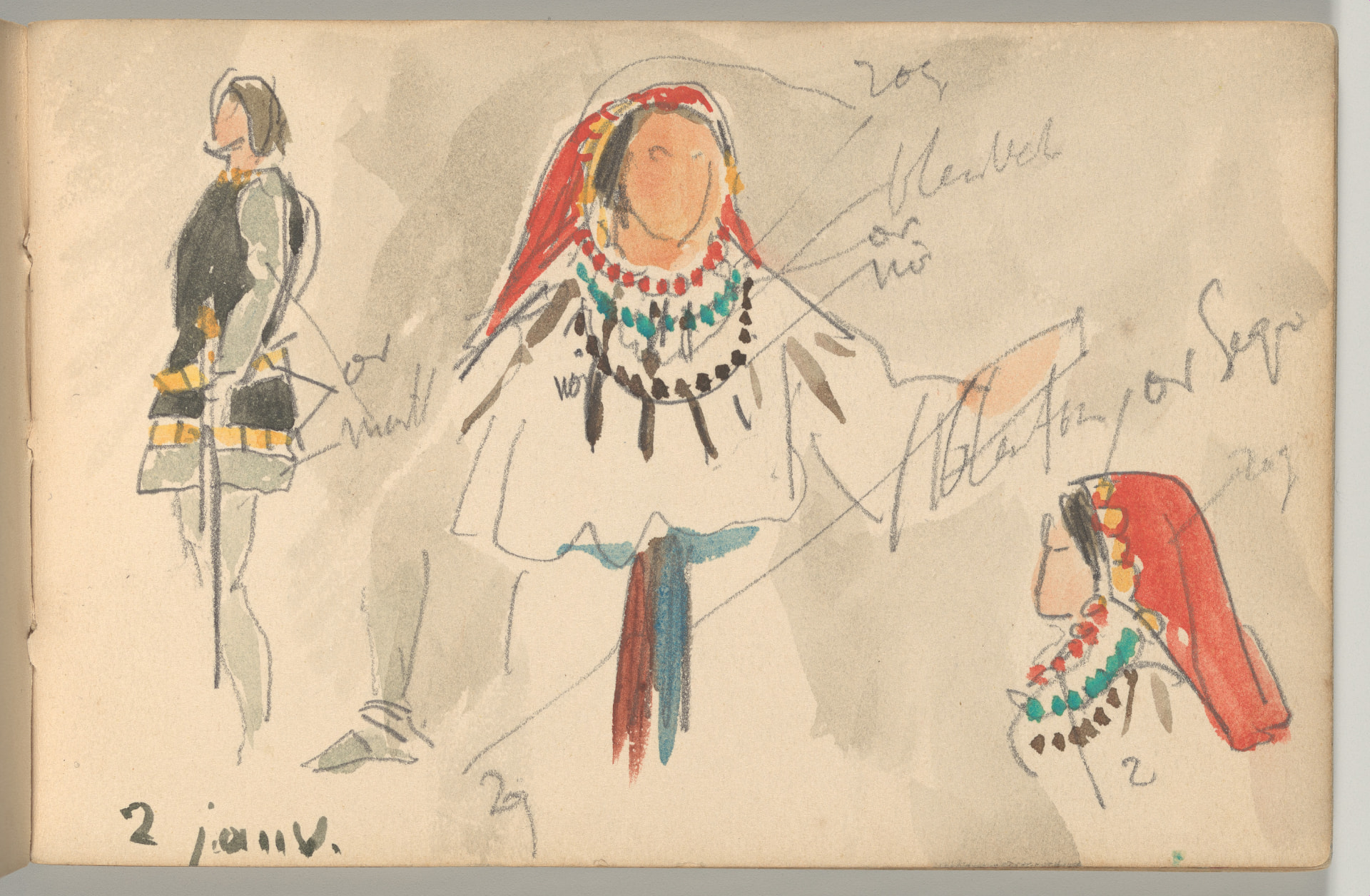
Eugène Delacroix used sketchbooks to hold onto things he noticed while looking. In his Othello Sketchbook, quick drawings and notes about colour gave him something to return to and develop later.
In your practice
Look back at your visual responses, experiments and documentation. Consider how your ideas, materials and visual language are working together. Use evidence from the work when you explain what you want to develop next.
Use your Visual Arts Journal to compare stages of your art making. Record important decisions, feedback and changes. Evaluate what is working and what you need to develop further.
Evaluate design decisions against the communication need, audience or user and design criteria. Use testing and feedback as evidence when deciding what should change.
Creative thinking
What has changed?
What is working, and what is your evidence?
What needs your attention next?
Tools to help you notice, describe, question, develop and document your work.
CRITIQUE + FEEDBACK →Source note
Developed through studio practice, curriculum guidance and established art and design theory. All instructional material on this page is original.
Curriculum + reading
Greenwood, D. (2023). Art creative practice: VCE units 1–4. Cambridge University Press & Assessment.
Guthrie, K. (2017). Nelson visual communication design: VCE units 1–4 (4th ed.). Cengage Learning Australia.
Victorian Curriculum and Assessment Authority. (2022). VCE Art Creative Practice study design 2023–2027. vcaa.vic.edu.au ↗
Victorian Curriculum and Assessment Authority. (2022). VCE Art Making and Exhibiting study design 2023–2027. vcaa.vic.edu.au ↗
Victorian Curriculum and Assessment Authority. (2023). VCE Visual Communication Design study design 2024–2028. vcaa.vic.edu.au ↗
Artists + artworks
Delacroix, E. (1855). Othello sketchbook. The Metropolitan Museum of Art, New York. metmuseum.org ↗
Studio material
REFLECTION + EVALUATION.. Visual material: Studio work, 2026.