14 / The Studio · Experiment
EXPERIMENTATION + REFINEMENT
Trying changes to see what works.
Refinement means making deliberate changes and checking what those changes do. You might change the scale, composition, colour, material, technique, format or another part of the visual language. Comparing versions can help you decide what to keep and what still needs work.
TODAY’S FOCUS
Change one thing. Compare the result.
Look
WHERE CAN YOU SEE THE CHANGES?
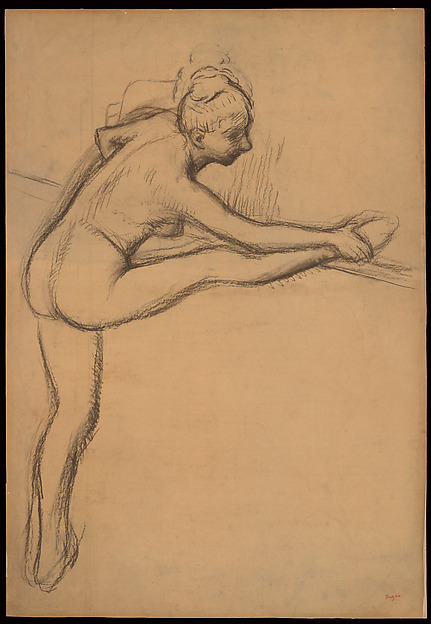
- Where can you see that Degas changed the drawing?
- What seems to have been adjusted?
- Look at the repeated lines around the figure. What do they show you about the drawing process?
Degas made several versions of this figure. In this drawing, earlier positions are still visible. The repeated lines show where he adjusted the form as he worked.
Understand
REFINEMENT COMES FROM COMPARISON
Making another version gives you something to compare. Change one part and look at the difference it makes. A change to scale, placement, colour, material, technique or format can affect the whole work. Compare the versions before deciding what to keep.
Make
TRY A CHANGE
Choose one part of something you are already working on. Make two or three quick variations. Change one thing each time so you can see what difference it makes.
You could change:
SCALE
PLACEMENT
COLOUR
CROP
LINE WEIGHT
MATERIAL
TECHNIQUE
SPACING
FORMAT
Put the versions beside each other. Which change helps the work do what you want it to do?
Use what you notice in the next version.
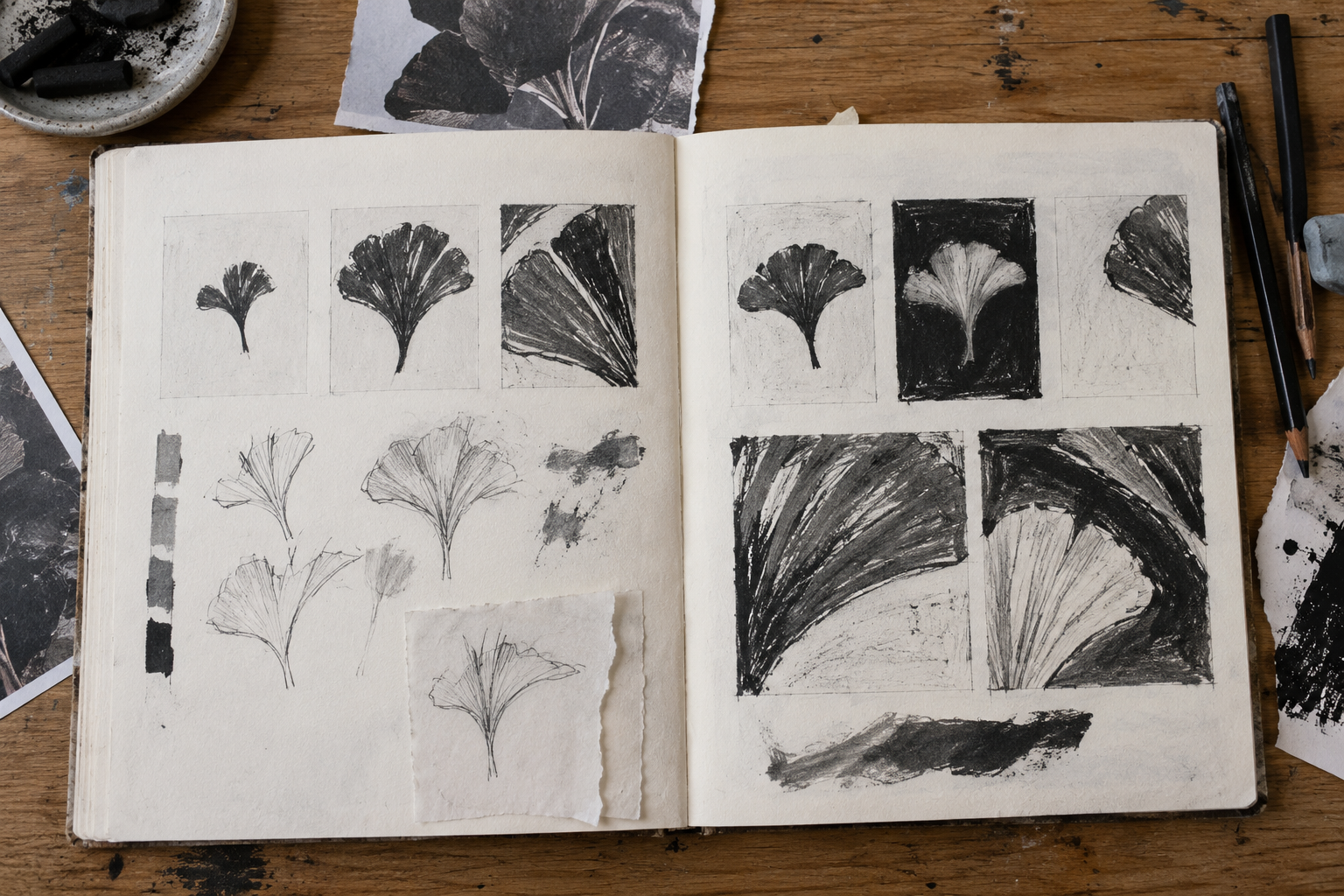
Visual material: Studio work, 2026.
Look again
Put the versions beside each other. What changed?
Which change helped?
Did anything become less clear?
What will you keep in the next version?
Keep the versions or photograph them before you continue.
In practice
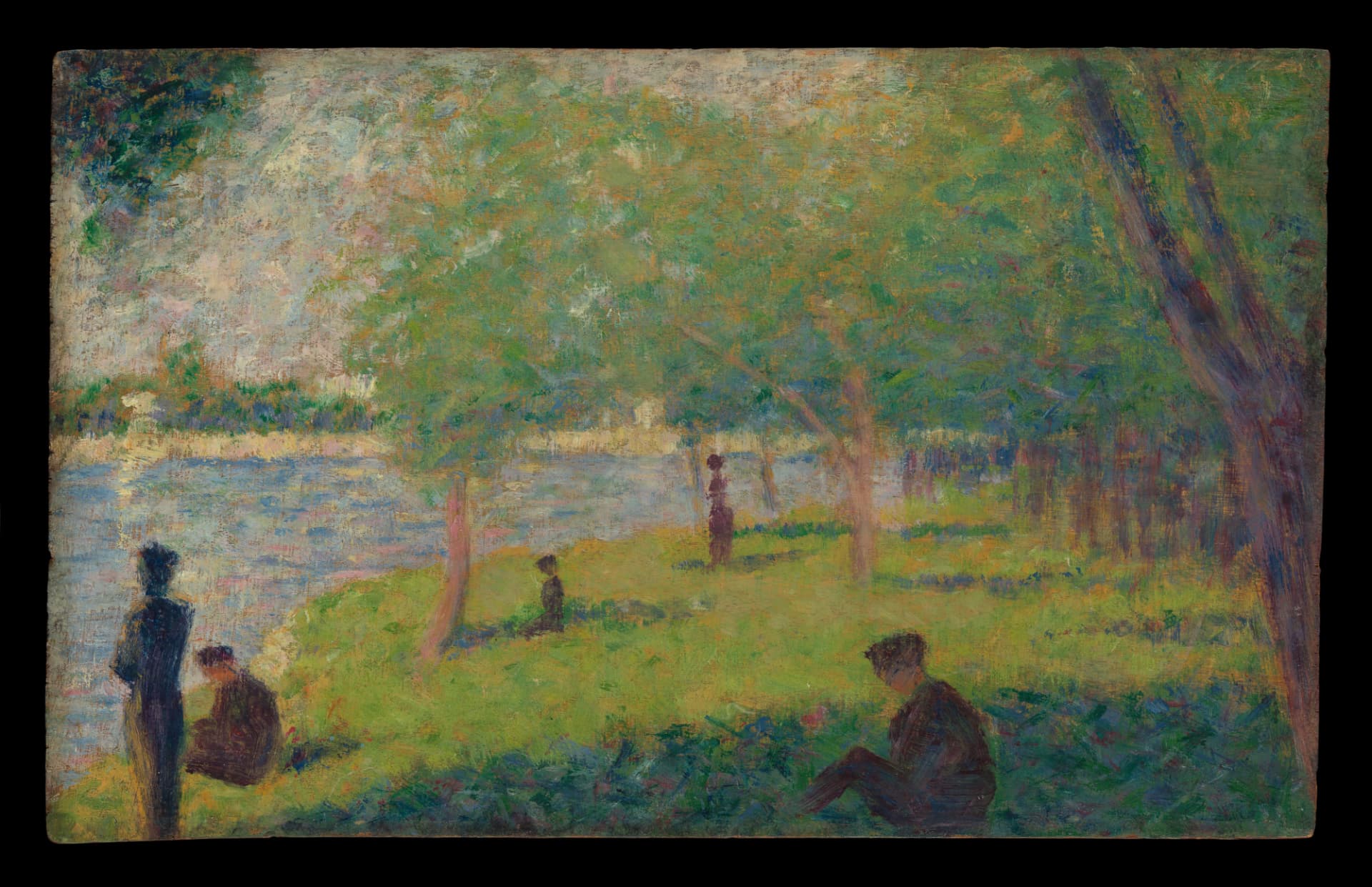
Artists and designers often work through several versions before resolving a work. Small changes can affect composition, visual language, materials or the way an idea is communicated. Georges Seurat made many studies while developing A Sunday on La Grande Jatte. The Metropolitan Museum of Art describes this study as one of around fifty drawings and oil sketches made in preparation for the final painting. Some of the figures changed considerably as the work developed. Looking at the study beside the finished painting shows how an idea can be tested, adjusted and refined before it is resolved.
Feedback can also show you something you have stopped noticing yourself. Consider the feedback, then decide what is useful to change.
In your practice
Experiment with materials, techniques, processes and visual language. Use comparison, critique and feedback to decide what you want to refine as the work develops.
Compare experimental and developing artworks in your Visual Arts Journal. Record the changes you make to materials, techniques, processes, subject matter and visual language as the work develops.
Test design concepts against the brief and design criteria. Use testing, critique and feedback to refine the concept before resolution.
Creative thinking
What changed between the versions?
What needs more attention?
Did the change improve the work?
Tools to help you notice, describe, question, develop and document your work.
CRITIQUE + FEEDBACK →Source note
Developed through studio practice, curriculum guidance and established art and design theory. All instructional material on this page is original.
Curriculum + reading
Bowden, M., & Tooke, A. (2022). Art making and exhibiting: VCE units 1–4. Cambridge University Press & Assessment.
Greenwood, D. (2023). Art creative practice: VCE units 1–4. Cambridge University Press & Assessment.
Victorian Curriculum and Assessment Authority. (2022). VCE Art Creative Practice study design 2023–2027. vcaa.vic.edu.au ↗
Victorian Curriculum and Assessment Authority. (2022). VCE Art Making and Exhibiting study design 2023–2027. vcaa.vic.edu.au ↗
Victorian Curriculum and Assessment Authority. (2023). VCE Visual Communication Design study design 2024–2028. vcaa.vic.edu.au ↗
Artists + artworks
Degas, E. (1884–1900). Study of a nude (Dancer at the barre) [Charcoal on tracing paper laid down on card]. The Metropolitan Museum of Art, New York, United States. Object 2019.598. Public domain. metmuseum.org ↗
Seurat, G. (1884). Study for “A Sunday on La Grande Jatte” [Oil on wood]. The Metropolitan Museum of Art, New York. metmuseum.org ↗
Studio material
REFINEMENT STUDIES.. Visual material: Studio work, 2026.