16 / The Studio · Present
PRESENTATION + COMMUNICATION
How the work is shown changes how it is seen.
Where a work is placed, what sits beside it, its height, spacing, lighting and format can all affect how someone encounters it. For design work, the presentation format also needs to suit the communication need and the audience or user. Presentation is another decision to make.
TODAY’S FOCUS
Look at how the work and its presentation work together.
Look
LOOK AT THE PRESENTATION
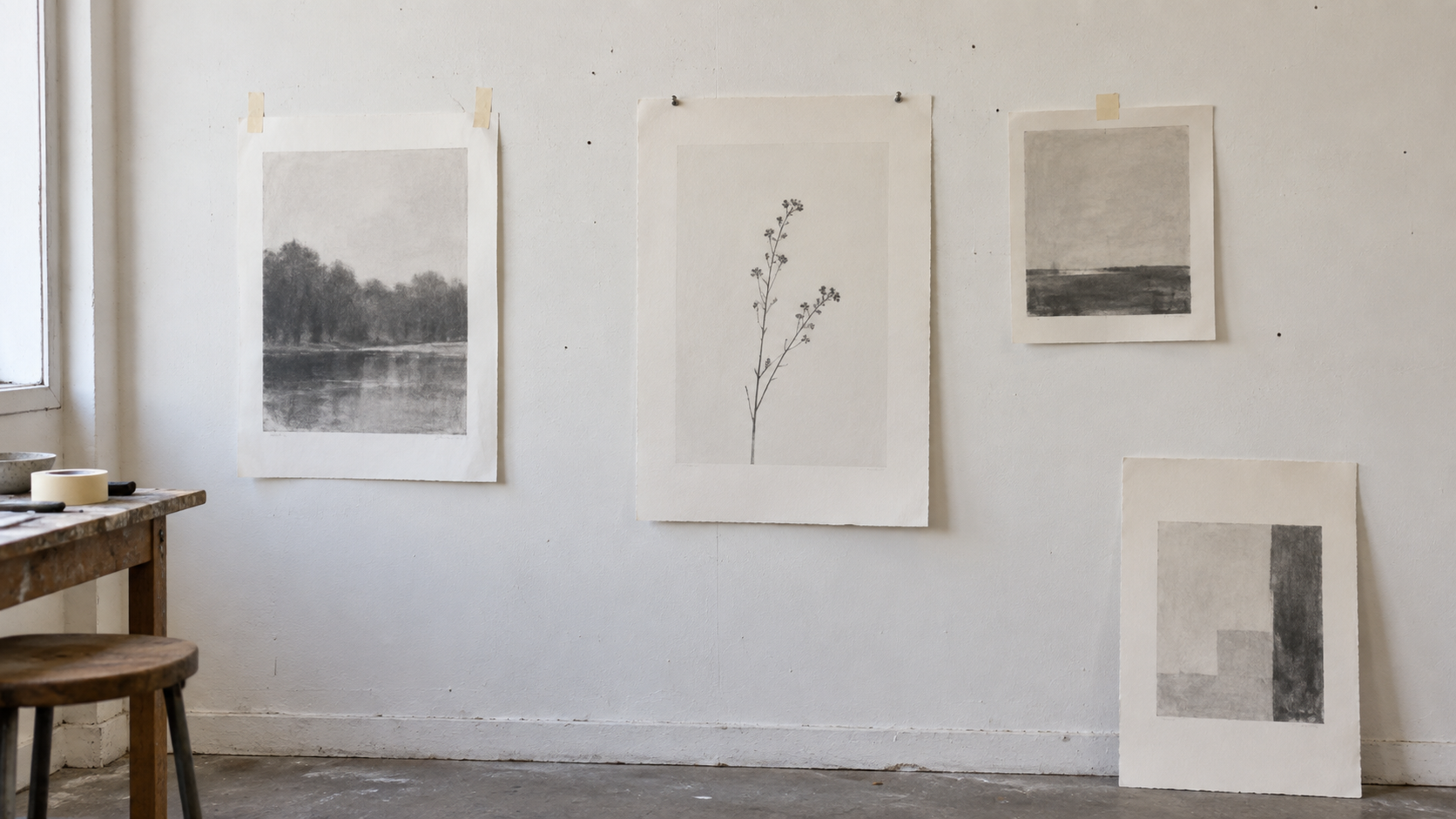
Studio process.
- Where does your attention go first?
- What does the spacing do?
- How does the height, position or format affect the way you see the work?
- What would change if the work were presented differently?
Understand
PRESENTATION CHANGES THE VIEWING
The work does not exist separately from where and how it is presented. A painting on a large empty wall is encountered differently from the same painting placed closely beside other works. A sculpture can change when it is placed on the floor, on a plinth or at eye level. A design can communicate differently on a screen, poster, package, publication or object.
Think about the work, the format, the space and the person who will encounter it.
Make
TEST THE PRESENTATION
Choose a work you are ready to present. Try at least two ways of presenting it. Change something that affects how it is seen. You might change position, height, spacing, sequence, scale, orientation, lighting, background or format.
Step back and look at each version. Which presentation supports the work best?
Photograph the versions before you decide.
What changes the presentation?
PLACEMENT. Where is the work in relation to the viewer or user?
SPACING. What happens between this work and what surrounds it?
SEQUENCE. If there is more than one work, what does someone encounter first, next and last?
FORMAT. Does the way the work is presented suit what it needs to do?
CONTEXT. What does the surrounding space, surface or situation add to the work?
In practice
Presentation involves selection and arrangement. Artists, designers, curators and exhibition designers make decisions about format, placement, spacing, sequence, lighting and context. Those decisions affect what an audience or user notices and how the work is understood.
The best presentation choice depends on the work and what it needs to communicate.
In your practice
Consider how the context and presentation of your Body of Work affect the communication of your ideas and meaning. Think about the relationships between the works as well as how a viewer will encounter them.
Plan how the artwork will be displayed in the space. Consider placement, spacing, lighting, viewing distance and any requirements for safe display and care.
Choose a presentation format that suits the communication need, audience or user and design criteria. Consider how the format, materials, media and visual language work together in the final presentation.
Look again
Stand where the viewer or user will encounter the work. What do you notice first?
Does anything compete with the work?
Does the presentation support what you want to communicate?
Is there anything you would change before presenting it?
Creative thinking
What does the presentation make more visible?
What does the viewer or user encounter?
Which presentation suits the work?
Tools to help you notice, describe, question, develop and document your work.
Source note
Developed through studio practice, curriculum guidance and established art and design theory. All instructional material on this page is original.
Curriculum + reading
Bowden, M., & Tooke, A. (2022). Art making and exhibiting: VCE units 1–4. Cambridge University Press & Assessment.
Greenwood, D. (2023). Art creative practice: VCE units 1–4. Cambridge University Press & Assessment.
Victorian Curriculum and Assessment Authority. (2022). VCE Art Creative Practice study design 2023–2027. vcaa.vic.edu.au ↗
Victorian Curriculum and Assessment Authority. (2022). VCE Art Making and Exhibiting study design 2023–2027. vcaa.vic.edu.au ↗
Victorian Curriculum and Assessment Authority. (2023). VCE Visual Communication Design study design 2024–2028. vcaa.vic.edu.au ↗
Studio material
PRESENTATION STUDIES.. Visual material: Studio work, 2026.