Studio Guide / Lesson 10 · Compare + interpret
Interpret + build toward the outcome
Learning outcomeDevelop a comparative interpretation and select evidence for Outcome 1.
What students need to know
Key learning points
- Comparative interpretation connects artwork evidence, context and artist practice.
- A focused question gives your comparison a clear direction.
- Strong evidence is selected because it helps answer the comparison question.
- Comparing artist practice as well as artworks can deepen interpretation.
- Reflection can show how comparison changed your understanding of visual language, context and meaning.
Key terms
- comparative interpretation
- evidence
- outcome
- visual language
01 /Interpret
Look across the artists
You now have evidence from across the learning sequence.
Maree Clarke
Walert – gurn barerarerungar: Tipperary, Ireland Dunstable, Britain Yorta Yorta Trawlwoolway Boonwurrung, Mutti Mutti, Wamba Wamba
NGV ↗Use these as places to begin. As you look across the artists, other connections, differences and questions may become useful.
What connects? What changes? What matters?
A comparative interpretation connects
Artwork
Context
Artist practice
Lens
Evidence
Compare
Interpret
Choose a question
Choose the one question that gives your comparison a clear direction.
Keep in your visual diaryComparative interpretation
Build your evidence
Joan Miró
Maree Clarke
Peter Waples-Crowe
megan evans
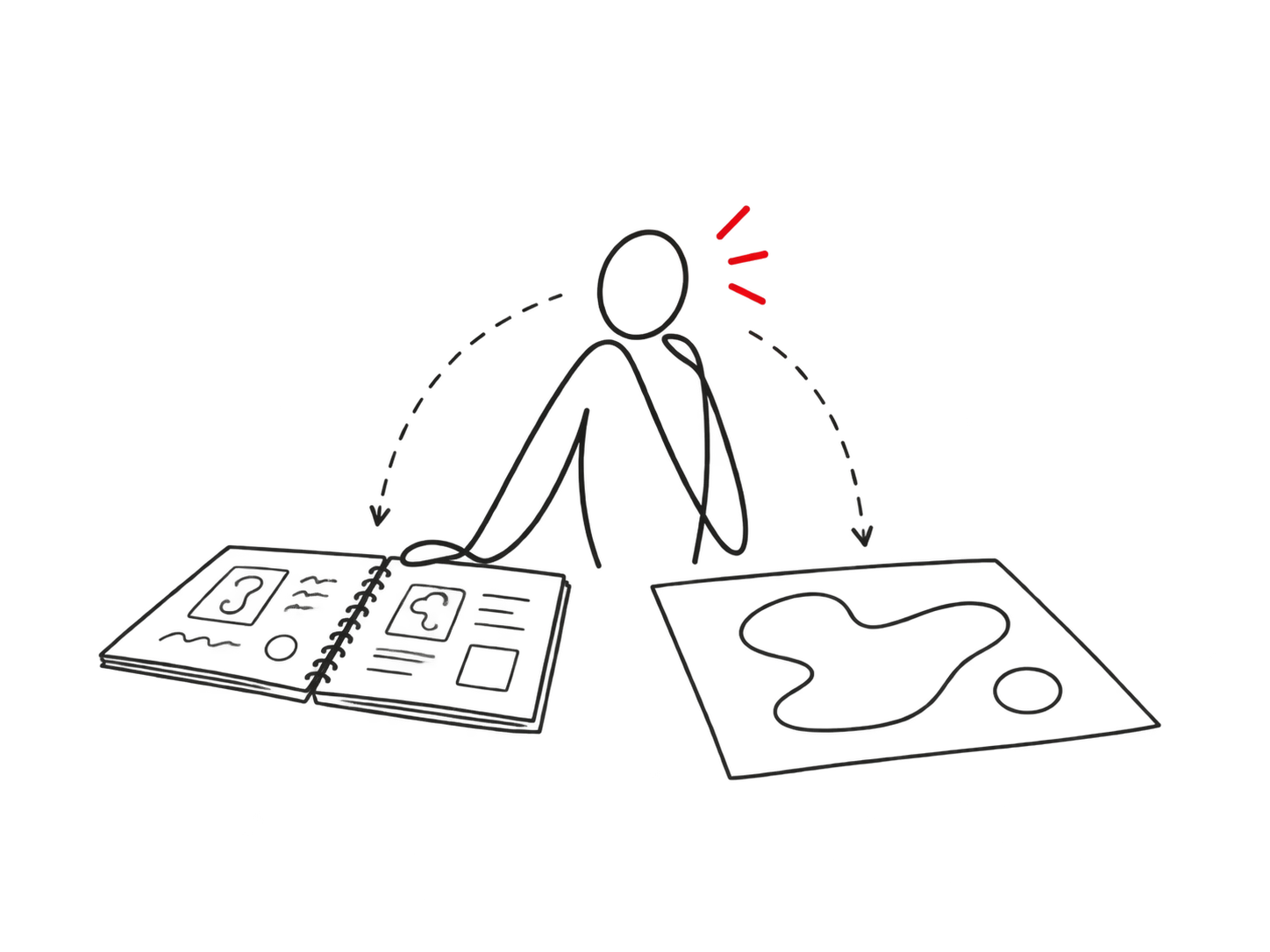
Bring forward what you have gathered across Weeks 2–5. You do not need everything. Select the evidence that helps answer your comparison question.
02 /Build your report
You are not starting again. Bring forward the strongest evidence you have already developed across Weeks 1–5.
01 / Choose
Choose a meaningful comparison.
02 / Select
Select precise artwork evidence.
03 / Context
Add relevant cultural or historical context.
04 / Practice
Compare how the artists make and present work.
05 / Interpret
Explain why the similarity or difference matters.
06 / Source
Keep the source with the information it supports.
Before you move on
- Can I point to specific artwork evidence?
- Have I used context where it helps my interpretation?
- Have I compared artist practice as well as the artworks?
- Can I explain why the similarity or difference matters?
- Is each sourced idea connected to its source?
Keep in your visual diaryStrongest comparative interpretation
03 /Look back
What changed?
- What changed in your interpretation when you compared artworks rather than looking at them separately?
- Which piece of evidence made the biggest difference?
- What can you now say about the relationship between visual language, context and meaning?
- Which artist practices give you the strongest comparison?
Keep your strongest comparative notes for the annotated visual comparative report.
Keep in your visual diaryFinal reflection + selected evidence
04 /Looking forward / your Creative Practice
Two stages, side by side.
Choose two stages of the visual language you developed across Weeks 1–4. Place them beside each other in your visual diary.
Earlier version
- What stayed?
- What evidence can you see in the marks?
Later version
- What changed?
- What decision caused the change?
- What might you carry into your next Creative Practice?
Keep the earlier versions visible.
The artist research from Area of Study 1 can continue to inform your own Creative Practice. This comparison can stay in your Visual Diary and support the next stage of your Creative Practice.
Keep in your visual diaryOwn-practice comparison
By the end of this lesson
- A comparative interpretation across the artists
- Evidence built around your chosen question
- Your strongest comparative interpretation, ready for the report
- A final reflection and selected evidence
- An own-practice comparison
References
Source note
This Studio Guide was developed for Learning by Design using VCE Art Creative Practice curriculum guidance and museum, artist and exhibition sources relating to Joan Miró, Maree Clarke, Peter Waples Crowe and megan evans. It brings together evidence developed across the preceding Studio Guides. Linked Studio Building Blocks, Interpretive Lenses, Creative Thinking Toolkit and Outcome + Assessment pages carry their own source notes and references.
Curriculum + reading
Greenwood, D. (2023). Art creative practice: VCE units 1–4. Cambridge University Press & Assessment.
Victorian Curriculum and Assessment Authority. (n.d.). VCE Art Creative Practice: Teaching and learning. VCAA Teaching and learning ↗
Victorian Curriculum and Assessment Authority. (2022). VCE Art Creative Practice study design 2023–2027. VCAA Art Creative Practice ↗
Artists + artworks
Clarke, M. (2020–2021). Walert – gurn barerarerungar… National Gallery of Victoria. NGV ↗
evans, m. (2016). Bleeding Chandelier. From Squatters and Savages, Art Gallery of Ballarat. megan evans / project ↗
Miró, J. (1923–1924). The Hunter (Catalan Landscape) [Oil on canvas]. The Museum of Modern Art, New York. MoMA ↗
Waples Crowe, P. (2017). Colonised 3 [Digital print on canvas]. From Squatters and Savages, Art Gallery of Ballarat. Exhibition catalogue ↗
Museum + gallery sources
Waples Crowe, P., & evans, m. (2017). Squatters and Savages [Exhibition catalogue]. Art Gallery of Ballarat. Exhibition catalogue ↗