Creative Thinking Toolkit / 04
DOCUMENT YOUR PROCESS
Keep something you can return to.
Work changes as you make it. A photograph, drawing, note, question or other trace can help you return to what happened, what changed and what you might do next.
Your documentation might live in a visual diary, journal, folio or alongside the work itself.
WHAT COULD YOU KEEP?
- Draw
- Explore or test.
- Photograph
- Record a stage or change.
- Label
- Identify something.
- Note
- Record a decision.
- Arrow
- Show a relationship.
- Circle
- Isolate something worth noticing.
- Question
- Keep something open.
You don't need to use all seven.
Keep what will help you return to the work.
WHAT IS WORTH RECORDING?
You don't need to record everything. Keep the moments that help you see how the work is developing.
ART CREATIVE PRACTICE
What might you keep?
- ideas and personal responses
- exploration and experimentation
- materials, techniques and processes
- developing visual language
- influences and connections
- feedback
- decisions and changes
- reflection and evaluation
- questions or possibilities you may return to
Ask yourself
- What changed my thinking?
- What did I discover through making?
- What decision did I make, and why?
- What is still unresolved?
- What might I return to?
Documentation can be written and visual. Keep the emphasis on the development of your Creative Practice, not on written annotation alone.
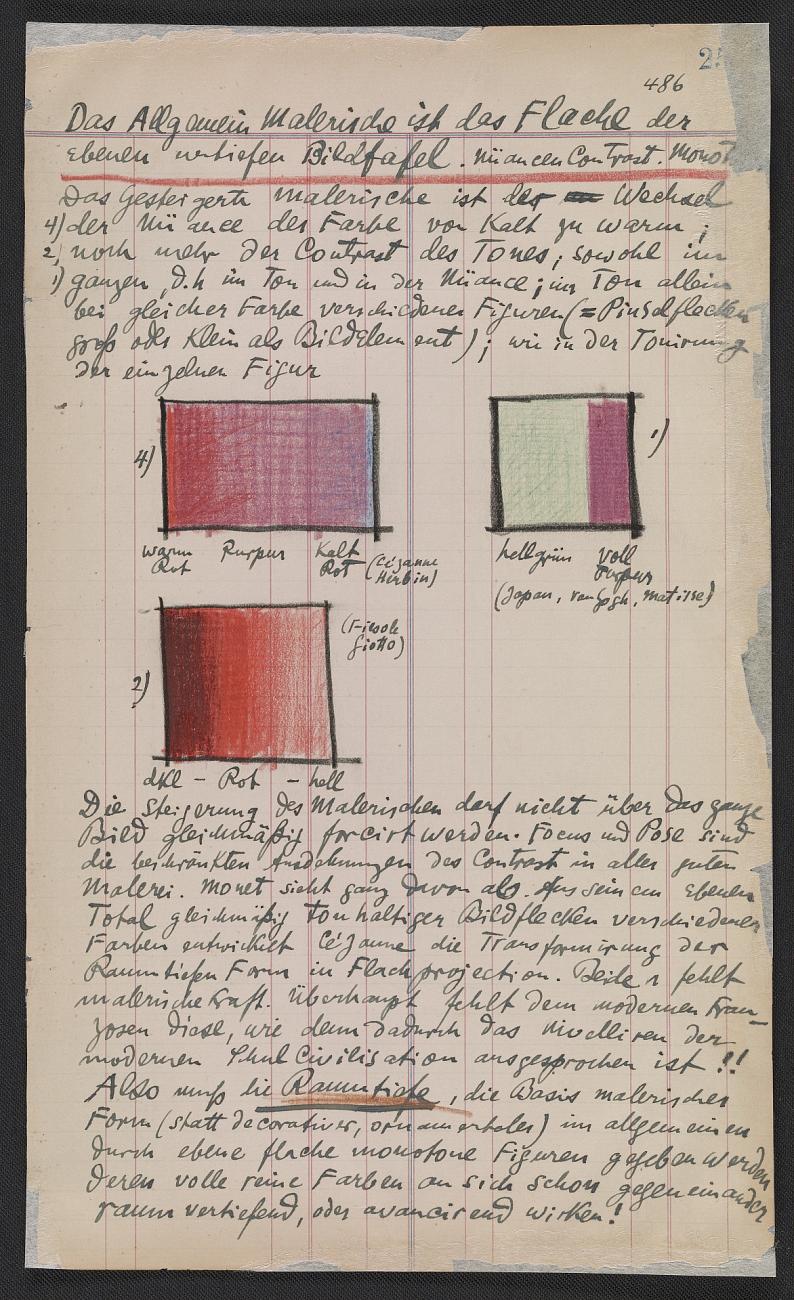
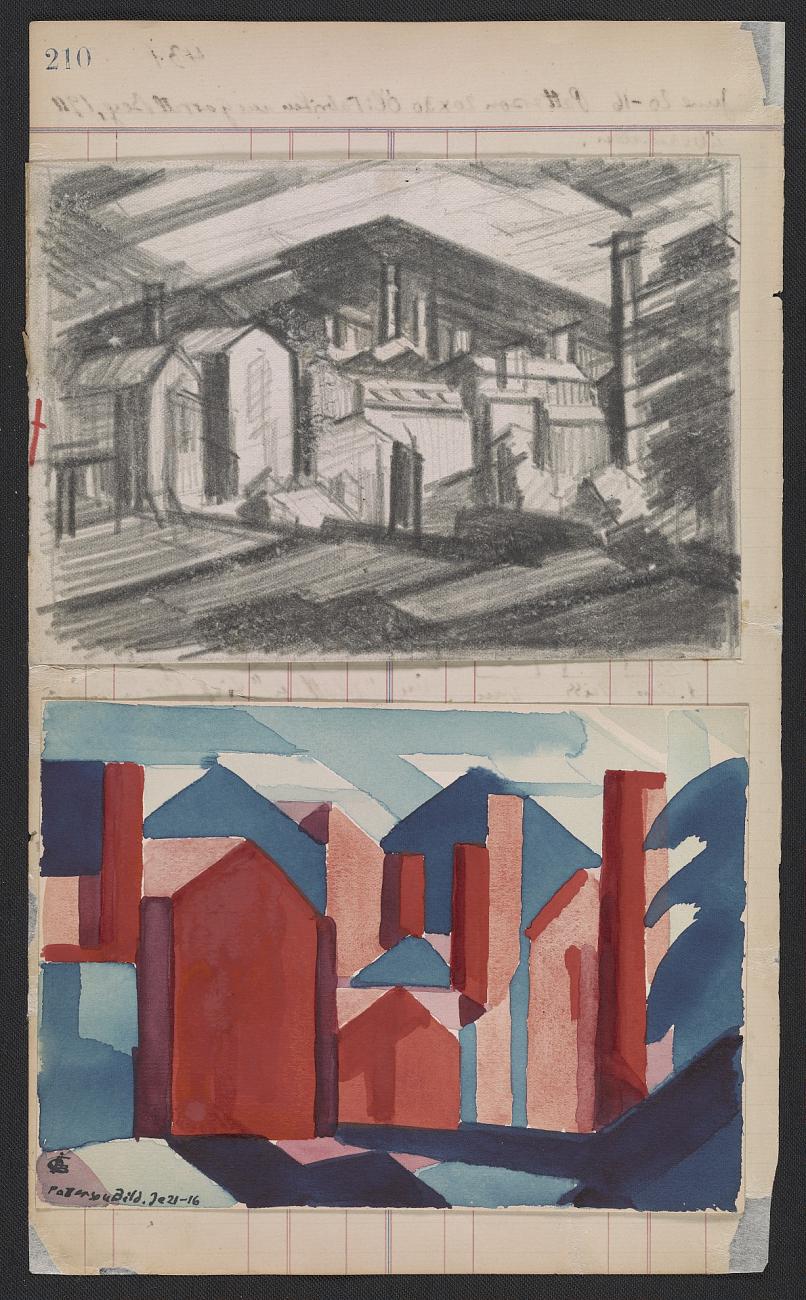
ART MAKING + EXHIBITING
What might you keep?
- experiments and trials
- materials
- techniques and processes
- development of visual language
- aesthetic qualities
- influences and research
- refinement
- feedback and evaluation
- presentation and exhibition decisions
- handling, care or conservation where relevant
Ask yourself
- What did I test?
- What did the material or process do?
- What changed as the work developed?
- What should I refine?
- What will matter when this work is presented or displayed?
The Visual Arts Journal connects practical work, research and theoretical study. Documentation can include visual material, annotation, photographs, audio, citations and notes.
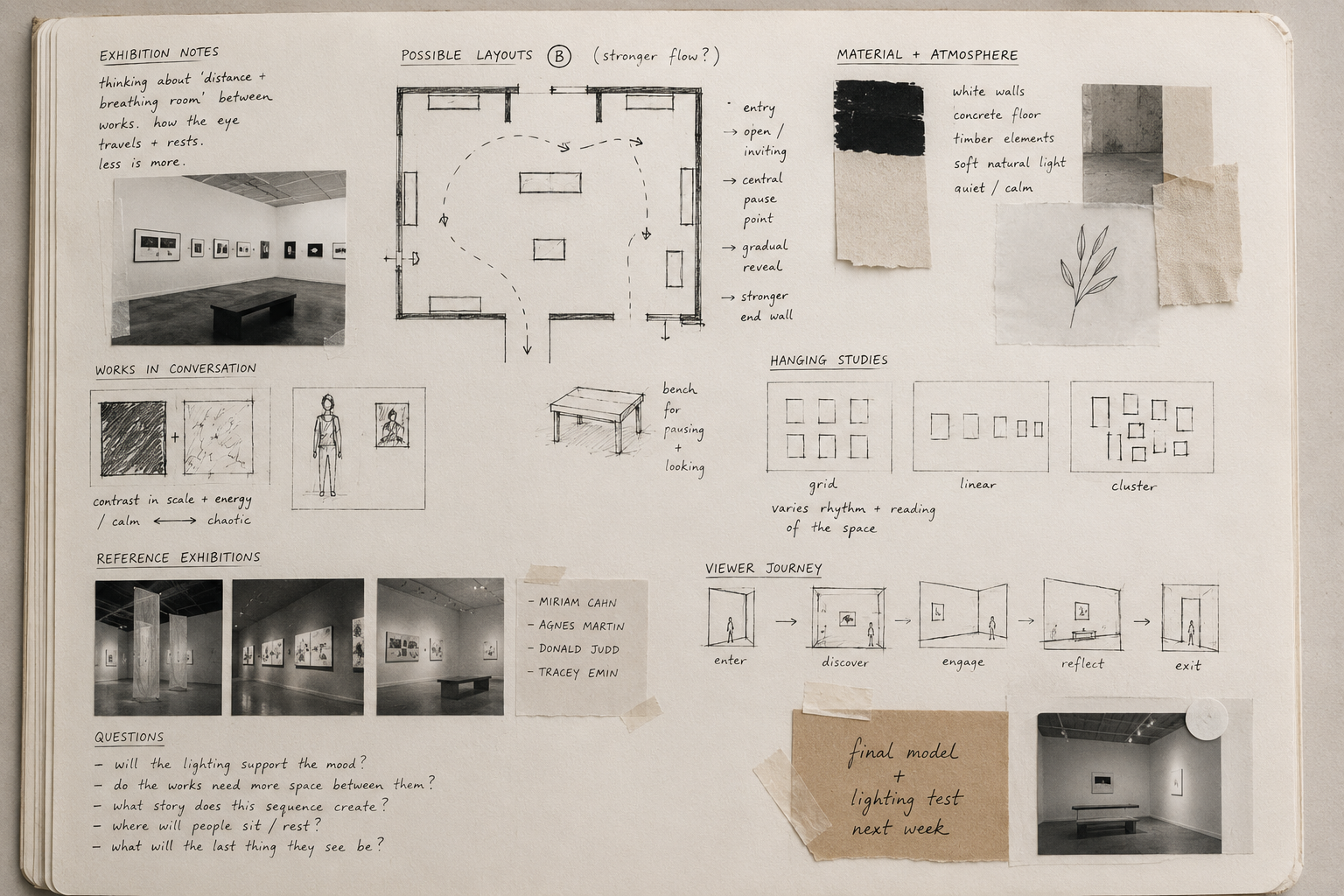
Visual material: Studio work, 2026.
VISUAL COMMUNICATION DESIGN
What might you keep?
- research and observations
- communication needs
- purpose, audience or user and context
- ideas and visualisations
- alternative possibilities
- testing
- feedback
- design decisions
- development and refinement
- mock-ups, models or prototypes where relevant
- evaluation and resolution
Ask yourself
- What did I discover?
- What alternatives did I test?
- What feedback changed the design?
- Why did I choose this direction?
- How does this decision respond to the purpose, audience or user?
- What still needs to be tested or refined?
Documentation should make the development, refinement and resolution of design concepts visible. A design folio makes the development of design thinking and decision making visible.
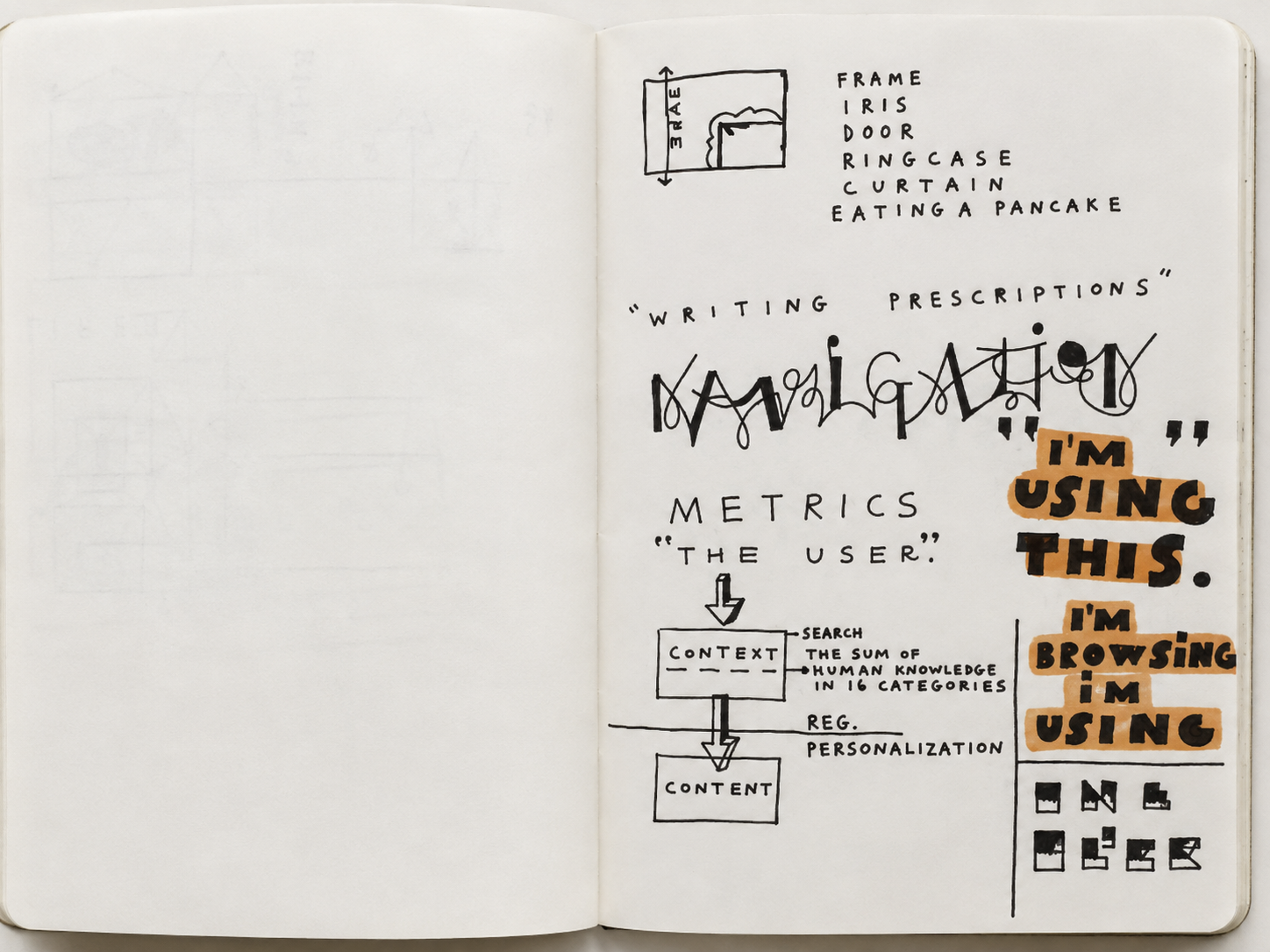
Visual material: Studio work, 2026.
ABOUT THIS RESOURCE
The guidance on this page draws on the terminology, skills and learning expectations of VCE Art Creative Practice, Art Making and Exhibiting, and Visual Communication Design, together with pedagogical approaches to documentation as a way of making experiences and processes visible and available for reflection.
Curriculum + reading
Victorian Curriculum and Assessment Authority. (2022). VCE Art Creative Practice study design 2023–2027.
Victorian Curriculum and Assessment Authority. (2022). VCE Art Making and Exhibiting study design 2023–2027.
Victorian Curriculum and Assessment Authority. (2023). VCE Visual Communication Design study design 2024–2028.
Greenwood, D. (2023). Art creative practice: VCE units 1–4. Cambridge University Press & Assessment.
Bowden, M., & Tooke, A. (2022). Art making and exhibiting: VCE units 1–4. Cambridge University Press & Assessment.
Documenteren met jonge kinderen. [REFERENCE DETAILS TO BE CONFIRMED]
Guthrie, K. (2017). Nelson visual communication design: VCE units 1–4 (4th ed.). Cengage Learning Australia.
Visual material: Studio work, 2026.