LANGUAGE SUPPORT
Find the words to describe, explain and reflect on your work.
01 / LOOK CLOSER
One work. Looking again can change what you are able to say.
NOTICE
What can I actually see?
TRY
- I can see…
- I notice…
- There is…
- I can see a ______ near the ______.
WORDS line · shape · colour · mark · figure · face · eye · dots · brush marks
EXAMPLE
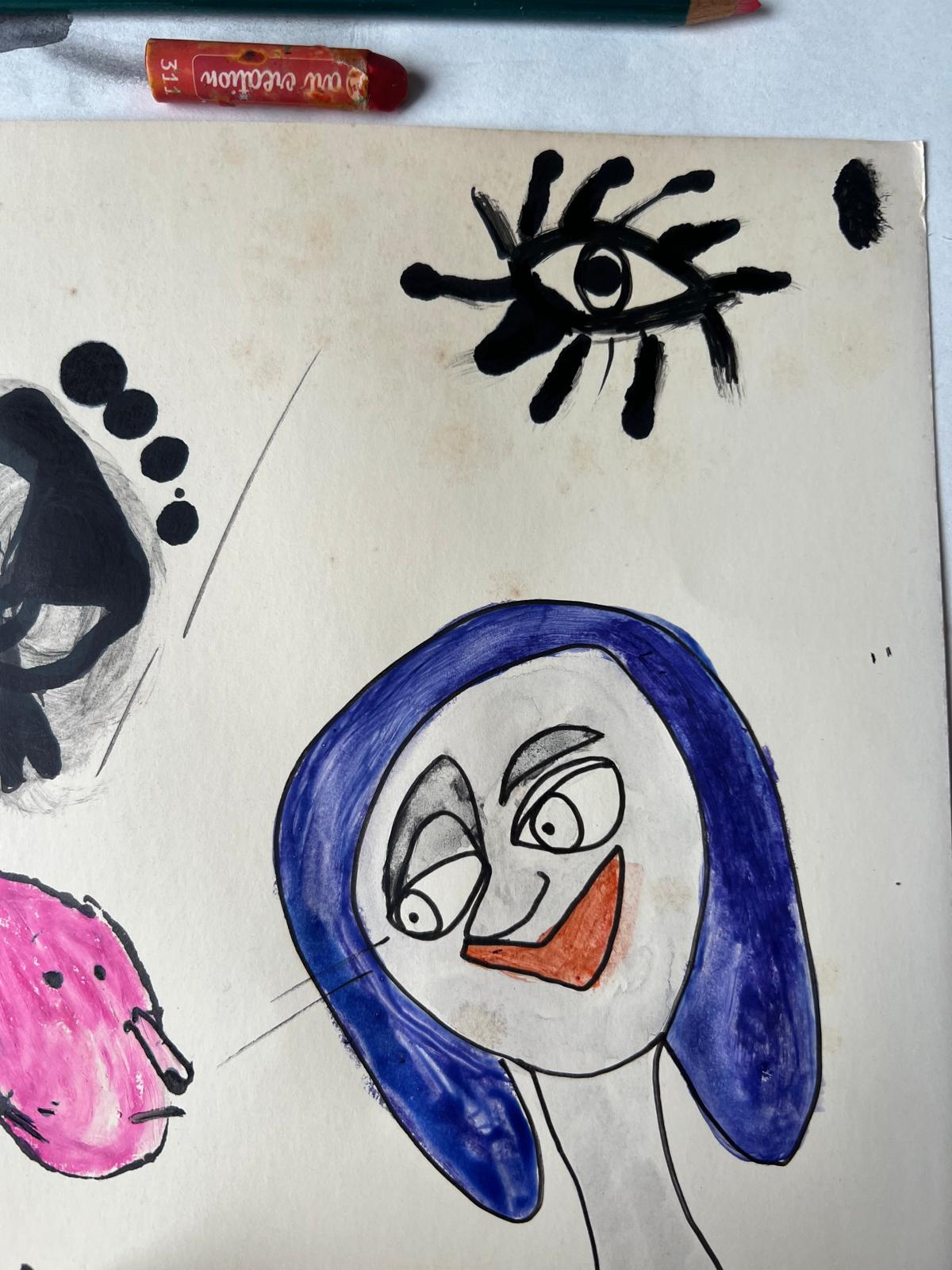
A large face occupies the lower part of the page. Above it is a painted eye. Pink lines, dark marks and areas of blue appear across the paper.
NAME
What can I name?
TRY
- I can name the ______.
- I can see ______ lines.
- The artist has used ______ colour.
- I can see ______ marks.
WORDS line · shape · colour · tone · contrast · scale · gesture · outline · paint · graphite · brush mark
EXAMPLE
The work combines painted colour, drawn line and gestural marks. Strong blue, pink and black areas create contrast, while outlines and brush marks vary in control and intensity.
DESCRIBE
What is happening specifically?
TRY
- The ______ is ______.
- The ______ appears beside ______.
- The ______ marks move ______.
- The ______ stands out because ______.
EXAMPLE
The blue areas are strongly enclosed, while the pink and black marks are looser. The large eye sits above the face and creates a second focal point. Different kinds of marks move across and around the recognisable forms.
CONNECT
How are these things working together?
TRY
- The ______ makes the ______ feel ______.
- When the artist ______, it creates ______.
- The ______ and ______ work together because ______.
EXAMPLE
The controlled outlines and looser painted marks create different kinds of energy across the page. Seeing the brush move across the surface makes the relationship between gesture, material and the resulting marks clearer.
JUDGE
What is working, what is unresolved, and what evidence supports that judgement?
TRY
- I think ______ is working because ______.
- The ______ is effective because ______.
- The ______ still feels unresolved because ______.
- I can see this in ______.
EXAMPLE
The contrast between controlled and gestural marks gives the work energy. The face and eye create strong points of attention, while some surrounding marks remain more exploratory. The variation between resolved forms and looser marks is interesting, although their relationship could be developed further.
BUILD A FULLER RESPONSE
SELECT
Keep what matters.
CONNECT
Bring related ideas together.
USE EVIDENCE
Support what you say with what you can see.
BE PRECISE
Use words that make the observation clearer.
EDIT
Remove repetition.
SELECTED + CONNECTED
- The blue and the black eye were brushed quickly.
- The shading was built up slowly in pencil.
- Orange-red appears only in the mouth.
FULLER RESPONSE
The sheet holds two speeds: the blue hood and the black eye are brushed in quickly, while the face is shaded slowly in pencil. Because the orange-red is used only once, it carries more weight than its size. The pink form at the left is the part that does not yet belong to that structure.
Sometimes one sentence is enough. How much you write depends on what you need to record, explain or communicate.
02 / THINK THROUGH YOUR WORK
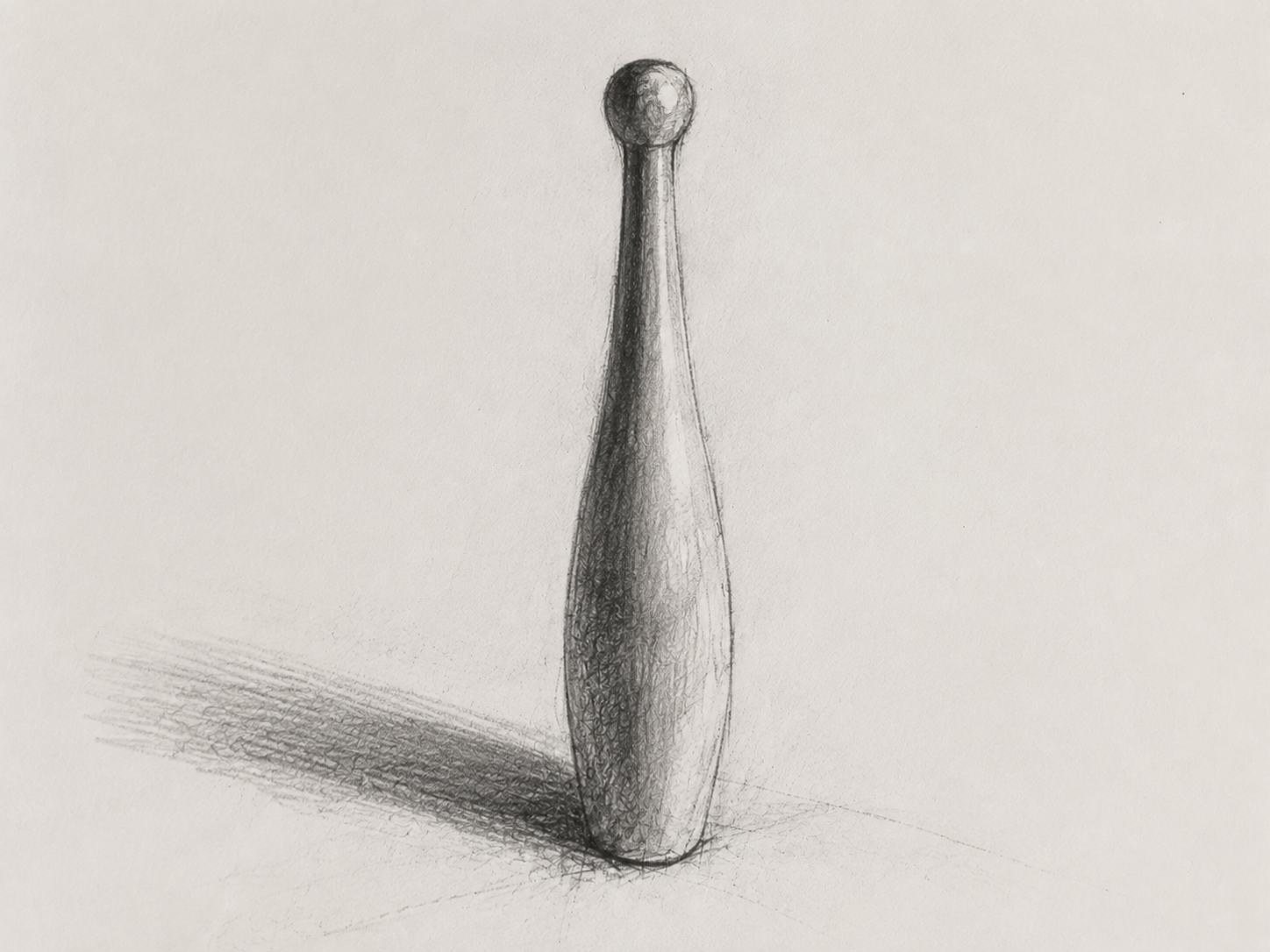
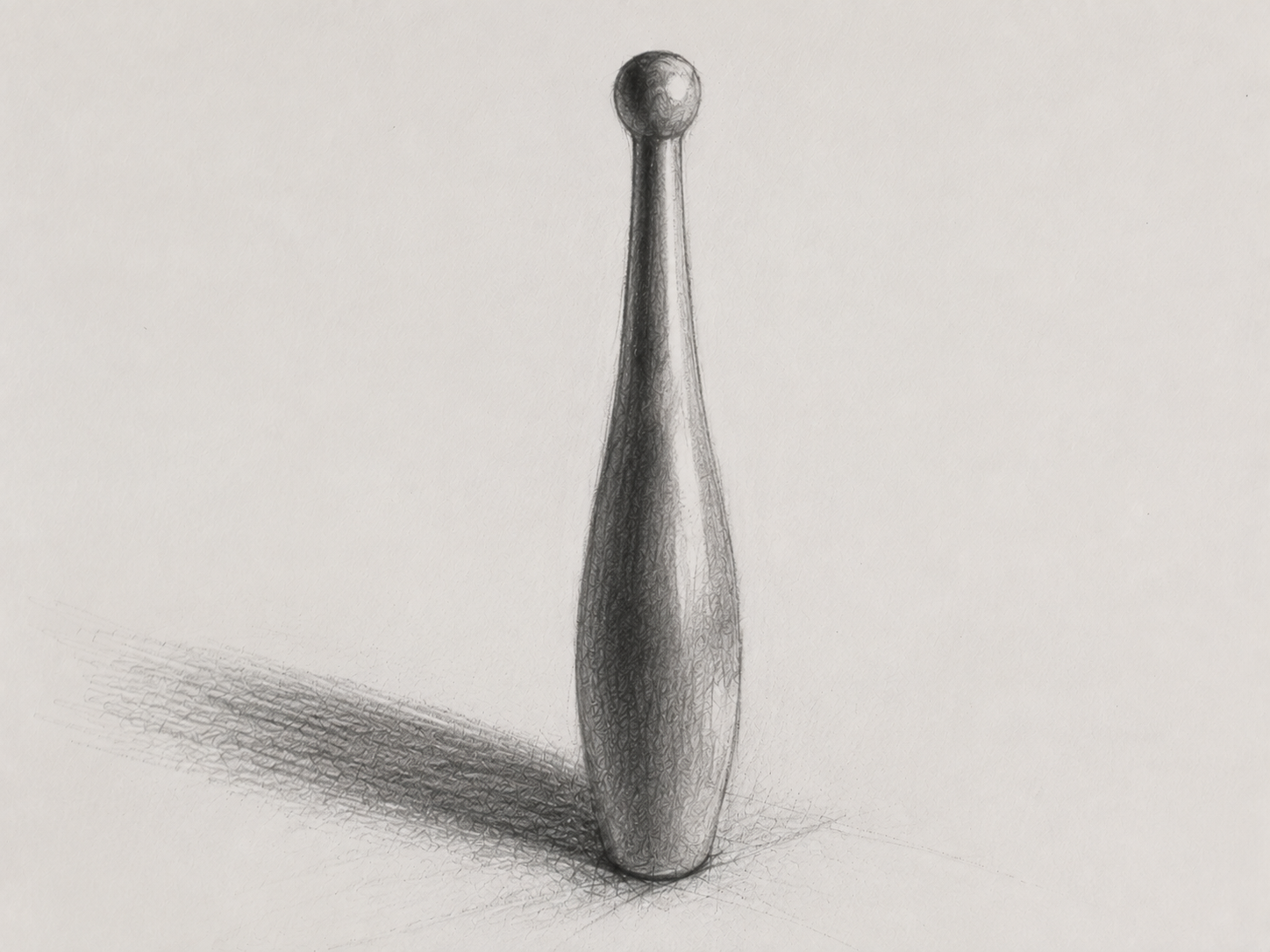
One object, looked at again and again. The work develops through comparison across the sequence.
LOOK · NOTICE + NAME
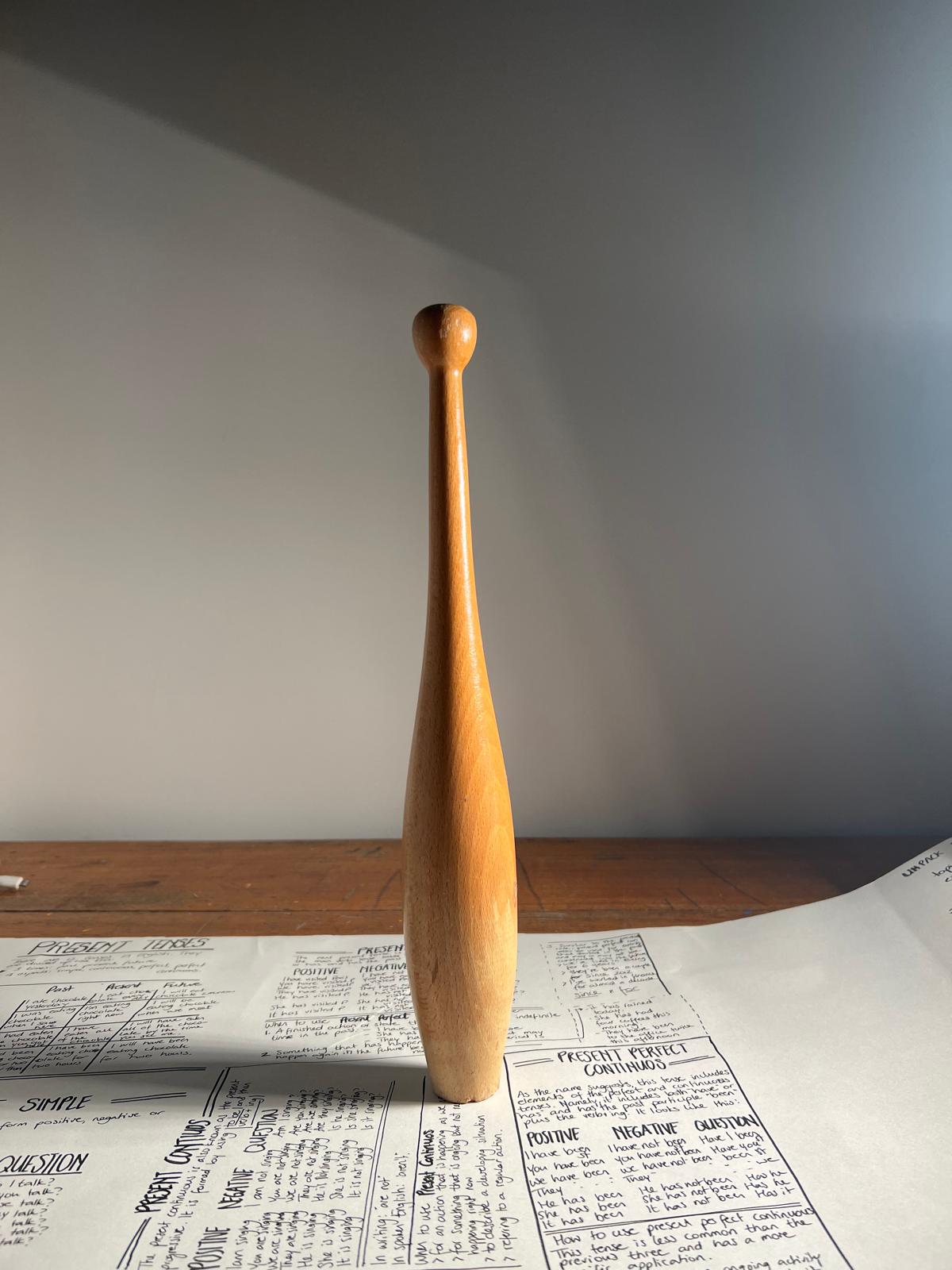
What is in front of me, and what did the first study take from it?
TRY
- In the source I can see ______.
- The light is coming from ______.
- In study 01 I can see ______.
- I can name the ______.
WORDS light source · light side · midtone · core shadow · cast shadow · contrast · value
EXAMPLE
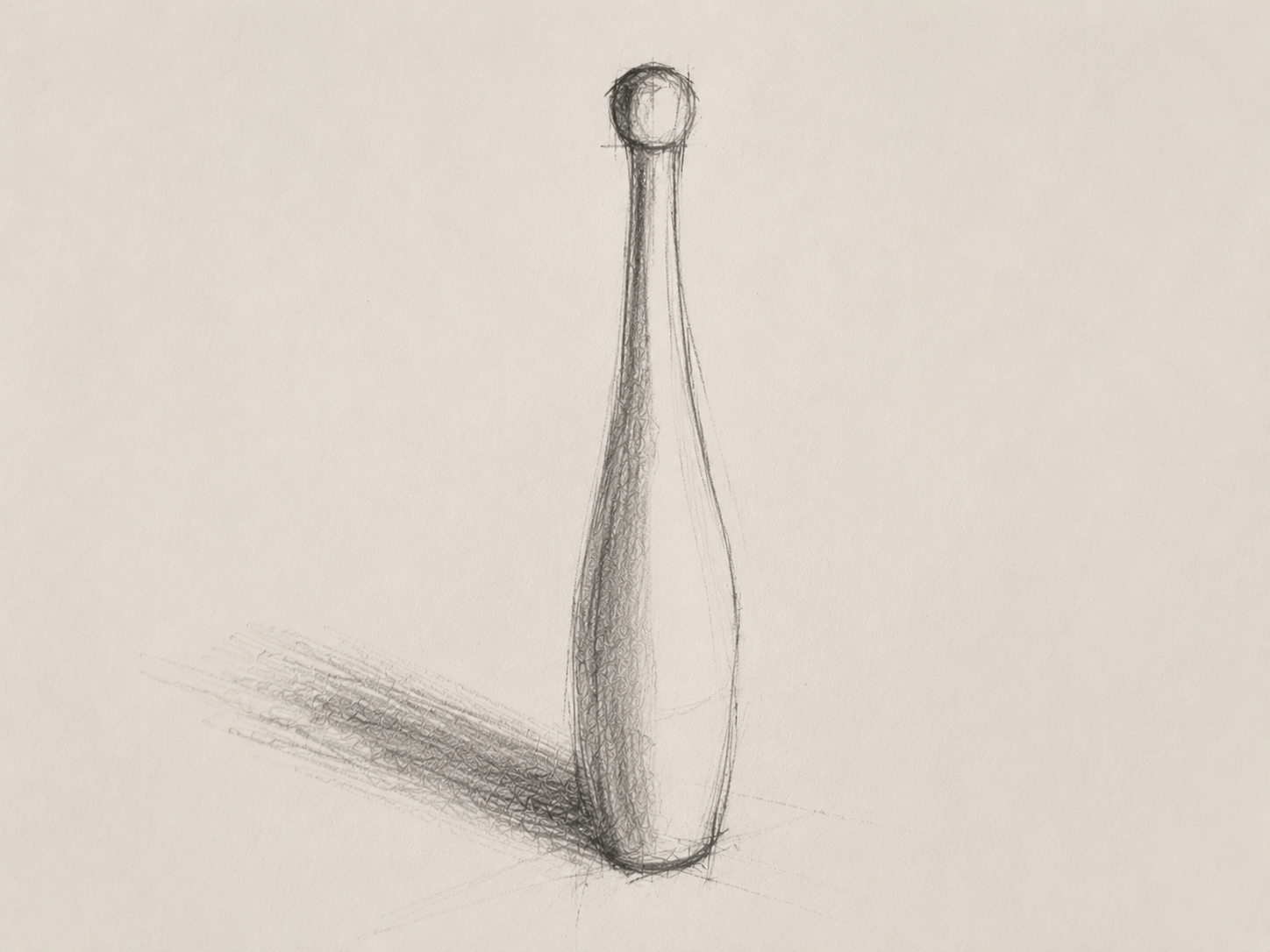
In the source, the strongest difference between light and dark runs down the right edge of the pin, with a cast shadow to the left. Study 01 finds the placement of the light but keeps the tone flat and the construction lines visible.
COMPARE · DESCRIBE + CONNECT
What changed across 01 to 03, and what did it do?
TRY
- Compared with 01, study 03 is ______.
- The biggest change is ______.
- This changed the ______ because ______.
WORDS darker · lighter · narrower · softer · flatter · rounder
EXAMPLE
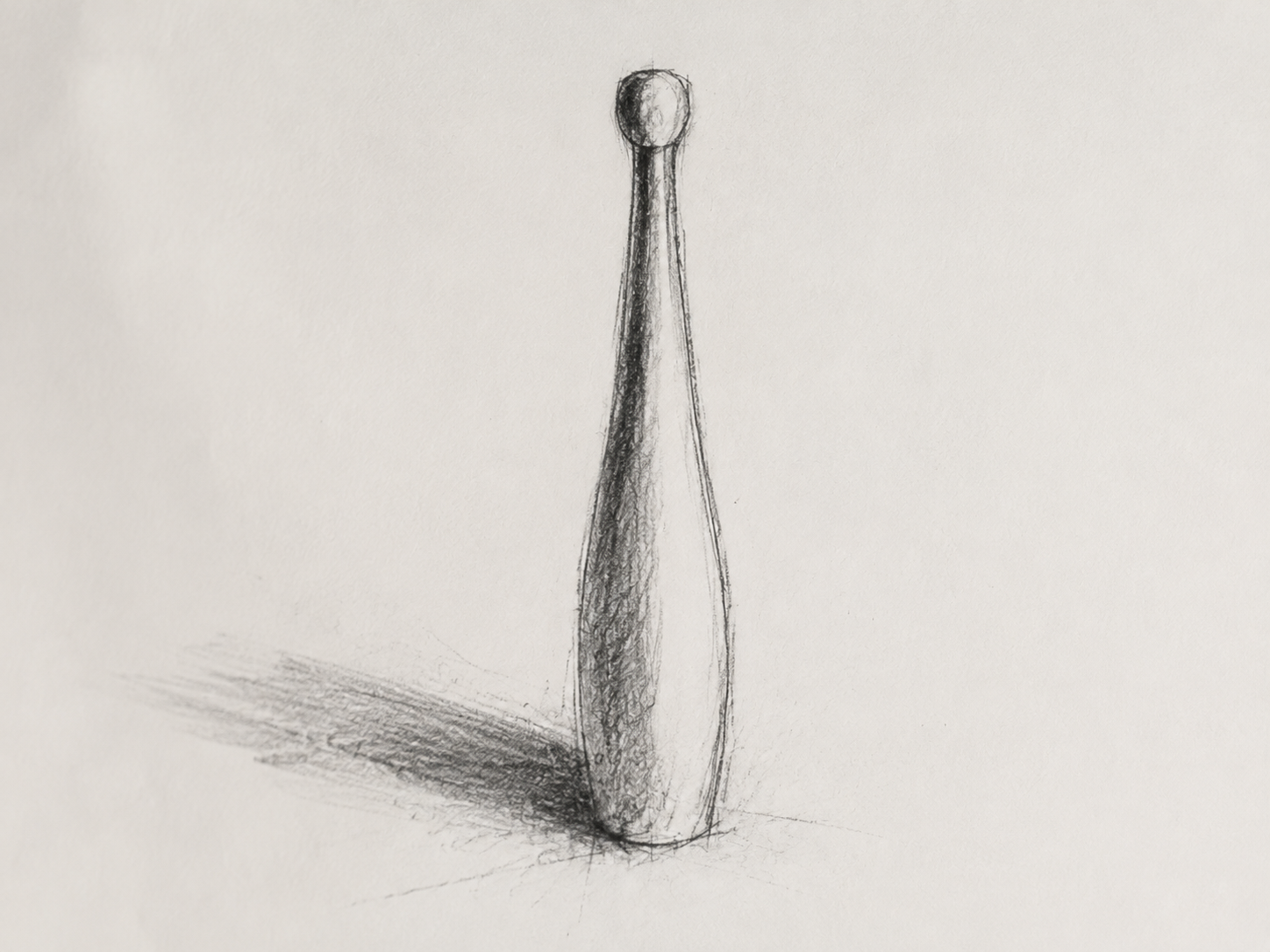
The light side narrows and the values darken as the form turns away, so the midtones start carrying the description. The form reads as rounder — but by 03 the shadow side is darker and flatter than the source, which makes the turn feel abrupt.
DECIDE · JUDGE + DECIDE
What is working, and what will I adjust next?
TRY
- The ______ is more effective because ______.
- I would change ______ because ______.
- Next I would test ______.
EXAMPLE
The light source and cast shadow describe the direction of the light clearly, but the transition between shadow and light is too abrupt to describe the rounded form. In 04 I lifted graphite from the darkest area and softened that transition, keeping enough contrast to describe the form. Next I will test the same adjustment on the cast shadow.
03 / RESPOND TO A WORK
Someone else's work. Support what you say with what you can see.
NOTICE
What can I actually see?
TRY
- I notice ______.
- There is ______ in the middle of the sheet.
- The ______ is positioned ______.
WORDS shape · silhouette · lettering · band · colour · edge · space
EXAMPLE
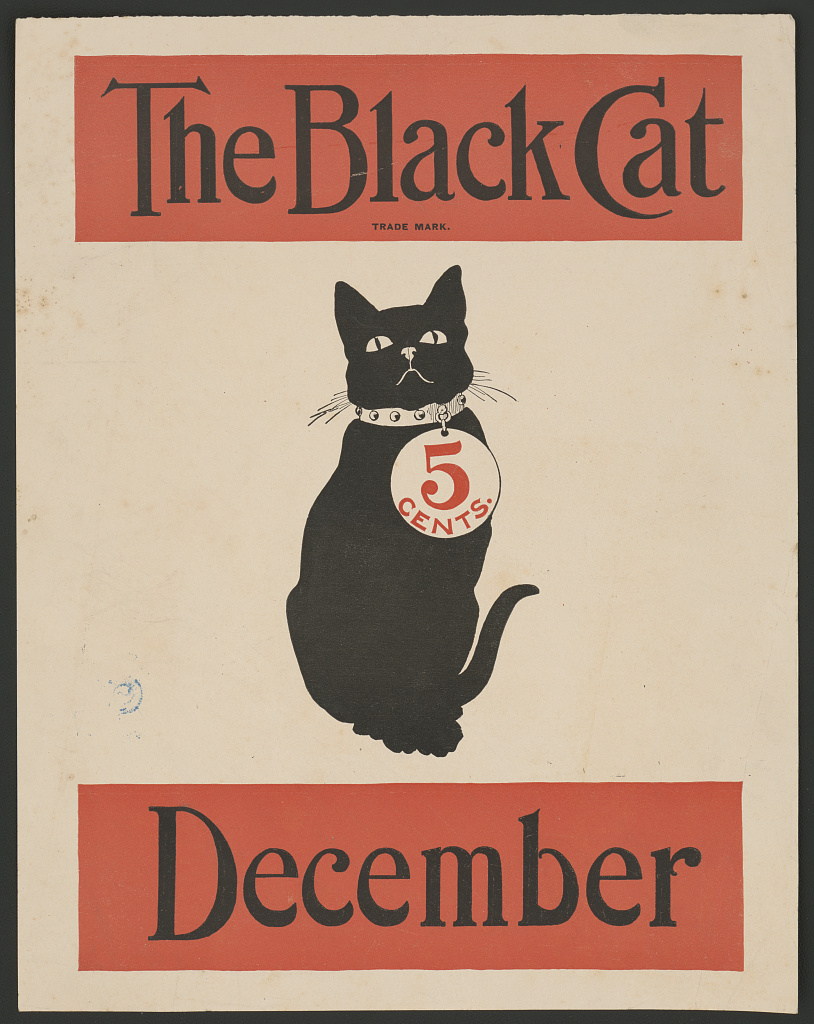
A black cat sits facing forward in the middle of a cream sheet, between two red bands carrying the words The Black Cat and December.
NAME
What is it called?
TRY
- This is a ______.
- I can name the ______.
- The artist has used ______ colour.
WORDS poster · colour print · silhouette · lettering · flat colour · contrast
EXAMPLE
A colour print made as a magazine poster. Flat silhouette, flat lettering, three colours only: black, red and the cream of the paper.
DESCRIBE
What is happening specifically?
TRY
- The ______ is ______.
- Inside the ______ I can see ______.
- The ______ sits at the ______ of the sheet.
EXAMPLE
The cat is one unbroken black shape with no shading; the only detail inside it is the white collar and the five-cent disc. The red bands are held to the top and bottom edges, leaving the middle of the sheet almost empty.
CONNECT
How are these things working together?
TRY
- The ______ draws attention to ______ because ______.
- The ______ and ______ work together because ______.
- The relationship between the image and text ______.
EXAMPLE
Because the black shape is uninterrupted and the paper around it is empty, the eye goes to the small white disc first and reads the price before anything else. The two red bands close the sheet top and bottom and hold the cat in place.
INTERPRET
What does the evidence allow me to say?
TRY
- This suggests ______ because ______.
- The visual evidence for this is ______.
- I think the work was made for ______.
EXAMPLE
The limited colour, large silhouette and open space allow the poster to be read quickly. The five cent disc carries particular emphasis, suggesting that price was important to its communication.
ABOUT THIS RESOURCE
The language support on this page draws on the terminology, skills and learning expectations of VCE Art Creative Practice, Art Making and Exhibiting, and Visual Communication Design. The NOTICE → NAME → DESCRIBE → CONNECT → JUDGE sequence organises these learning expectations into manageable thinking moves.
Curriculum + reading
Victorian Curriculum and Assessment Authority. (2022). VCE Art Creative Practice study design 2023–2027.
Victorian Curriculum and Assessment Authority. (2022). VCE Art Making and Exhibiting study design 2023–2027.
Victorian Curriculum and Assessment Authority. (2023). VCE Visual Communication Design study design 2024–2028.
IMAGE + MEDIA CREDITS
LOOK CLOSER Fragment of artwork and process video.
THINK THROUGH YOUR WORK Source photograph and drawing studies.
RESPOND TO A WORK The Black Cat, December, c. 1890–1900. Artist unidentified. Colour print, 30 × 24 cm. Library of Congress, Prints and Photographs Division. No known restrictions on publication.
Visual material: Studio work, 2026.