04 / The Studio
SPACE
A flat image can make some things appear close and others far away.
What is it?
Space is the area around, between and within things.
The spaces around, between and within shapes affect how we read an image. Overlap, size and position can also make those shapes appear closer or further away.
On a flat surface, artists and designers can make some things appear closer and others further away.
Three dimensional work occupies actual space. You can move around it and see it from different positions.
TODAY’S FOCUS
Overlap, size and position can make things look closer or further away.
Look
WHAT MAKES THIS LANDSCAPE LOOK DEEP?
Look at the painting.
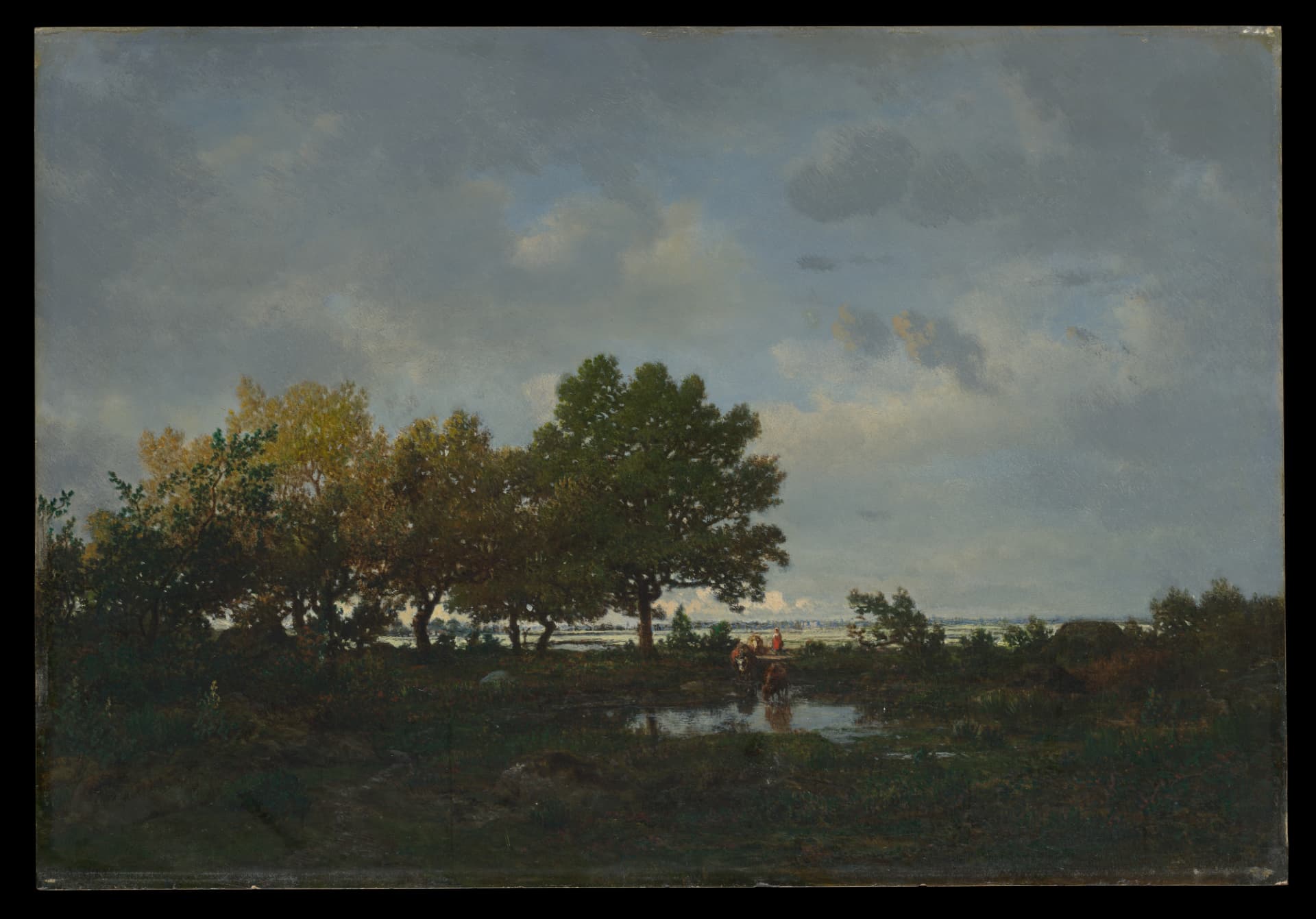
What appears closest to you?
What appears furthest away?
Where do things overlap?
Compare the size of things that appear close with things further away.
WHAT IS MAKING THE LANDSCAPE LOOK DEEP?
Try
THREE WAYS TO CREATE DEPTH
01 / Overlap
One shape covers part of another.
ONE SHAPE CAN APPEAR IN FRONT OF ANOTHER.
02 / Size
The same shapes at different sizes.
THE SAME SHAPE CAN APPEAR CLOSER WHEN IT IS LARGER.
03 / Position
The same shapes placed at different heights.
WHERE SOMETHING SITS CAN CHANGE HOW NEAR OR FAR AWAY IT APPEARS.
Materials
Material encounter
MOVE + LOOK
Place two or three pieces of paper on a page.
Move one.
WHAT NOW LOOKS CLOSER?
Make one piece larger or smaller.
WHAT CHANGES?
Overlap two pieces.
WHICH ONE APPEARS IN FRONT?
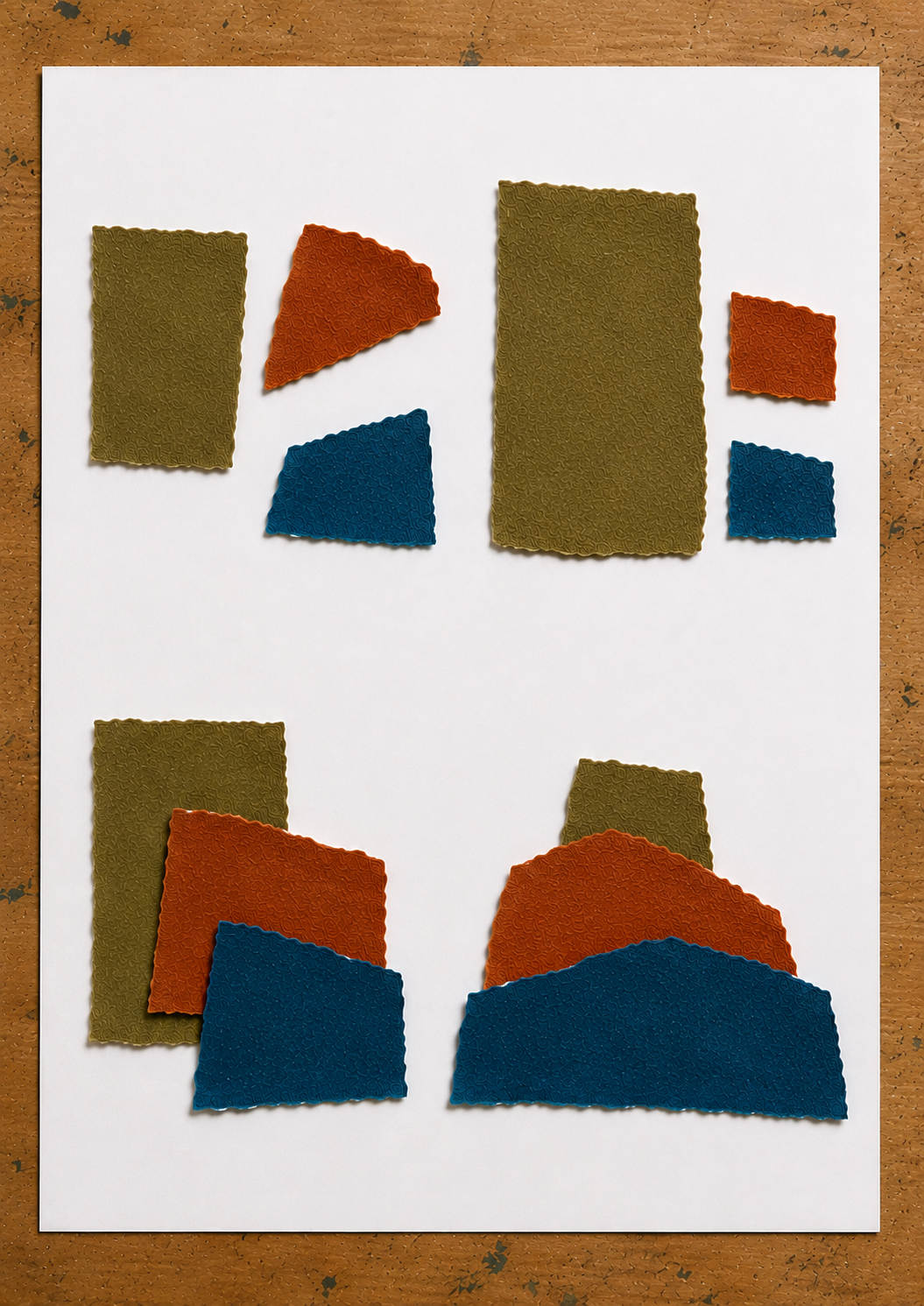
Studio exercise.
Understand
MAKING DEPTH
One thing covers part of another.
The same or similar things can appear closer when they are larger and further away when they are smaller.
Where something sits on the page can change how near or far away it appears.
What appears closest.
What sits between.
What appears furthest away.
WATCH
Make
LANDSCAPE COLLAGE
Choose the amount of support you need today.
Build a landscape from cut or torn paper.
It can come from a place you know, a photograph or your imagination.
Begin with a few shapes. Move them around before you glue anything down.
Try changing:
- which shapes overlap
- which shapes are larger or smaller
- where the shapes sit on the page
Look at what appears close and what appears further away.
Add, remove or move pieces as you work.
When the arrangement works, glue the pieces down.
- 01 / Choose
Choose a few pieces of paper.
- 02 / Place
Place them on the page.
- 03 / Move
Move one piece.
- 04 / Change
Try changing its size or position.
- 05 / Overlap
Overlap some pieces.
- 06 / Look
Look at what appears close, in between and further away.
- 07 / Decide
Choose the arrangement that works.
- 08 / Glue
Glue the pieces down.
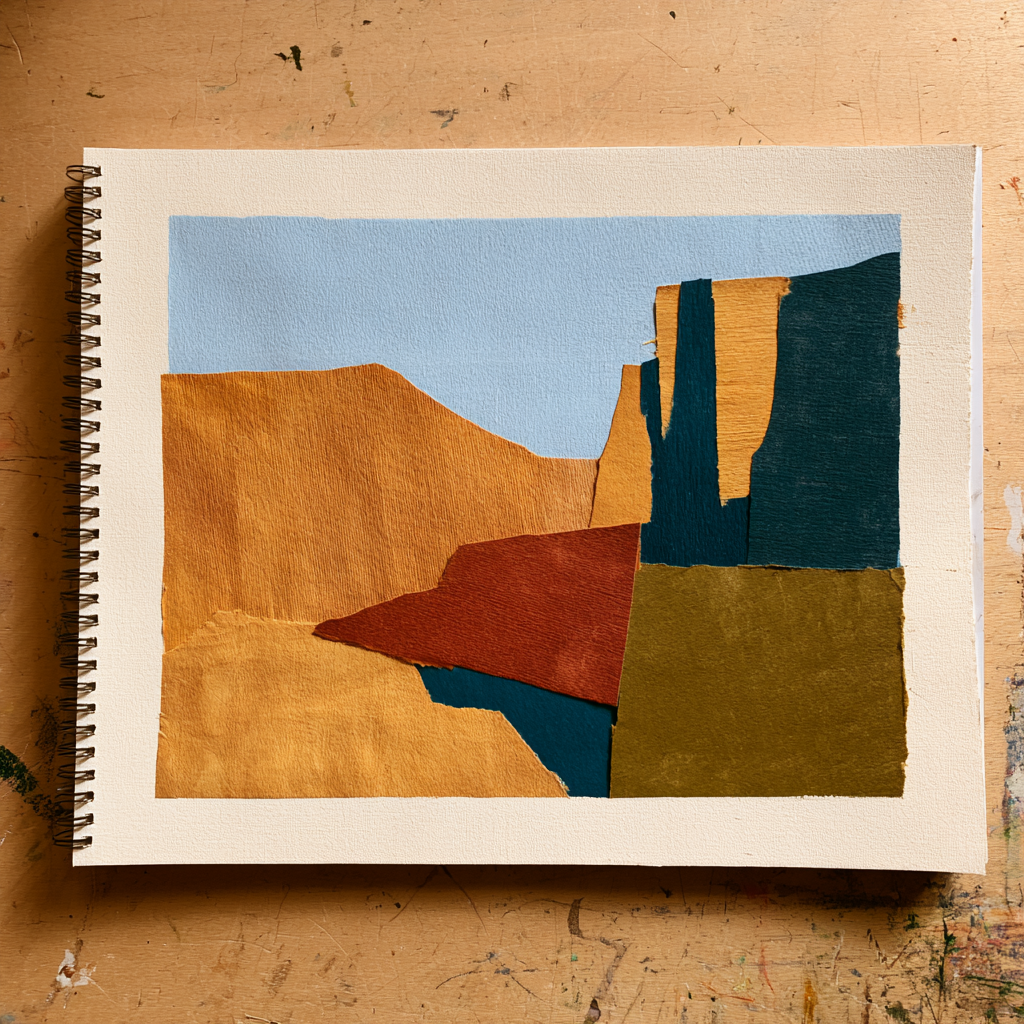
Studio exercise.
Look again
COMPARE + CHANGE
Put the collage where you can see the whole image.
What appears closest?
What appears furthest away?
Where did overlap help?
What happened when you changed the size or position of something?
MOVE ONE PIECE. DOES THE SPACE LOOK DIFFERENT?
You can move it back if the original arrangement worked better.
In practice
A FLAT IMAGE CAN SUGGEST DEPTH. SOME ARTWORKS OCCUPY ACTUAL SPACE.
ACTUAL SPACE
Some artworks occupy the space around us.
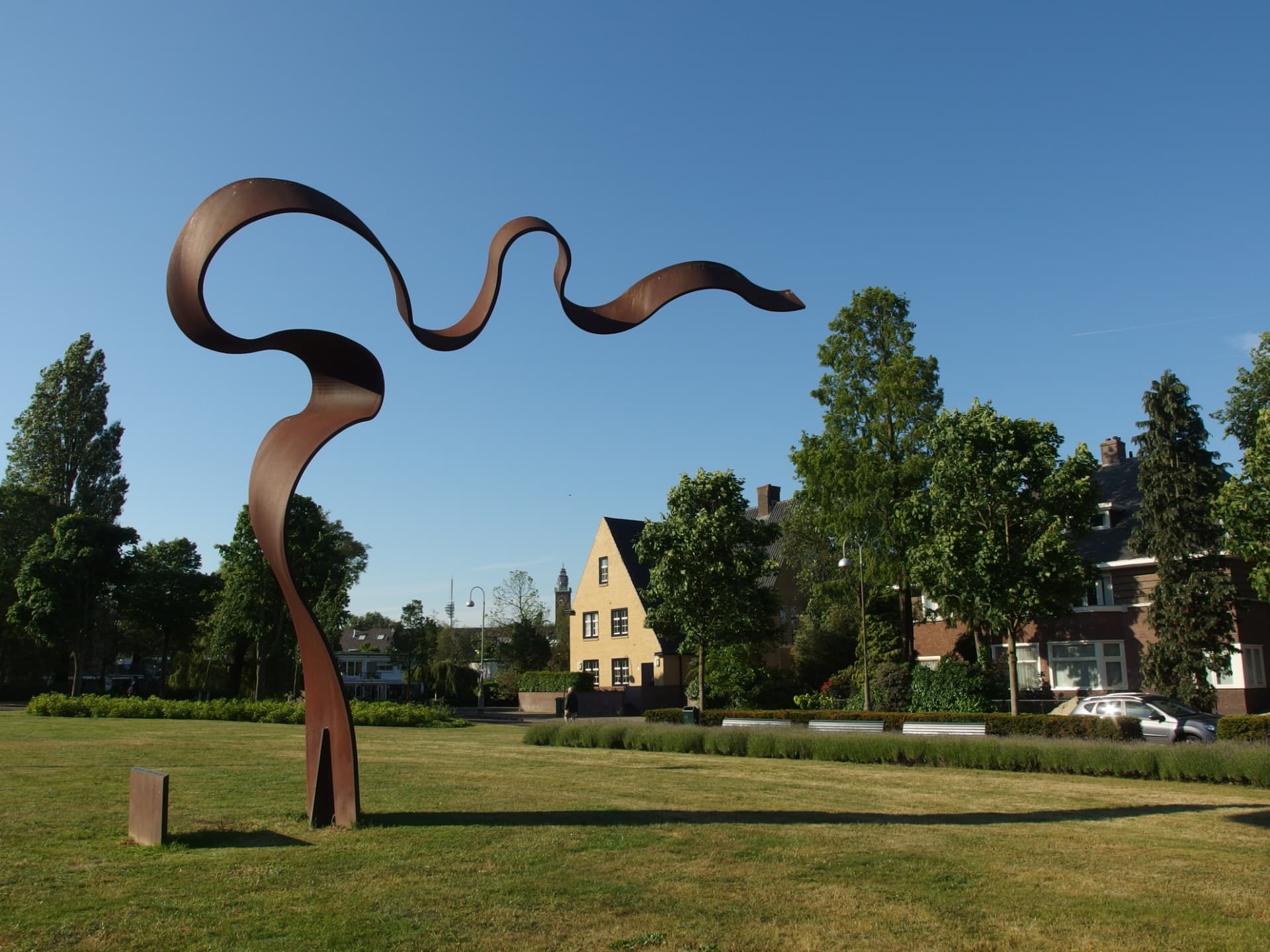
Look at its size compared with the street, trees and buildings.
Where could you stand?
What would you see if you moved around it?
WHAT CHANGES WHEN YOUR VIEWPOINT CHANGES?
Artists can explore space through drawing, painting, sculpture, installation and other materials and processes.
Where a work is placed can change how it is seen and experienced.
Designers use scale, position, overlap and spatial relationships to show how elements relate within a visual communication.
Creative thinking
What makes something look close or far away?
What changed when you moved, overlapped or resized something?
Keep one stage that shows how the space changed.
Tools to help you notice, describe, question, develop and document your work.
Curriculum + reading
Greenwood, D. (2023). Art creative practice: VCE units 1–4. Cambridge University Press & Assessment.
Guthrie, K. (2017). Nelson visual communication design: VCE units 1–4 (4th ed.). Cengage Learning Australia.
Victorian Curriculum and Assessment Authority. (2022). VCE Art Creative Practice study design 2023–2027. vcaa.vic.edu.au ↗
Victorian Curriculum and Assessment Authority. (2022). VCE Art Making and Exhibiting study design 2023–2027. vcaa.vic.edu.au ↗
Victorian Curriculum and Assessment Authority. (2023). VCE Visual Communication Design study design 2024–2028. vcaa.vic.edu.au ↗
Artists + artworks
Rousseau, T. (1855). The pond (La Mare) [Oil on wood]. The Metropolitan Museum of Art, Robert Lehman Collection, New York, NY, United States. Public domain. metmuseum.org ↗
Vellut, G. (2015). Sculpture @ Apollolaan @ Amsterdam [Photograph]. Wikimedia Commons. CC BY 2.0. commons.wikimedia.org ↗
Studio material
Move + Look.
Landscape Collage.
Overlap, Size and Position.
Visual material: Studio work, 2026.