03 / The Studio
SHAPE + FORM
Seeing and changing the shapes in, around and between things.
What is it?
A shape is two dimensional: it has height and width.
When you look at an object, you can also look at the shapes that make it up: its outer edge, the shapes inside it and the spaces around it.
The spaces around and between objects create shapes too. This is called negative space.
TODAY’S FOCUS
Looking at the shapes around an object can change what you notice.
Look
WHAT SHAPES CAN YOU SEE?
Look at the painting before reading its title.
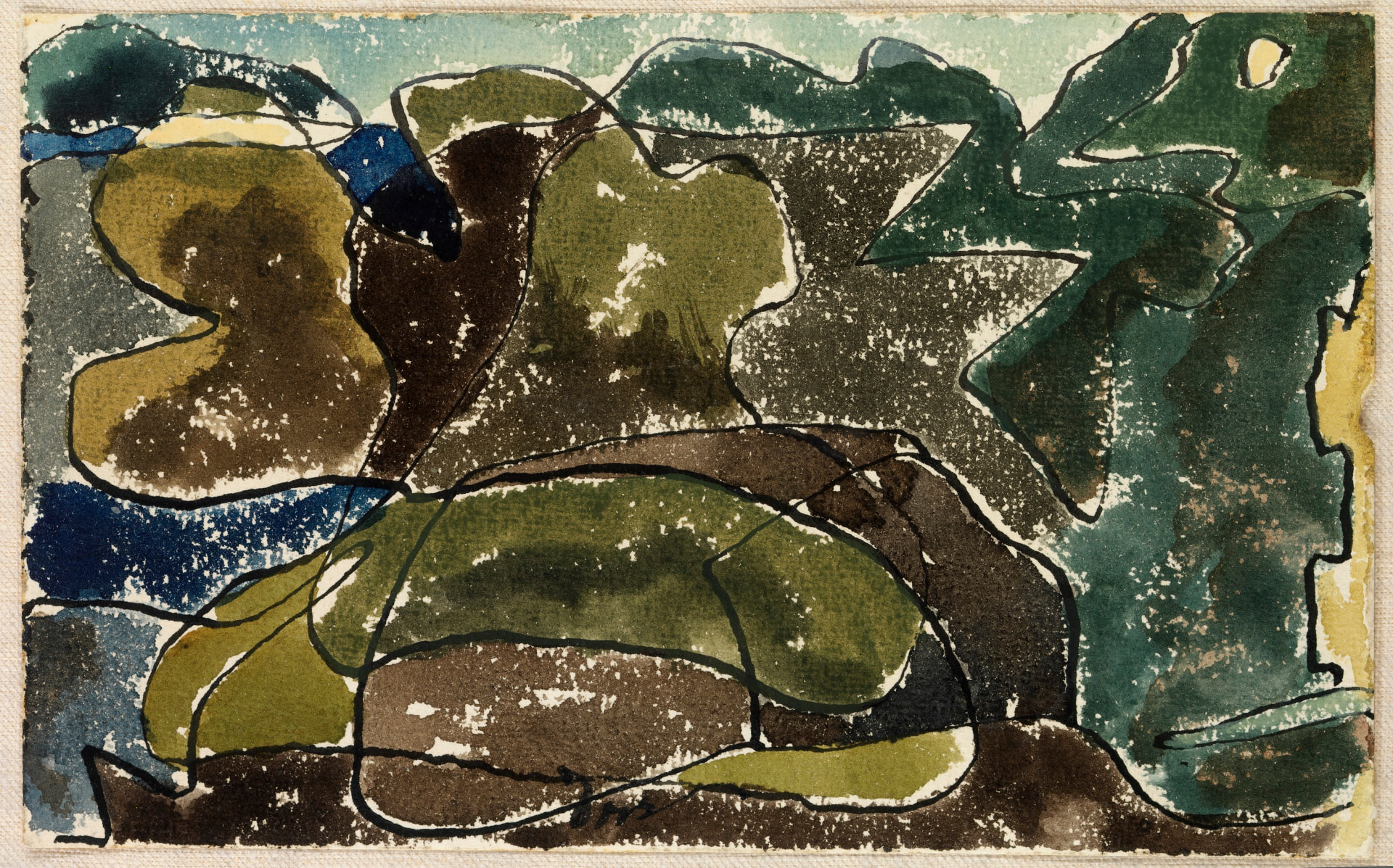
Look first.
What shapes do you notice first?
Look at the spaces between them. Where can you see the white paper showing through?
Now read the title: Over the Harbor, Centerport. Can you find parts of the harbour in the painting?
What becomes easier to recognise once you know the title?
Try
ONE OBJECT, THREE WAYS
Use one object for three short drawings.
01 / Outer shape
Look at its outside edge. Draw only the shape made by that edge. Leave the details out.
02 / Negative space
Look at the spaces around and inside the object. Draw those shapes instead.
03 / Crop
Move closer or let part of the object move beyond the edge of the page. Look at what happens to the shapes when you only see part of the object.
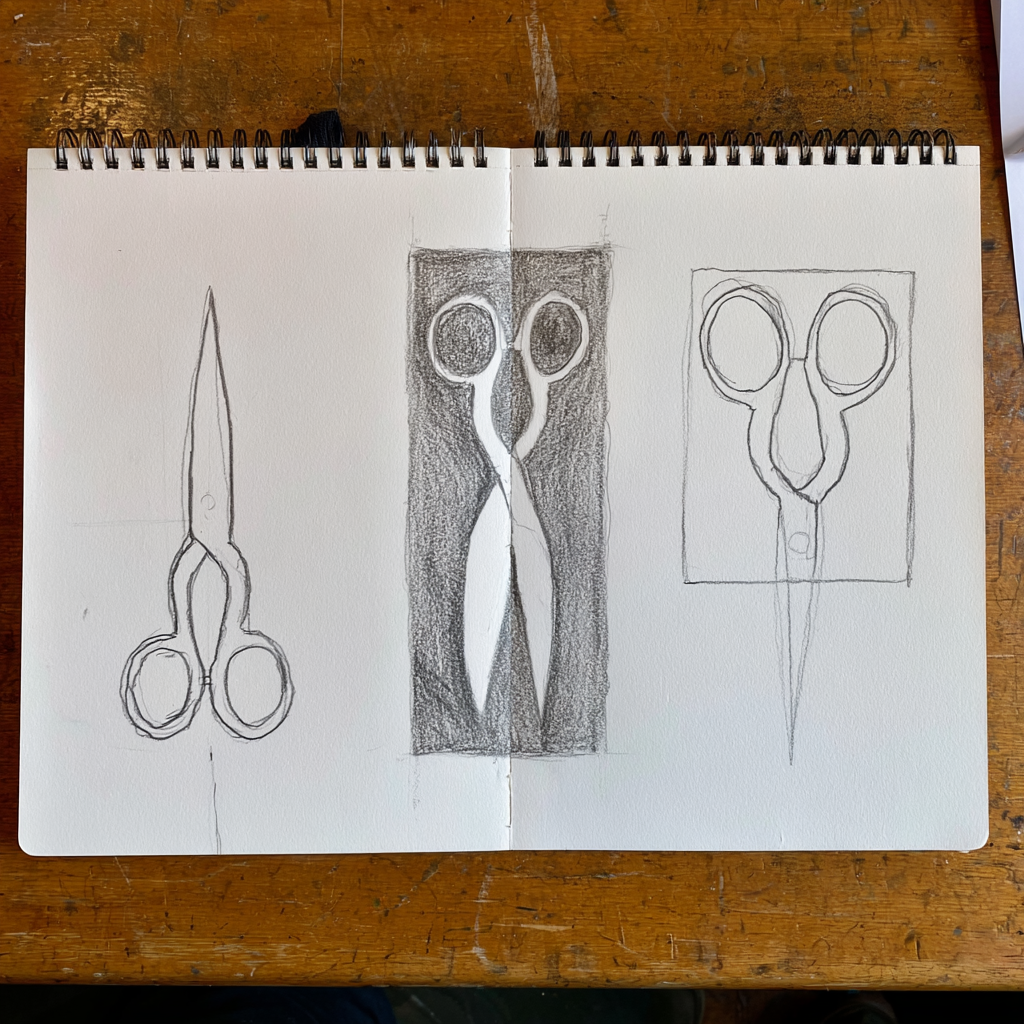
Studio exercise.
Materials
Material encounter
CUT + MOVE
Cutting changes a shape immediately.
Move one piece. Turn it. Overlap another piece. Leave a gap.
Notice what happens to the shapes around it as well as the shape you moved.
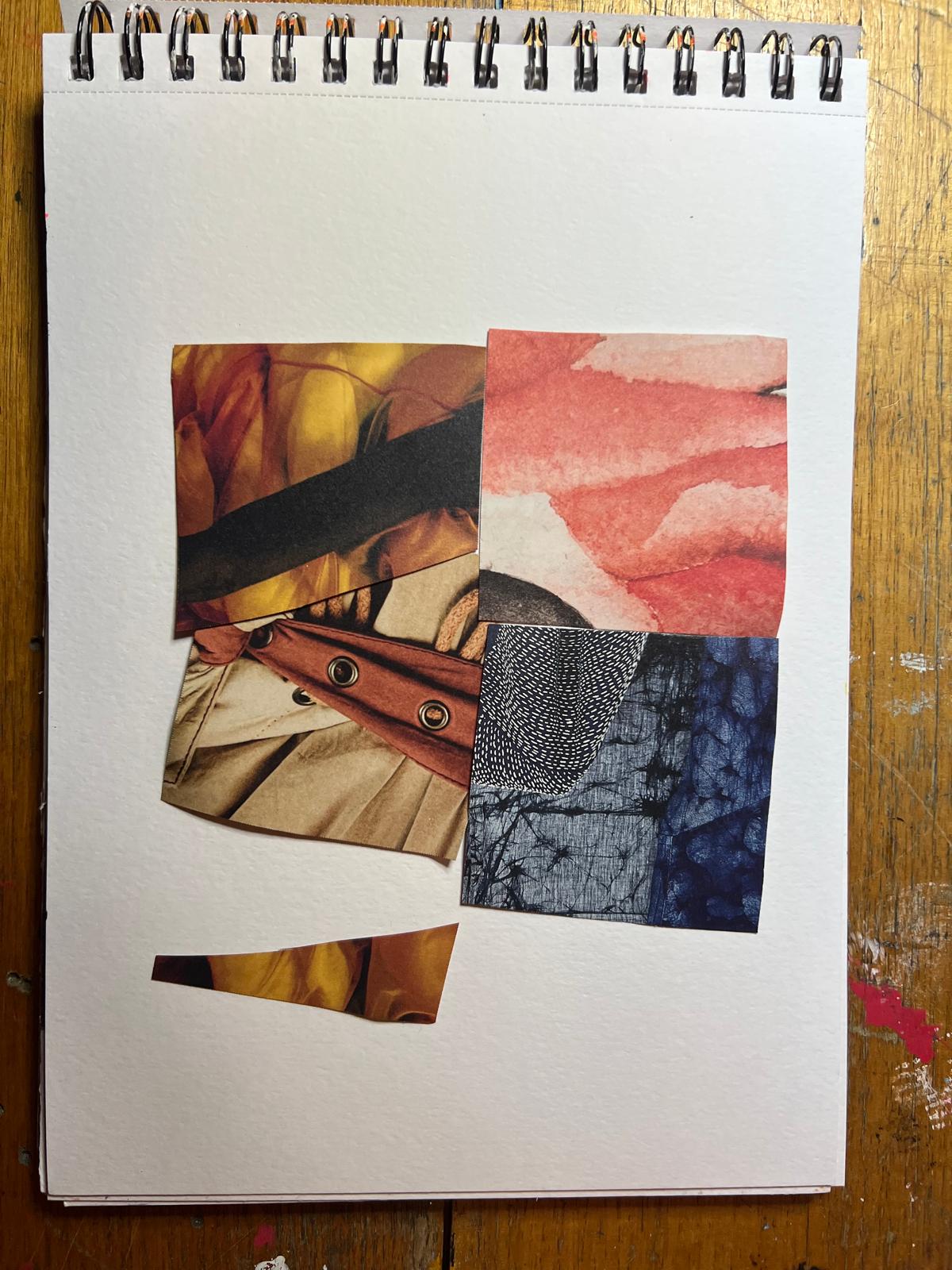
Studio exercise.
Move or turn one fragment. What changed around it?
Understand
POSITIVE + NEGATIVE SPACE
The object or subject creates a shape. The spaces around and between it create shapes too.
The shape occupied by the subject or object.
The shapes around and between subjects or objects.
WATCH
CHANGING ONE CHANGES THE OTHER.
Make
FOUR SQUARES
Choose the amount of support you need today.
Start with four square fragments cut from different magazine photographs. Arrange them on a page. Turn them, move them and try different combinations.
You can then cut into the squares, overlap pieces or leave spaces between them. As you work, notice which shapes, edges and spaces you want to keep.
When you have an arrangement you want to work from, make a drawing or painting from it. You do not need to copy every detail. Look at the shapes, spaces and relationships you want to carry into the new work.
- 01 / Select
Choose four square fragments from different magazine images.
- 02 / Place
Place them on the page and look at the shapes and spaces they create.
- 03 / Move
Move, turn or overlap the fragments.
- 04 / Cut
Cut into one or more fragments and try another arrangement.
- 05 / Choose
Choose the arrangement you want to work from.
- 06 / Translate
Make a drawing or painting from it. Keep the shapes, spaces and relationships that matter to you.
- 07 / Look again
Look back at the earlier stages and notice what changed.
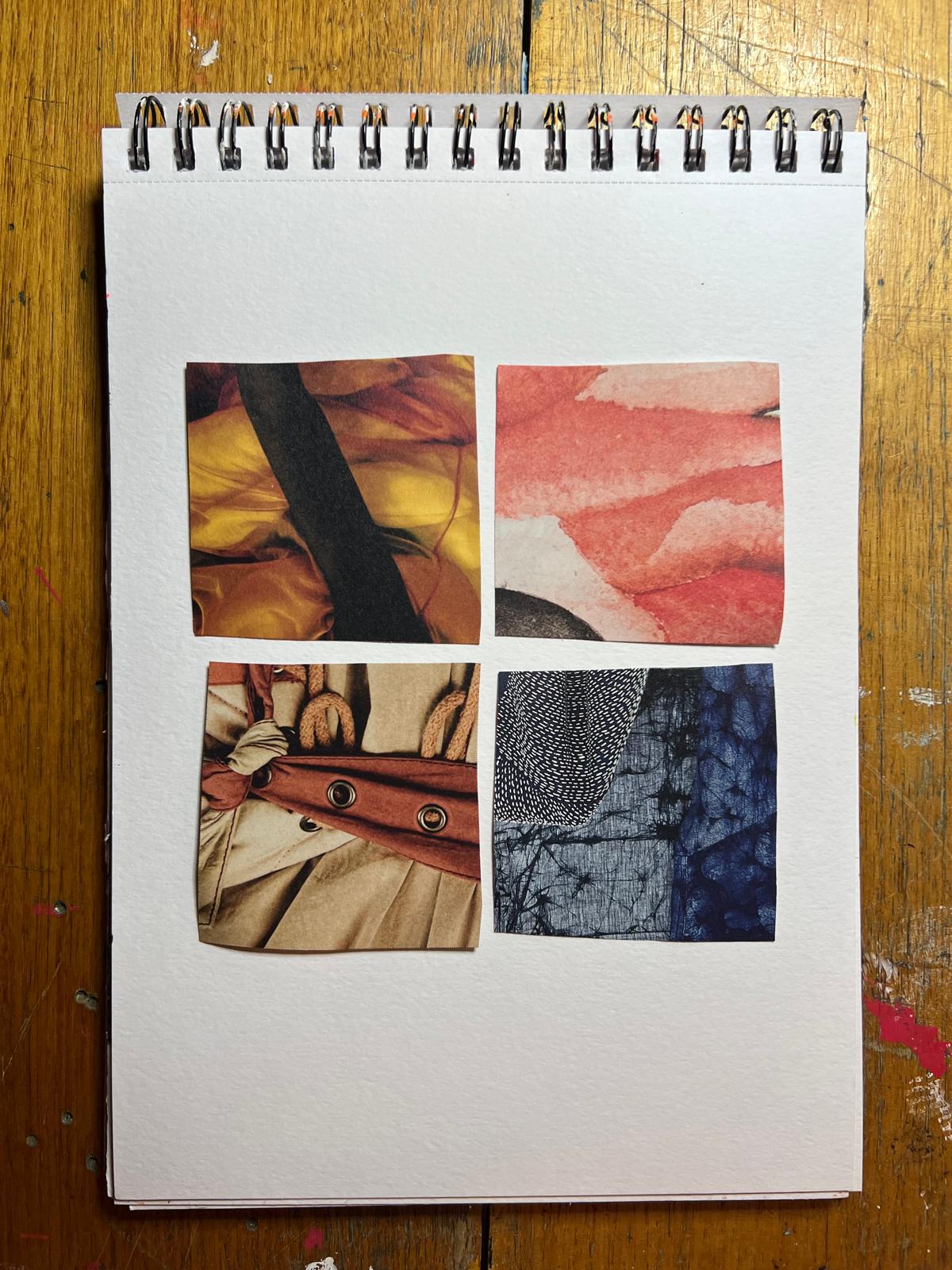
Studio exercise.
Studio exercise.
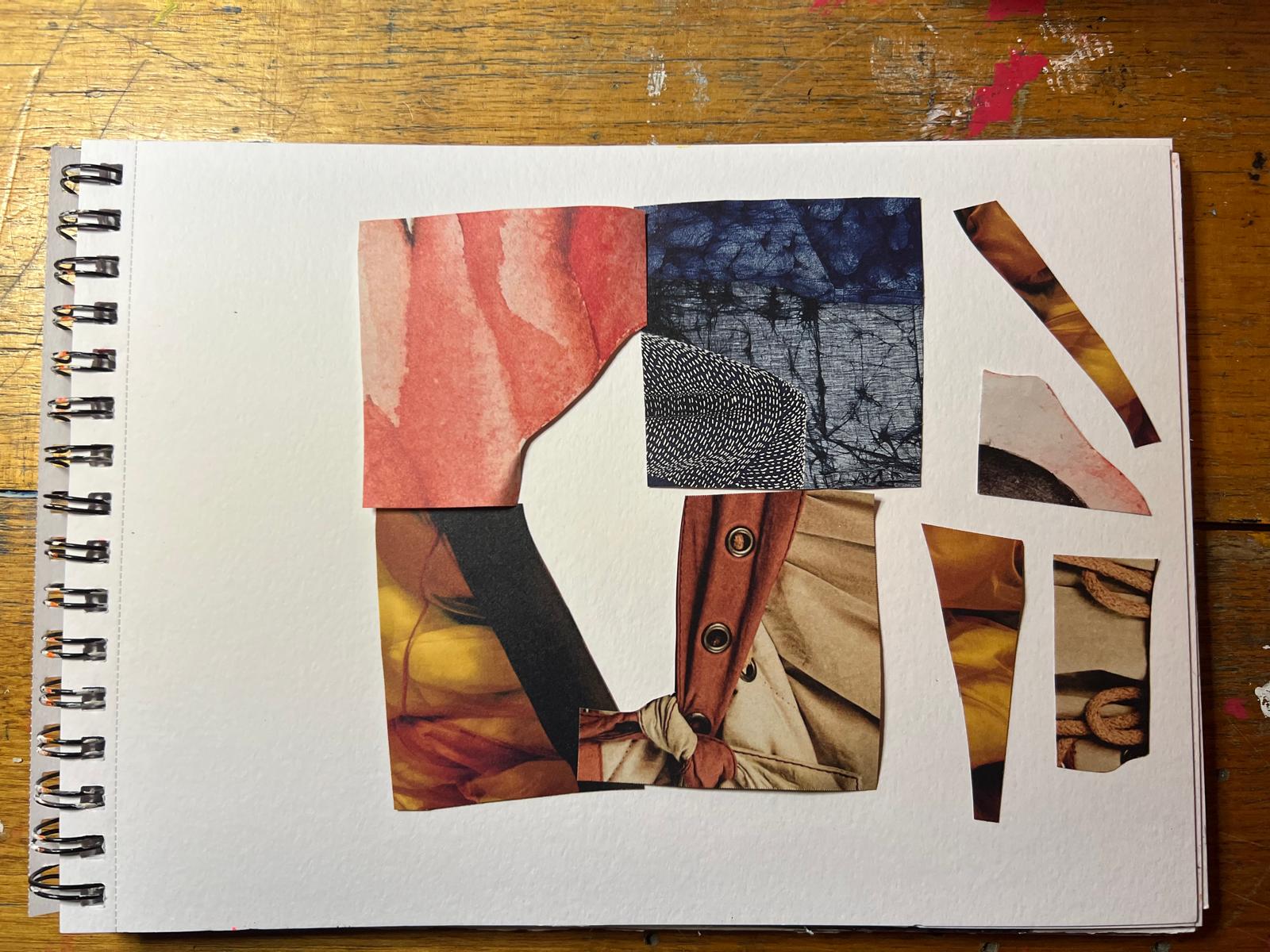
Studio exercise.
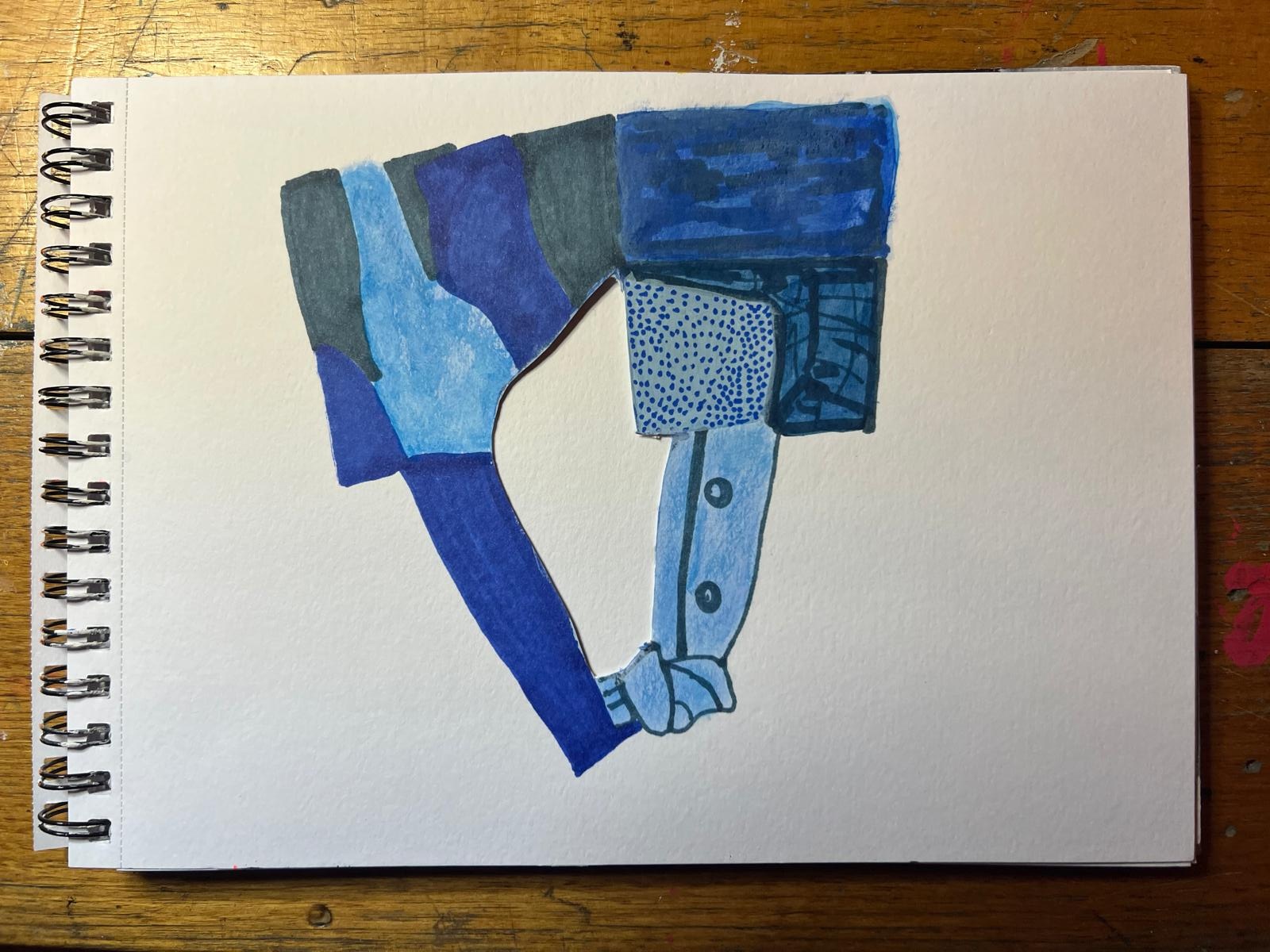
Studio work.
Look again
COMPARE + CHANGE
Look back at the first arrangement and compare it with the work you made.
What did you keep? What did you change or leave out?
Which shapes or spaces became more important as you worked?
What happened to the spaces between the shapes?
If you changed one part now, what would you try?
In practice
Shape and space can become part of your visual language. Cropping, simplifying, cutting and rearranging can change how an idea develops as you work.
Explore what happens when you change shapes, spaces and relationships through different materials and processes. Keep stages of the work so you can compare what changed and decide what to develop.
Designers consider the relationship between a figure and the space around it. Cropping, placement and figure-ground can change what stands out and how a visual communication is read.
Creative thinking
Where does the space around something become a shape?
What changed when you moved, cropped or removed part of the image?
Keep one stage that shows how the relationship between shape and space changed.
Tools to help you notice, describe, question, develop and document your work.
Curriculum + reading
Bowden, M., & Tooke, A. (2022). Art making and exhibiting: VCE units 1–4. Cambridge University Press & Assessment.
Greenwood, D. (2023). Art creative practice: VCE units 1–4. Cambridge University Press & Assessment.
Guthrie, K. (2017). Nelson visual communication design: VCE units 1–4 (4th ed.). Cengage Learning Australia.
Victorian Curriculum and Assessment Authority. (2022). VCE Art Creative Practice study design 2023–2027. vcaa.vic.edu.au ↗
Victorian Curriculum and Assessment Authority. (2022). VCE Art Making and Exhibiting study design 2023–2027. vcaa.vic.edu.au ↗
Victorian Curriculum and Assessment Authority. (2023). VCE Visual Communication Design study design 2024–2028. vcaa.vic.edu.au ↗
Artists + artworks
Dove, A. (1942). Over the Harbor, Centerport [Watercolor on paper]. Smithsonian American Art Museum, Washington, DC. CC0. si.edu ↗
Studio material
One Object, Three Ways.
CUT + MOVE.
Four Squares — Select, Rearrange, Cut + Change.
Four Squares — Translate.
Visual material: Studio work, 2026.