12 / The Studio · Material
MATERIALS + PROCESSES
Working with what materials can do
Materials behave differently depending on how you use them. Try changing the tool, pressure, amount of water, surface or way you apply the material. Notice what changes. Keep anything that gives you something worth exploring further.
TODAY’S FOCUS
Let what happens in the material guide the next move.
Look
WHAT DID THE PROCESS MAKE POSSIBLE?
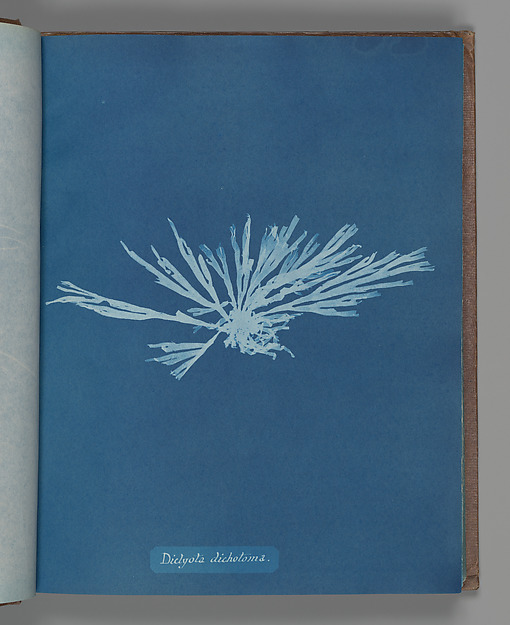
Look first.
- Where can you see the algae itself?
- Where can you see the action of light and paper?
- What could this process do that a drawn line could not do in quite the same way?
Atkins placed wet algae directly onto light-sensitive paper and exposed it to sunlight. The image comes from direct contact between the specimen, paper and light.
Understand
THE TERMS CHANGE BETWEEN SUBJECTS
In Art Creative Practice and Art Making + Exhibiting, you work with materials, techniques and processes. In Visual Communication Design, the related terms are methods, media and materials.
Art
ART MATERIALS
What you work with, including the qualities and characteristics the material brings.
TECHNIQUES
How materials are manipulated using tools and equipment.
PROCESSES
The activities, procedures and investigation through which the work develops.
VCD
METHODS
Manual or digital processes used to develop design ideas, concepts and solutions.
MEDIA
Manual or digital applications used to communicate ideas and information.
MATERIALS
The surfaces or substrates on or from which designs are made.
WATCH
Make
FOLLOW THE MATERIAL
Begin with one action that suits it: press, drag, fold, tear, layer, dilute, scrape, print or repeat.
Work for about ten minutes.
When something unexpected happens, stop and look before changing it. Let that moment suggest the next move.
Let it stay an experiment. You are finding out what this material can give you.
USING UNFAMILIAR MATERIALS OR EQUIPMENT? CHECK THE SAFE WAY TO HANDLE THEM FIRST.
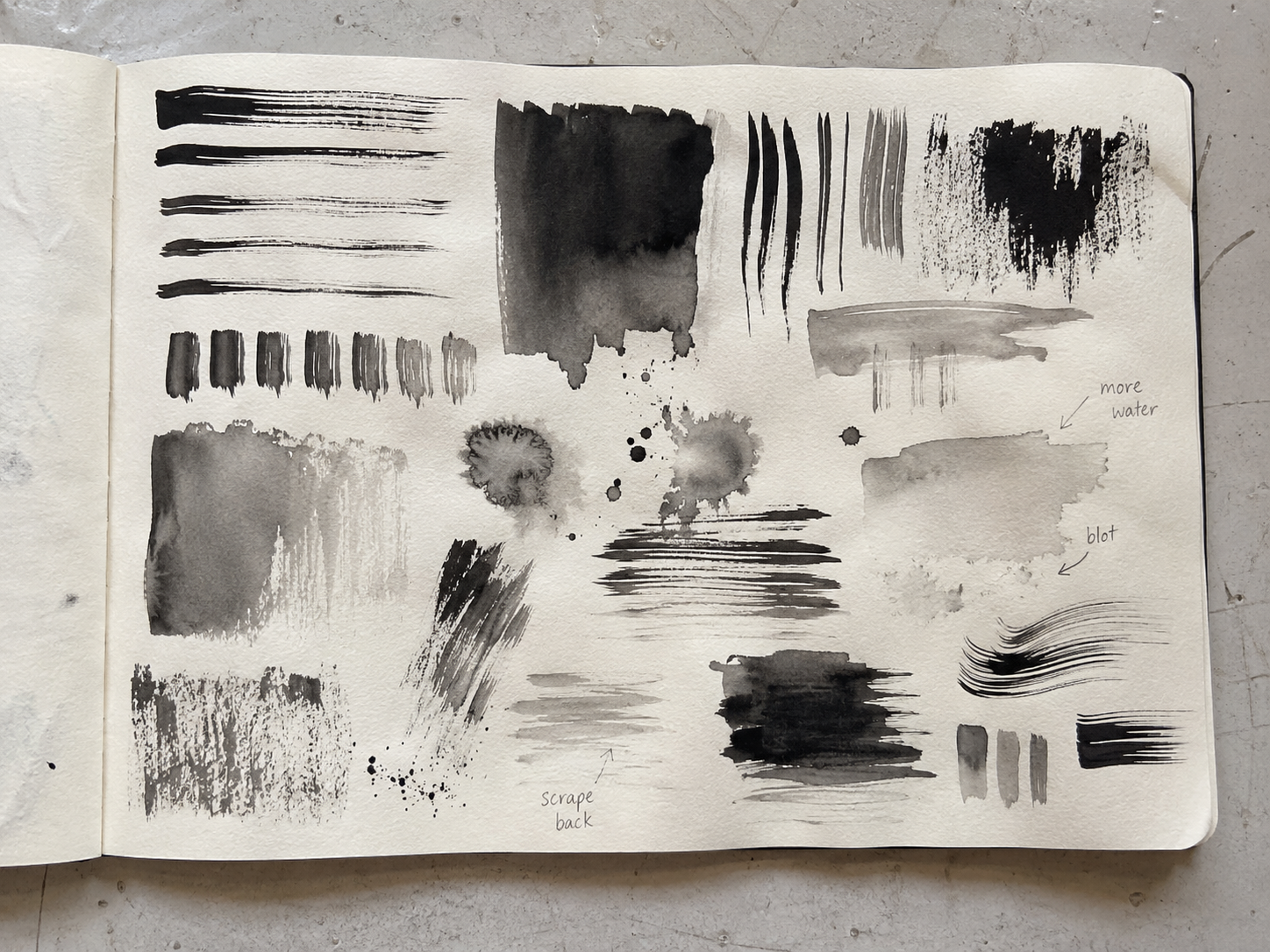
Studio experiment.
Ink, water, brush and blotting tests in a visual diary.
Look again
Put the study down.
Where can you see the material itself?
Where can you see the process?
What happened that you would not have planned before you started?
What might be worth returning to?
Keep the study, or photograph it before you move on.
In practice
LOOK FOR THE BLOCK
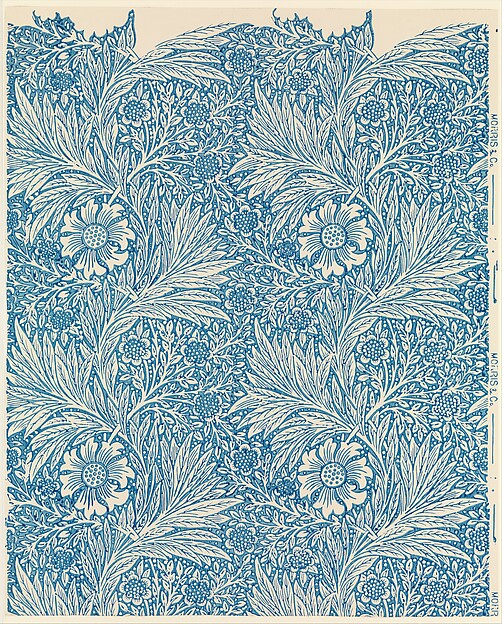
Marigold was printed by hand from wooden blocks. At the top of this sheet, you can still see where the edges of the printing blocks met the paper.
Look at the repeat and the flat layers of colour.
Where can you see the process?
How has the way it was made shaped the design?
In your practice
When you choose a material or process, ask what it lets you do.
Does the work need to hold, bend, repeat, absorb, resist, layer, transfer, move or change?
Materials, techniques and processes become part of visual language as ideas develop. Notice what the material contributes, then decide what you want to explore further.
Explore the properties of materials and what happens when you manipulate them through different techniques and processes. Keep useful trials and record what you discover.
Choose methods, media and materials for what the design needs to do. Consider how the way something is developed or made affects the design idea and its communication.
Choose for what the work needs, then stay open to what happens once you begin.
Creative thinking
What is the material doing?
Let one thing that happens guide the next move.
Keep the test or photograph the moment.
Tools to help you notice, describe, question, develop and document your work.
Source note
Developed through studio practice, curriculum guidance and established art and design theory. All instructional material on this page is original.
Curriculum + reading
Bowden, M., & Tooke, A. (2022). Art making and exhibiting: VCE units 1–4. Cambridge University Press & Assessment.
Greenwood, D. (2023). Art creative practice: VCE units 1–4. Cambridge University Press & Assessment.
Victorian Curriculum and Assessment Authority. (2022). VCE Art Creative Practice study design 2023–2027. vcaa.vic.edu.au ↗
Victorian Curriculum and Assessment Authority. (2022). VCE Art Making and Exhibiting study design 2023–2027. vcaa.vic.edu.au ↗
Victorian Curriculum and Assessment Authority. (2023). VCE Visual Communication Design study design 2024–2028. vcaa.vic.edu.au ↗
Artists + artworks
Atkins, A. (ca. 1853). Dictyota dichotoma [Cyanotype]. The Metropolitan Museum of Art, New York, United States. Public domain. metmuseum.org ↗
Morris, W. (1875). Marigold [Block printed in distemper colours]. Morris & Company; printed by Jeffrey & Co. The Metropolitan Museum of Art, New York, United States. Public domain. metmuseum.org ↗