Lesson 7 / Week 4 · History + position
Two positions
Learning outcomeCompare what each artist brings to shared material and name the position you bring yourself.
01 /
Start from your position
Bring one of your developed
marks forward.
Use one mark developed through earlier lessons. Place it in your visual diary and write beside it:
- Where did this come from?
- What relationship do you have to it?
- What knowledge comes from your own experience?
- What knowledge comes from another person or source?
Keep this brief. The purpose is to make your own position visible before you study the artists.
Keep in your visual diaryMark + position note
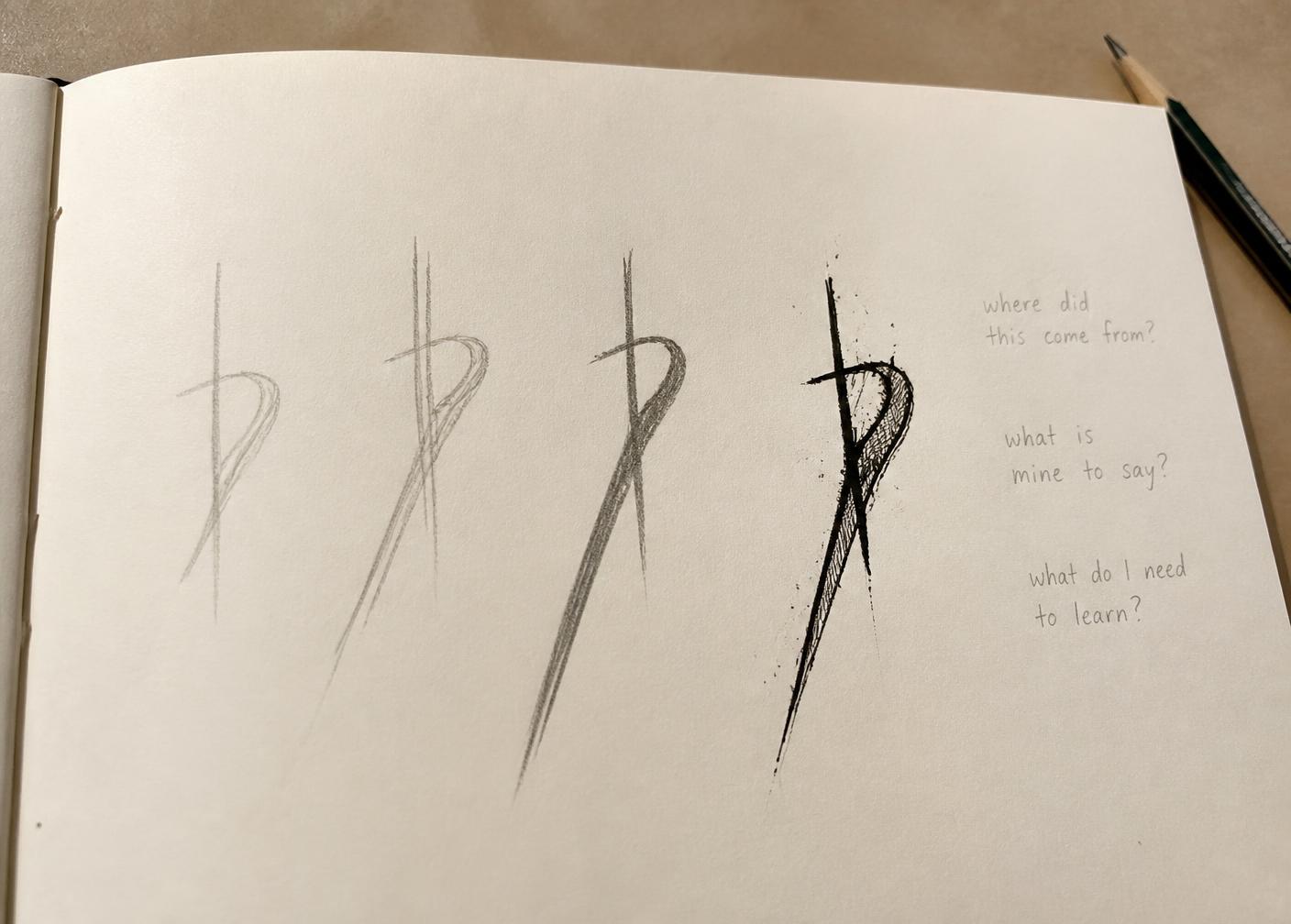
Visual material: Studio work, 2026.
02 /
Encounter the project
Two artists / one exhibition
Squatters and Savages was presented at the Art Gallery of Ballarat in 2017. Peter Waples-Crowe invited megan evans to work with him in response to the gallery's colonial collection of nineteenth-century images. Across two years they researched their own family histories, travelled together to Ngarigo Country and to places connected with Evans's settler ancestry, then developed artworks individually while collaborating on the ideas behind the exhibition.
Two works to study
Peter Waples-Crowe · Ngarigo artist
Colonised 3, 2017
Digital print on canvas. From Squatters and Savages, Art Gallery of Ballarat, 2017.
What earlier image is being reworked here, and from what position?
megan evans · settler artist
Bleeding Chandelier, 2016
Antique chandelier, glass beads. From Squatters and Savages, Art Gallery of Ballarat, 2017.
What has been done to a familiar object, and what does that make visible?
Look closely
- What has each artist chosen to show?
- What has each artist changed, reworked or disrupted?
- What materials, images or objects can you identify?
- How has each work been presented?
- What does the presentation make the viewer notice?
- Where can you see evidence of the artist's position in these choices?
Keep in your visual diaryArtwork evidence from both artists
Making + presenting
The artists respond to the same colonial history through different practices.
megan evans
Evans works with objects and materials connected with colonial domestic life, altering familiar things so their histories become visible in new ways.
- What happens when a familiar object is altered?
- Why might the original object matter to the meaning of the work?
- How does presenting the altered object in a gallery affect how we read it?
Peter Waples-Crowe
Waples-Crowe reworks colonial representations from a Ngarigo position, using contemporary art practice to challenge who has historically controlled images of Aboriginal people, Country and history.
- What earlier representation is being responded to?
- What has Waples-Crowe changed or disrupted?
- How does that change affect who controls the story?
Keep in your visual diaryMaking + presenting note
03 /
Hear the artist
History + position
Peter Waples-Crowe is a Ngarigo artist. megan evans is a settler artist. In Squatters and Savages they engage with colonial history from different cultural positions. Their relationship to that history affects the stories they tell, the choices they make and the responsibilities they bring to the project.
What becomes clearer when you hear the artist speak?
Keep in your visual diaryArtist voice / context note
04 /
Two positions
What is shared, and what remains different?
Peter Waples-Crowe and megan evans worked within the same exhibition while bringing different histories, cultural positions and responsibilities to the project.
Return to Colonised 3 and Bleeding Chandelier.
- What issue are both artists responding to?
- What visual or material decisions are specific to each artist?
- How does each artist's position affect those decisions?
- What appears to have been developed collaboratively?
- What remains individual?
- How does the exhibition bring the two positions into relationship without making them the same?
Cultural Lens / who is speaking?
- Who is the artist?
- What is their relationship to this history?
- What knowledge or experience do they bring?
- How does that position affect the choices they make?
Evidence
Choose one specific example from each artwork and one piece of contextual evidence from a source.
Keep in your visual diaryComparison of position + collaboration