01 / Building block
LOOKING + OBSERVATION
Learning to see and record what is there.
Look
Stay with it for a moment.
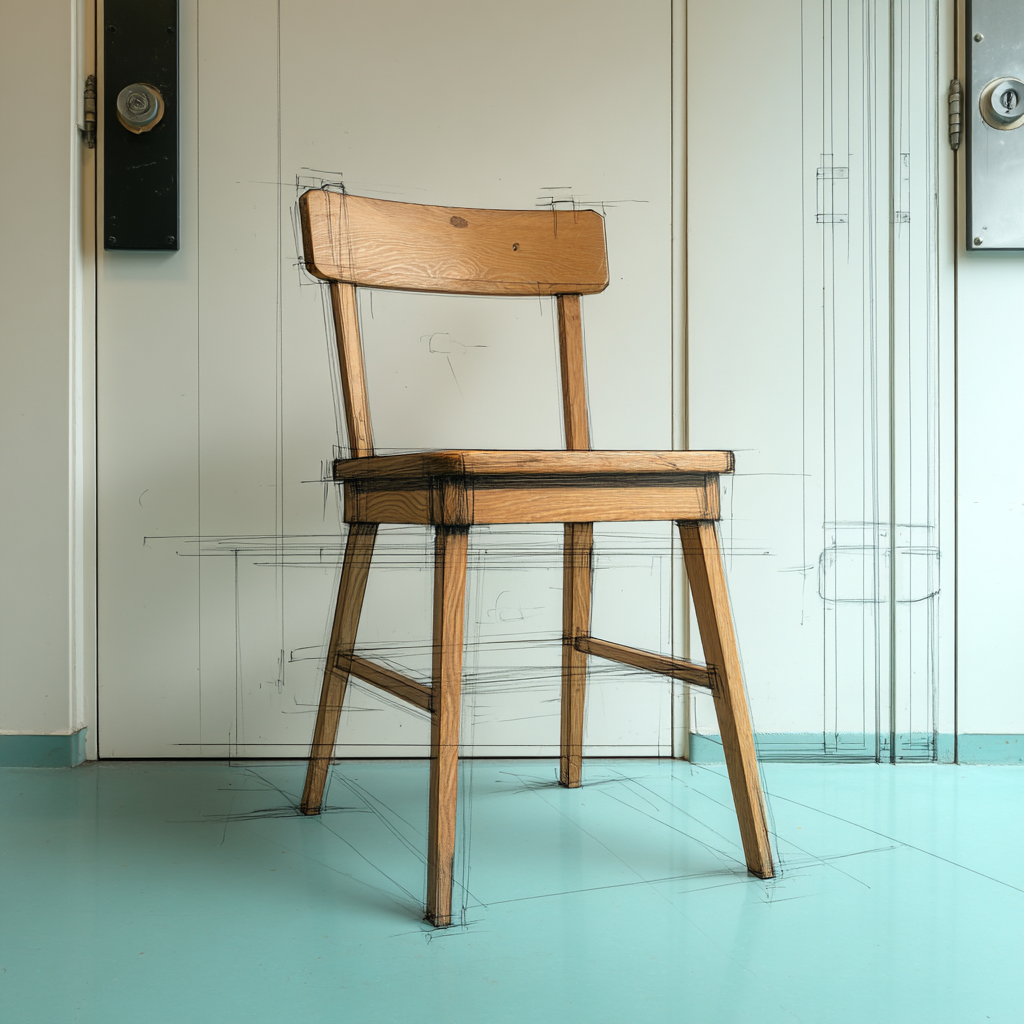
Studio exercise.
Choose an everyday object. Follow an edge with your eyes.
Notice where one part sits in relation to another. Look at the spaces around it.
Move higher, lower or around the object. What changes?
LOOK. MAKE A MARK. LOOK AGAIN.
Understand
What you see changes when you move
Your viewpoint changes what you can see. Move around an object and parts appear, disappear or overlap. Parts can appear wider, narrower, larger or smaller.
Look for what is particular to the object in front of you.
- What becomes visible?
- What disappears?
- What overlaps?
- What changes shape?
Look in practice
One object, more than once
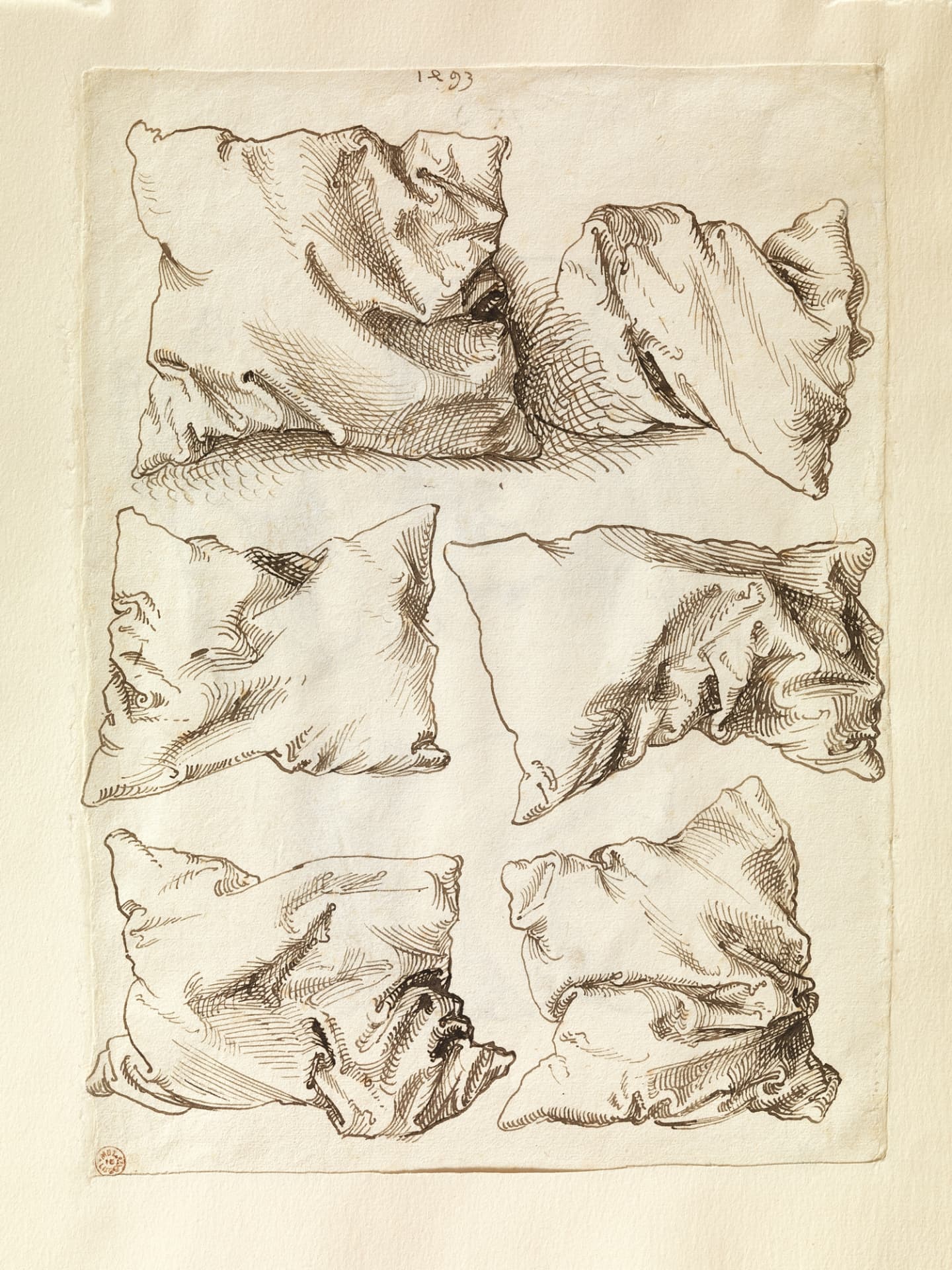
Dürer returned to the same ordinary object again and again.
What changes as the pillow turns?
What stays recognisable?
What did he have to notice to make each drawing different?
Try
Same object, three viewpoints
Move around the object and draw what changes.
01 / Three positions
Choose one object. Draw it three times:
- from above
- at eye level
- from below
02 / What to watch
Keep the drawings exploratory. Look for changes in visible shape, proportion, overlap, openings and structure.
Keep asking: what else can I see?
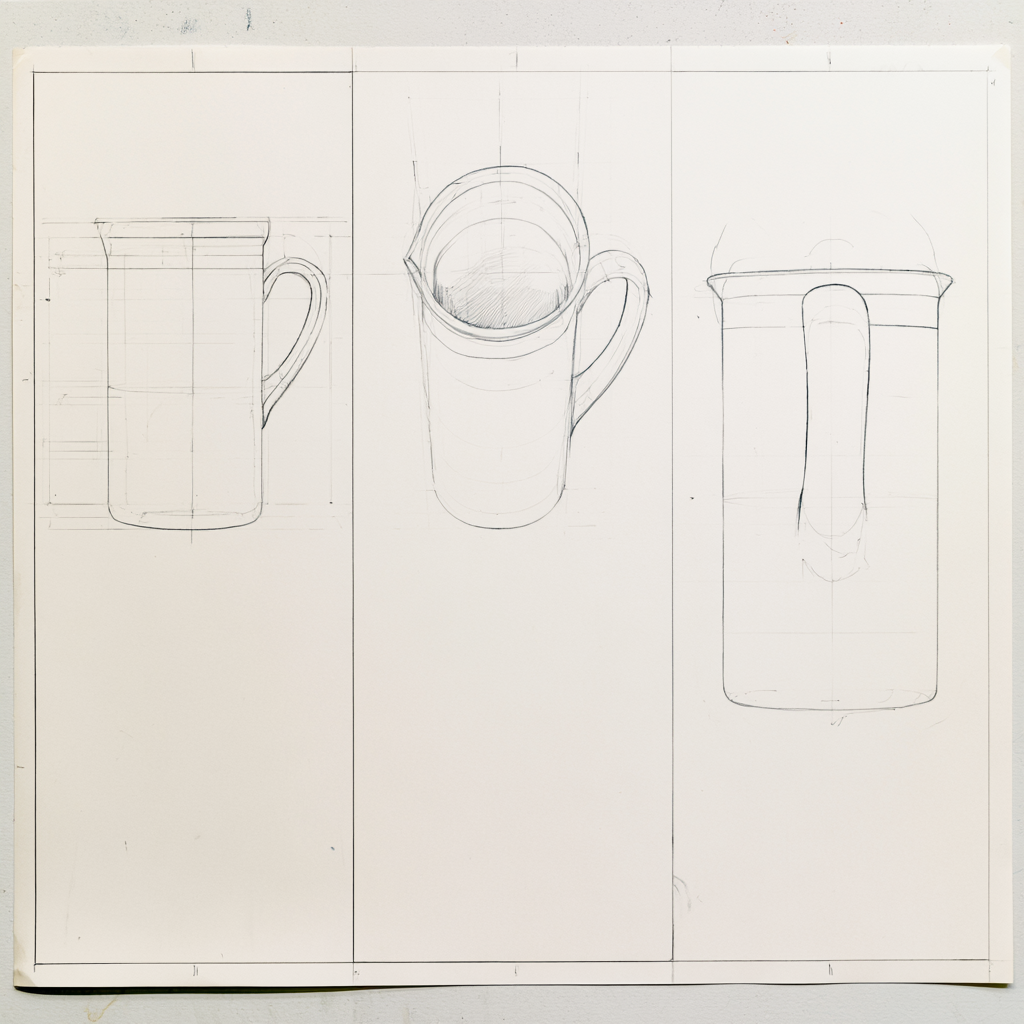
Studio exercise.
When the subject moves
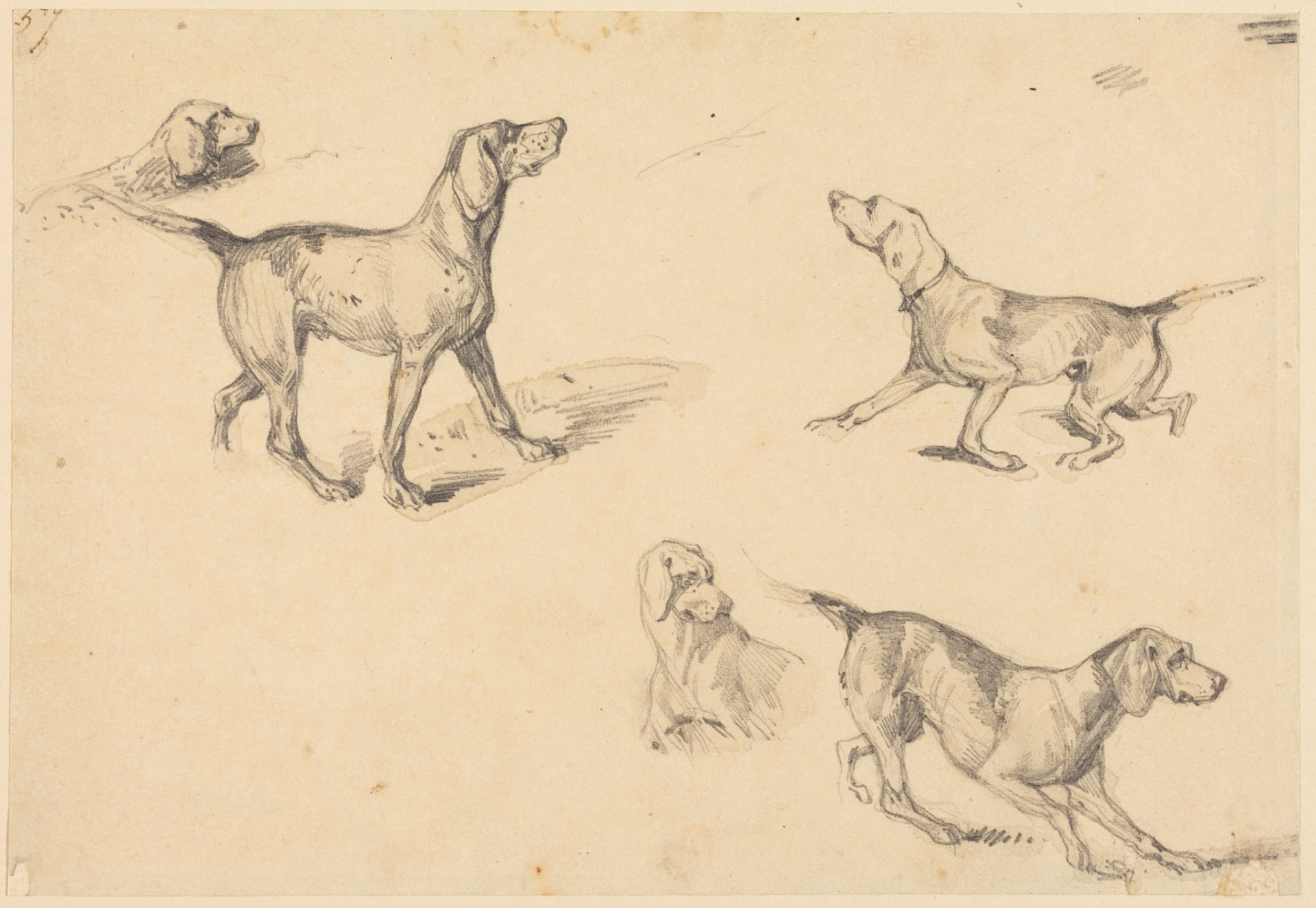
Bonington returned to the same dog several times. The subject moves, so each drawing catches something different.
Look across the studies. What remains recognisable?
What changes?
Materials
Material encounter
Searching marks
Light marks can be changed, layered and strengthened as you look again.
Every mark stays. Keep looking and let new marks sit beside earlier decisions.
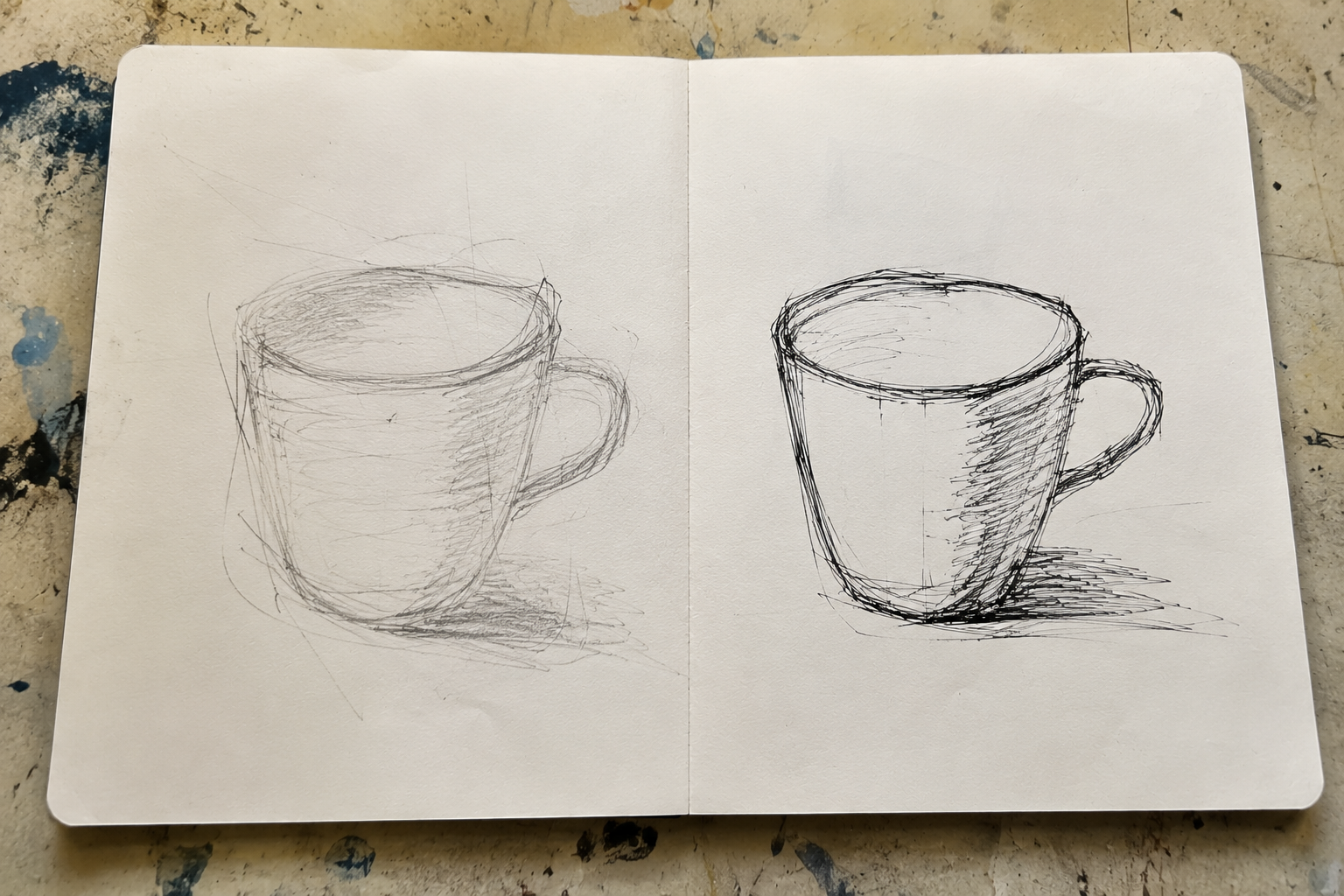
Studio exercise.
Draw a small part of your object with a tool you cannot erase. What changes in the way you look and draw?
Make
Choose the amount of support you need today.
Choose an object you want to look at for longer. Make a drawing directly from observation. Keep looking back at the object as you work, compare what you see with what you have drawn, and adjust as you notice more.
- 01 / Set up
Choose your object and your viewpoint.
- 02 / Wait
Look before making a mark.
- 03 / Begin
Find the overall shape.
- 04 / Measure
Compare the height and the width.
- 05 / Relate
Look at where parts sit in relation to each other.
- 06 / Build
Draw lightly and keep comparing.
- 07 / Adjust
Change the drawing as you notice more.
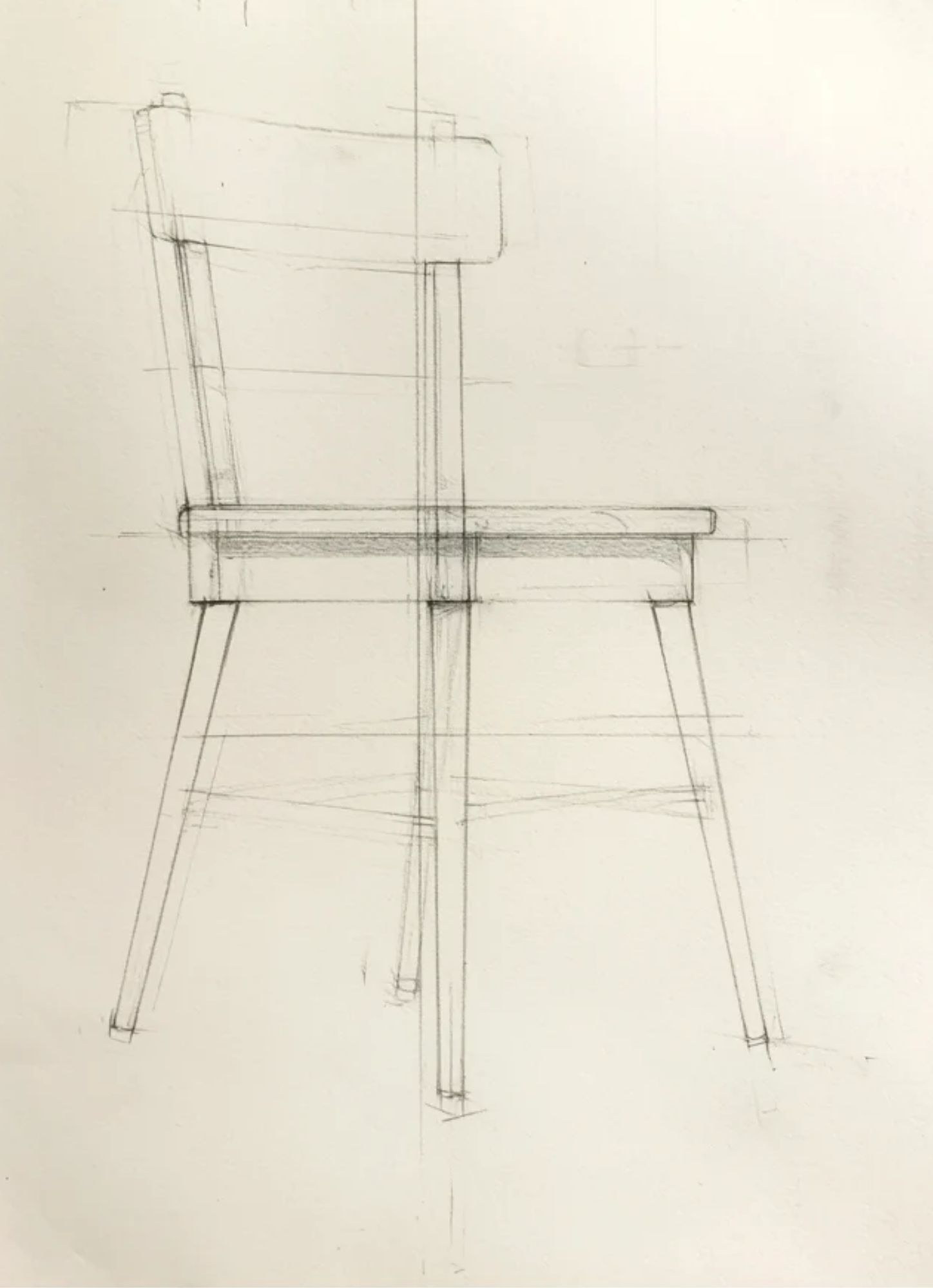
Studio exercise.
WATCH
Studio process
LOOK. MAKE A MARK. LOOK AGAIN.
Your first mark does not have to be your final decision. Searching lines and adjustments can show your looking changing as you work. Leave them visible.
Studio demonstration.
Tool / Fixed viewpoint
Keeping the same viewing position can help you compare what you see with what you draw. Return to the same position each time. Compare the subject with your drawing, notice a difference, then adjust.
LOOK → COMPARE → ADJUST
Fixed viewpoint — studio diagram.
Look again
LOOK → COMPARE → ADJUST
Put your drawing beside the object.
Look back and forth between them.
What do you notice now that you did not notice when you began?
What would you change? Try making that change.
In your practice
Observation can become a starting point for response. What you notice, select, repeat, exaggerate or leave unresolved can begin to shape your visual language.
Observation can help you collect subject matter, develop technical skills and explore how materials and processes change what you record.
Observation helps you understand form, proportion, structure, materials, texture and how parts relate. Looking from different viewpoints can also reveal how something is constructed and how it functions.
The longer you look, the more there is to notice.
Creative thinking
What did you see after looking for longer?
What changed when you looked from another viewpoint?
Keep one drawing that shows where you looked, compared and adjusted.
Tools to help you describe, question, develop, document and reflect.
Curriculum + reading
Bowden, M., & Tooke, A. (2022). Art making and exhibiting: VCE units 1–4. Cambridge University Press & Assessment.
Greenwood, D. (2023). Art creative practice: VCE units 1–4. Cambridge University Press & Assessment.
Guthrie, K. (2017). Nelson visual communication design: VCE units 1–4 (4th ed.). Cengage Learning Australia.
Kantrowitz, A., Brew, A., & Fava, M. (Eds.). (2012). Thinking through drawing: Practice into knowledge. Teachers College, Columbia University.
Schön, D. A., & Wiggins, G. (1992). Kinds of seeing and their functions in designing. Design Studies, 13(2), 135–156. doi.org/10.1016/0142-694X(92)90268-F ↗
Victorian Curriculum and Assessment Authority. (2022). VCE Art Creative Practice study design 2023–2027. vcaa.vic.edu.au ↗
Victorian Curriculum and Assessment Authority. (2022). VCE Art Making and Exhibiting study design 2023–2027. vcaa.vic.edu.au ↗
Victorian Curriculum and Assessment Authority. (2023). VCE Visual Communication Design study design 2024–2028. vcaa.vic.edu.au ↗
Artists + artworks
Bonington, R. P. (1825–1826). Five studies of a French pointer [Graphite with touches of gray wash on wove paper]. National Gallery of Art. nga.gov ↗
Dürer, A. (1493). Six studies of pillows [Pen and brown ink]. The Metropolitan Museum of Art. metmuseum.org ↗
Studio material
OBJECT FOR OBSERVATION.
SAME OBJECT, THREE VIEWPOINTS.
SAME OBJECT, GRAPHITE + FINELINER.
OBSERVATIONAL CHAIR STUDY.
EYE STUDY PROCESS.
Look → compare → adjust (fixed viewpoint).
Visual material: Studio work, 2026.